


Join us on a literary world trip!
Add this book to bookshelf
Grey
Write a new comment Default profile 50px
Grey
Subscribe to read the full book or read the first pages for free!
All characters reduced
The unpretenders - cover

The unpretenders

Ruth Cranston

Publisher: Good Press

  • 0
  • 0
  • 0

Summary

In "The Unpretenders," Ruth Cranston delves into the intricacies of identity and self-perception through a richly woven narrative that blends psychological insight with poetic prose. Set against the backdrop of a society obsessed with appearances, the novel explores the lives of its characters as they grapple with their true selves in a world that often demands conformity. Cranston's literary style merges vibrant imagery with sharp dialogue, creating an immersive reading experience that echoes the themes of existential inquiry found in modernist literature. Her nuanced portrayal of the human condition invites readers to reflect on their own masks and the societal pressures that shape them. Ruth Cranston, a prominent voice in contemporary fiction, draws from her extensive background in psychology and personal experiences with identity crises to craft this poignant work. Her previous writings have frequently examined the complexities of human relationships and the struggle between societal roles and individual authenticity. Cranston's keen observations of human behavior and her deep understanding of the emotional landscapes that influence personal choices infuse "The Unpretenders" with both authenticity and relatability. For readers seeking a thought-provoking exploration of the struggle for authenticity in a superficial world, "The Unpretenders" is an essential addition to contemporary literature. Cranston's masterful storytelling and profound themes resonate on multiple levels, making it a compelling read for anyone interested in the intersections of identity, society, and the quest for self-discovery.
Available since: 03/02/2025.
Print length: 160 pages.

Other books that might interest you

  • The Woman of Andros - cover

    The Woman of Andros

    Thornton Wilder

    • 0
    • 0
    • 0
    “From the earliest pages of his first novels and plays, Wilder examined the universal quandaries encapsulated in the questions the young man Pamphilus asks in The Woman of Andros: “How does one live? What does one do first?” — Penelope Niven Thornton Wilder’s celebrated novel The Woman of Andros, set before the birth of Christ on an obscure Greek island, tells the story of the enigmatic Chrysis, a courtesan (and an outcast) of haunting beauty and intelligence. In her gatherings with the young men of the island, Chrysis probes what is precious about life, and how we live, love, and die in a harsh world, themes that Wilder revisited eight years later in his play, Our Town. Pamphilus, the only son of a prominent villager, fathers a baby out of wedlock with Chrysis’s sister, whom he wants to marry. The questions faced by Pamphilus, his family and the other “respectable” citizens of the island also explore themes of social class and status.
    Show book
  • Cain - From their pens to your ears genius in every story - cover

    Cain - From their pens to your...

    Alexander Kuprin

    • 0
    • 0
    • 0
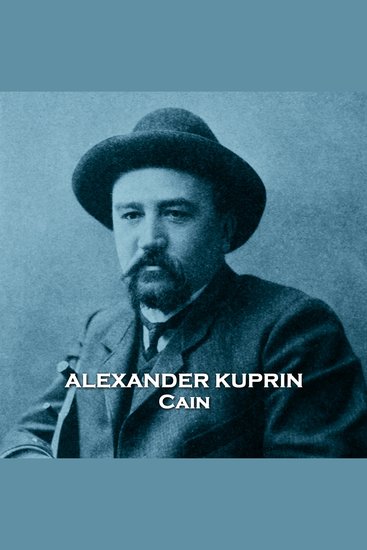
    Alexander Kuprin was born in Narovchat, Penza in Russia on 7th September 1870. 
    At 3 his Father died and he and mother moved to Moscow. By 10 he was enrolled at the Second Moscow Military High School and there his interest in literature began. The Alexander Military Academy followed and two years later he was a sub-lieutenant and posted to an Infantry Regiment for a further four years. 
    Despite his duties he was a now a keen writer and published his first short story at this time. His military duties also garnered him experiences for his breakthrough work ‘The Duel’.  Leaving the military he left for Kiev to work for local newspapers.  He continued to publish both stories and novels and by 1901 he was in St Petersburg becoming part of a group that included Chekhov, Ivan Bunin, Maxim Gorky and Leonid Andreyev.  
    In the years that followed further controversial works and acclaim followed.  His comments on the regime meant he was also put under secret police surveillance.   
    As World War I erupted, Kuprin opened a military hospital but was then given command of an infantry company in Finland. He was soon discharged on grounds of ill health.  
    The October Revolution saw him praise Lenin, but he warned that the Bolsheviks threatened Russian culture and might cause further widespread suffering to the peasants.  As Civil War raged he took his family to Helsinki and then on to Paris. 
    Exile saw his talents decline further and his succumbing to alcoholism. He became lonely and withdrawn. The family's poverty increased his malaise.   
    In May 1937, the Kuprin’s returned to Moscow.  He now saw his work published but wrote almost nothing new.  In 1938 his health rapidly deteriorated.  Already suffering from a kidney problems and sclerosis, he had now developed cancer of the oesophagus.  
    Alexander Kuprin died on 25th August 1938.
    Show book
  • Idiot The - Audiolbook - cover

    Idiot The - Audiolbook

    Fyodor Dostoevsky, Classic...

    • 0
    • 0
    • 0
    The Idiot is one of Fyodor Dostoevsky's most profound and philosophical novels, exploring the nature of goodness in a world driven by selfishness and ambition. The story follows Prince Lev Myshkin, a man of extraordinary kindness and sincerity, who returns to Russia after years of medical treatment abroad. His innocence and honesty set him apart from the manipulative society he encounters, where people view his goodness as either weakness or foolishness.As Myshkin navigates the complexities of high society, he becomes entangled in a web of relationships, each testing his ideals and moral strength. Dostoevsky uses his protagonist to pose fundamental questions about human nature, love, and the struggle between purity and corruption. The Idiot is a moving and thought-provoking novel that challenges readers to consider whether true goodness can survive in a world filled with deception and cruelty.
    Show book
  • The Crock of Gold - cover

    The Crock of Gold

    James Stephens

    • 0
    • 0
    • 0
    One of the great novels in the Irish comic tradition, The Crock of Gold (1912) consists of six parts. Bringing together pagan gods, policemen, prisoners, leprechauns and animals, the narrative concerns a philosopher and his quest to find the most beautiful woman in the world, Cáitilin Ni Murrachu, who has been abducted by the god Pan. His journey takes him from dark forests to the spectacular heights of pagan gods, as he experiences encounters that will change him forever.With its unique combination of philosophy and Irish folklore, The Crock of Gold is full of humour, its central themes including the battle of the sexes and the difference between men and women.
    Show book
  • The Wind in the Willows [A Softly Spoken Story] - cover

    The Wind in the Willows [A...

    Kenneth Grahame

    • 0
    • 0
    • 0
    Embark on a tranquil journey through Kenneth Grahame's beloved classic The Wind in the Willows in a new audiobook edition gently narrated by Miles Palmer. 
    Immerse yourself in the enchanting adventures of Mole, Ratty, Badger, and Toad as they navigate the serene landscapes of the English countryside.  
    Palmer's soothing and captivating voice brings this timeless tale to life, infusing each character's charm with a gentle warmth that makes for an immersive and relaxing listening experience. Transport yourself to the riverbank, where friendship blossoms, and whimsical adventures unfold. This audiobook edition is an invitation to rediscover the magic of friendship and the wonders of nature, delivered with a soft touch that makes it perfect for cozy evenings and quiet reflections.
    Show book
  • Possible Collapse of Civilisation The (Unabridged) - cover

    Possible Collapse of...

    H. G. Wells

    • 0
    • 0
    • 0
    Herbert George Wells (21 September 1866 - 13 August 1946) was an English writer. Prolific in many genres, he wrote dozens of novels, short stories, and works of social commentary, history, satire, biography and autobiography. His work also included two books on recreational war games. Wells is now best remembered for his science fiction novels and is often called the "father of science fiction", along with Jules Verne and the publisher Hugo Gernsback.
    THE POSSIBLE COLLAPSE OF CIVILISATION: (New Year, 1909.) The Editor of the New York World has asked me to guess the general trend of events in the next thirty years or so with especial reference to the outlook for the State and City of New York.
    Show book
