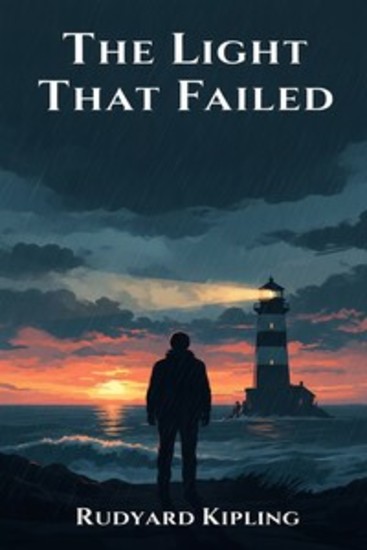
The Light That Failed
Rudyard Kipling
Editora: Bu Classics Books
Sinopse
A talented artist faces a tragic race against time as his eyesight fades, forcing him to confront the shattering loss of his passion and his independence.
Editora: Bu Classics Books
A talented artist faces a tragic race against time as his eyesight fades, forcing him to confront the shattering loss of his passion and his independence.
Catherine Ann Stevens was born on 20th September 1803 in Borough Green, Kent. She was mainly home-schooled. Her marriage to Major John Crowe seemed to be an unhappy one, although she had a son in 1823. By 1838 she was separated and living in Edinburgh where she was friends with several writers including de Quincey and Thackeray. By this time too her writing had given her both an audience and an income. In 1841 ‘The Adventures of Susan Hopley’ was the first of her books to establish her as a novelist and was followed by several others. She also wrote two plays, both with historical themes. A verse tragedy ‘Aristodemus’ (1838) and the melodramatic ‘The Cruel Kindness’ (1853) brought further but limited success. ‘The Adventures of Susan Hopley’ was reprinted several times as well as turned into a play and a penny serial. Her stories were also in demand from periodicals such as the weekly Chambers' Edinburgh Journal and Dickens's Household Words. Her own writing interests, inspired by German writers, turned to supernatural subjects. The collection ‘The Night-side of Nature’ (1848) became her most popular work. However, a bizarre episode happened in Edinburgh in February 1854, when she was discovered naked one night, convinced that spirits had rendered her invisible. After treatment she is said to have made a complete recovery. In her later literary career Crowe also wrote a number of children’s books. She now lived mainly in London though at times she settled abroad. In 1861 her finances tightened, and she sold her copyrights. In 1871 she moved to Folkstone Catherine Crowe died in Folkstone on 14th June 1876.Ver livro
This little novel by Robert Lewis Stevenson is a real classic of the "horror literature". Moreover, its popularity with time only increases. The scientist puts on a daring and dangerous experiment. From the depths of the subconscious, he releases his dark personality, the sinister scoundrel and murderer, Mr. Hyde. He causes an inexplicable disgust for everyone who communicates with him. Dr. Henry Jekyll, nevertheless, leaves a testament in which, in the event of his death, leaves all to Hyde.Ver livro
War at its most intense—rage, honor, and the cost of pride driving everything forward. The Iliad by Homer centers on a single, explosive conflict within the Trojan War: Achilles' fury. What begins as a personal grievance between warriors grows into something far greater, shaping the fate of armies and echoing across the battlefield. Combat is relentless, but the story is not just about war. It moves through grief, loyalty, vengeance, and the fragile humanity beneath the armor. Gods intervene, destinies collide, and every victory carries a price. Heard as an audiobook, it takes on a driving, almost hypnotic rhythm—voices clashing, emotions rising, and moments of stillness cutting through the chaos. The result is immediate and forceful, pulling the listener into a world where glory and loss exist side by side, and where even the greatest heroes cannot escape what is coming.Ver livro
Leslie Harrison Lambert was born on 11th November 1883 in Nottingham. After attending Rugby School he trained to be a surveyor. One of his passions was magic and such was his prowess that he joined The Magic Circle, and performed at society events. By the beginning of World War I he was an amateur radio ham and volunteered to work at a coastguard station in Norfolk to intercept German radio transmissions. By November 1914 he was with the Admiralty at Naval Intelligence Room 40. By 1919 this had become part of the new Government Code and Cypher School. He was still there as World War II erupted across Europe and with many of his colleagues he transferred to Bletchley Park. There, in Hut 8, he was quoted as saying that "in contrast to his outrageously unconventional stories" that he led his life on "a monotonously regular timetable". Life outside the Intelligence services was very different. He married but the couple had no children. They lived at Holland Park with a second home at Potter Heigham for sailing on the Norfolk Broads. Other interests were as an amateur radio operator, using the call sign G2ST, and an authority on food and wine. He contacted the BBC to suggest he might tell one of his own short stories on the radio. Thus was born A J Alan, and his broadcast of ‘My Adventure in Jermyn Street’, on New Year’s Eve, 1924. It was an immediate success and although he only broadcast a handful of times a year he was one of the most popular radio personalities of the time. He spent weeks working on each short story, honing his conversational style, making his stories seem like anecdotes that had peculiarly happened to him. A live broadcast was, in fact, a performance. He used cards to avoid any rustling noises and kept a candle lit in case the lights failed. His attire was a dinner jacket with eye glass, and a slim black briefcase. Many of his stories were subsequently printed in newspapers and magazines. By 1937 his health had deteriorated and he reduced his radio work making his last broadcast on 21st March 1940. A J Alan died on 13th December 1941.Ver livro
"A dashed awkward situation, if you know what I mean..." Bertie Wooster is in a positively radiant mood—which, as any seasoned observer will tell you, is precisely when things begin to go wrong in earnest. Between Bingo Little's latest and most imprudent romantic upheaval and a certain alarming development in the matter of a mauve shirt, Bertie finds himself on the brink of a crisis of the first water. In "Jeeves in the Springtime," the incomparable valet is already several moves ahead. While Bertie flounders and Bingo blunders, Jeeves is busy brewing the perfect tea and quietly steering events away from the sort of outcome that simply doesn't bear thinking about. A sparkling example of Wodehouse at his finest: effortless, elegant, and irresistibly funny. The only sensible companion for a spring morning in Mayfair.Ver livro
Willa Cather weaves a poignant and evocative tale of pioneer life on the Nebraska plains. In My Antonia we follow Jim Burden, a young boy who moves to Nebraska to live with his grandparents, and his close bond with Ántonia Shimerda, the spirited and resilient daughter of Bohemian immigrants. As they grow up, Jim and Ántonia experience the challenges and triumphs of life on the frontier, marked by hardship, love, loss, and the indomitable strength of the human spirit. A cornerstone of American literature, My Ántonia captures the heart and soul of the American West while offering up a profound meditation on friendship, identity, and the land that shapes us.Ver livro