Join us on a literary world trip!
Add this book to bookshelf
Grey
Write a new comment Default profile 50px
Grey
Subscribe to read the full book or read the first pages for free!
All characters reduced
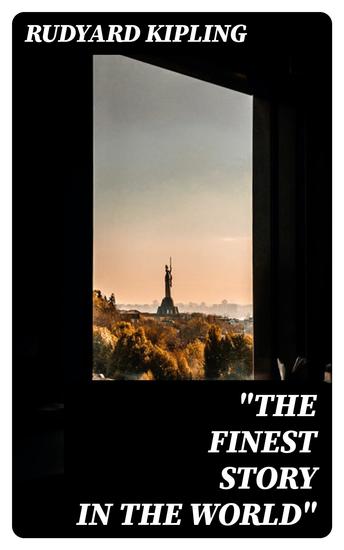
"The Finest Story in the World" - cover

"The Finest Story in the World"

Rudyard Kipling

Publisher: DigiCat

  • 0
  • 0
  • 0

Summary

In "The Finest Story in the World," Rudyard Kipling masterfully intertwines themes of identity, creativity, and the complexities of storytelling within the fabric of an ostensibly simple narrative. The tale unfolds as a metafictional exploration, where Kipling reflects on the nature of authorship through a young writer's quest for inspiration. Stylistically rich and imbued with Kipling's characteristic wit, the prose oscillates between the poetic and the profoundly philosophical, emphasizing the conflicts between imagination and reality, as well as the power of narrative to shape one's life and circumstances. Set against the backdrop of colonial India, this novella not only serves as an introspective journey for the protagonist but also resonates with the artistic struggles of its creator's own experiences during the late 19th century. Rudyard Kipling, born in India, brings a unique perspective to his writing, having navigated the complexities of British colonialism with an intimate lens. His experiences as a journalist and correspondent in India throughout the late 1800s and early 1900s profoundly informed his literary themes. "The Finest Story in the World" encapsulates Kipling's reflections on the role of the storyteller as both a participant and observer of the world's narratives, further enriched by his biographical context of belonging to two very disparate cultures. This compelling tale is a must-read for anyone fascinated by the art of writing and storytelling. It invites readers to reflect on their own creative processes and the inherent struggles that accompany the act of creation. Kipling's rich prose, coupled with profound insights into human nature and the artistry of narrative, makes this an essential addition to any literary collection.
Available since: 06/03/2022.
Print length: 26 pages.

Other books that might interest you

  • The Riddle of the Sands - cover

    The Riddle of the Sands

    Erskine Childers

    • 0
    • 0
    • 0
    "The Riddle of the Sands" stands as one of the earliest spy thrillers, an intriguing blend of adventure, suspense, and a genuine call to national vigilance. First published in 1903, Erskine Childers’s novel occupies a unique place in literary and historical context. Set against the backdrop of a world growing increasingly uncertain, this novel serves not only as a thrilling narrative but also as a reflection of the anxieties of pre-war Europe. Childers crafts a story so gripping and credible that it was heralded as both a piece of literature and a cautionary warning for an unprepared British government. 
    The story unfolds in the labyrinthine tidal channels and sandbanks of the Frisian Islands in the North Sea, where two young Englishmen, Carruthers and Davies, find themselves swept into an unintended espionage mission. What begins as a leisurely sailing holiday soon escalates into a daring adventure, as they uncover a clandestine German plot that could threaten England’s security. The novel's detailed nautical descriptions, drawn from Childers's own passion for sailing, lend an authenticity that deeply immerses the reader in the experience of navigating the sea and its lurking dangers. 
    Head Stories Audio presents "The Riddle of the Sands" by Erskine Childers. Narrated by Simon Hester. With original music.
    Show book
  • The Phantom of the Opera - cover

    The Phantom of the Opera

    Gaston Leroux

    • 0
    • 0
    • 0
    When stripped of the musical and cinematic additions which have clung to the story over the last 100 years, Gaston Leroux's tragic tale still sounds fresh and engaging. A beautifully crafted tale with at its heart the brooding, monstrous, yet pitiful figure of the Phantom. Around him swirl the young and naive lovers and the almost comic comings and goings of the 18th century Paris Opera House. 
    Head Stories Audio present this classic tale narrated by Simon Hester. With original music.
    Show book
  • Les Misérables: Volume 2: Cosette - Book 3: Accomplishment of the Promise Made to the Dead Woman (Unabridged) - cover

    Les Misérables: Volume 2:...

    Victor Hugo

    • 0
    • 0
    • 0
    Victor-Marie Hugo (26 February 1802 - 22 May 1885) was a French poet, novelist, essayist, playwright, and dramatist of the Romantic movement. During a literary career that spanned more than sixty years, he wrote abundantly in an exceptional variety of genres: lyrics, satires, epics, philosophical poems, epigrams, novels, history, critical essays, political speeches, funeral orations, diaries, and letters public and private, as well as dramas in verse and prose.
    BOOK 3: ACCOMPLISHMENT OF THE PROMISE MADE TO THE DEAD WOMAN: Montfermeil is situated between Livry and Chelles, on the southern edge of that lofty table-land which separates the Ourcq from the Marne. At the present day it is a tolerably large town, ornamented all the year through with plaster villas, and on Sundays with beaming bourgeois.
    Show book
  • master of ballantrae The: A winter's tale - cover

    master of ballantrae The: A...

    Robert Louis Stevenson

    • 0
    • 0
    • 0
    "The Master of Ballantrae: A Winter's Tale" is a novel written by Robert Louis Stevenson. The book was first published in 1889 and is set in the aftermath of the Jacobite rising of 1745 in Scotland. It tells the story of two brothers, James Durie and Henry Durie, who are on opposite sides of the conflict. The novel explores themes of loyalty, betrayal, and the consequences of political and personal choices. The narrative is framed as a mystery, as it follows the fate of the two brothers and their conflicting paths. The Master of Ballantrae, James Durie, is a complex and enigmatic character whose actions and decisions drive the plot forward. The story is rich in historical and atmospheric details, capturing the rugged landscapes of Scotland and the tumultuous period in which it is set.
    Show book
  • The Story of B24 - From their pens to your ears genius in every story - cover

    The Story of B24 - From their...

    Arthur Conan Doyle

    • 0
    • 0
    • 0
    Arthur Conan Doyle was born in Edinburgh, Scotland on 22nd May 1859.  His childhood was blighted by his father’s heavy drinking which for some years broke up the family. Fortunately, wealthy uncles were willing to support them by paying for education and clothing.  
    He was accepted at the University of Edinburgh to study medicine and also began to write short stories the first, ‘The Haunted Grange of Goresthorpe’, was published in Blackwood’s Magazine.  Despite several other stories and some articles in the British Medical Journal his medical studies took priority. 
    When these finished he was appointed as Doctor on the Greenland whaler ‘Hope of Peterhead’ in 1880 and then, after graduation, as ship’s surgeon on the SS Mayumba on its voyage to West Africa. 
    1882 saw a move to Plymouth and his own independent practice. With few patients he resumed writing and completed his first novel, ‘The Mystery of Cloomber’, although most of his output was short stories based on his experiences at sea.  
    He married Louisa Hawkins in 1885. However, two years later he met and fell in love with Jean Elizabeth Leckie, though they remained platonic out of respect for, and loyalty to, his wife. 
    His literary career suddenly burst into life in November 1886 with ‘A Study In Scarlet’, the first of the fabulously successful Sherlock Holmes stories.  
    With two children to support he now revisited his haphazard commercial arrangements and curtailed everything save for commissions from the Strand Magazine.  
    As a sportsman he was remarkably proficient. He was goalkeeper for Portsmouth Association Football Club and played ten first-class cricket matches for the Marylebone Cricket Club as well as captain of the Crowborough Beacon Golf Club in East Sussex.  
    In 1891 tired of writing Holmes stories, he began a series of historical novels and even went so far as to apparently kill off Holmes in a lethal brawl with his arch-nemesis Moriarty. 
    Despite heavy and sustained criticism he continued to write in support of the Boer War, a fact he thought contributed to his knighthood in 1902.  The following year to great relief and acclaim he brought Sherlock Holmes back from the dead in his first outing for a decade. 
    Sadly, his wife Louisa died from TB in 1906 and, a year later, he at last married Jean.  
    During the War and for several years after family deaths had left him depressed. In a search for solace and answers he alighted upon spiritualism and, such was his interest, that he wrote several books on the subject. 
    On 7th July 1930 Conan Doyle was discovered in the hall of Windlesham Manor, his house in East Sussex, clutching his chest dying of a heart attack.  He was 71.
    Show book
  • To the Lighthouse - cover

    To the Lighthouse

    Virginia Woolf

    • 0
    • 0
    • 0
    “What is the meaning of life? That was all — a simple question; one that tended to close in on one with years. The great revelation had never come. The great revelation perhaps never did come. Instead, there were little daily miracles, illuminations, matches struck unexpectedly in the dark; here was one.” 
      
    Mr. and Mrs. Ramsay and their eight children spend the summer holiday on Scotland’s Isle of Skye. When the family postpones their trip to a nearby lighthouse, the narrative evolves into a meditation on the subjectivity of art and the bittersweet impermanence of life. 
      
    This semi-autobiographical account invites fans of Virginia Woolf’s beloved classics Mrs. Dalloway and A Room of One’s Own to glimpse a more intimate exploration of the author’s own upbringing. Discover for yourself why To the Lighthouse was featured in the “ALL TIME 100 books list” of English-language novels published since the dawn of TIME magazine.
    Show book