Join us on a literary world trip!
Add this book to bookshelf
Grey
Write a new comment Default profile 50px
Grey
Subscribe to read the full book or read the first pages for free!
All characters reduced
The Complete Works of Rudyard Kipling - Enriched edition - cover

The Complete Works of Rudyard Kipling - Enriched edition

Rudyard Kipling

Publisher: DigiCat

  • 0
  • 0
  • 0

Summary

The Complete Works of Rudyard Kipling encapsulates the remarkable breadth and depth of Kipling's literary genius, showcasing his diverse range of stories, poems, and essays. This anthology not only includes his most celebrated works such as 'The Jungle Book' and 'Kim', but also lesser-known pieces that reflect the rich tapestry of colonial life and the intricate interplay of culture and identity. Kipling's literary style is characterized by vivid imagery, rhythmical prose, and an acute sense of place, while his nuanced portrayals of characters reveal a profound understanding of human psychology. Positioned within the context of late 19th and early 20th-century literature, his writing engages with themes of imperialism, adventure, and the moral dilemmas facing individuals amid societal upheaval. Rudyard Kipling (1865-1936) was born in British India, an experience that deeply influenced his worldview and literary output. His early exposure to the rich tapestry of Indian culture and colonial life shaped his narratives, infusing them with authenticity and insight. Kipling was awarded the Nobel Prize in Literature in 1907, marking him as the first English-language writer to receive this honor. His works reflect both admiration and critique of the British Empire, offering readers a complex portrayal of imperial life. For readers seeking a profound exploration of the human experience through the lens of colonialism and adventure, The Complete Works of Rudyard Kipling is an essential addition to any literary collection. This anthology not only celebrates Kipling's mastery of storytelling but also invites critical engagement with his thematic concerns—a testament to his enduring impact on literature and society.

In this enriched edition, we have carefully created added value for your reading experience:
- A comprehensive Introduction outlines these selected works' unifying features, themes, or stylistic evolutions.
- The Author Biography highlights personal milestones and literary influences that shape the entire body of writing.
- A Historical Context section situates the works in their broader era—social currents, cultural trends, and key events that underpin their creation.
- A concise Synopsis (Selection) offers an accessible overview of the included texts, helping readers navigate plotlines and main ideas without revealing critical twists.
- A unified Analysis examines recurring motifs and stylistic hallmarks across the collection, tying the stories together while spotlighting the different work's strengths.
- Reflection questions inspire deeper contemplation of the author's overarching message, inviting readers to draw connections among different texts and relate them to modern contexts.
- Lastly, our hand‐picked Memorable Quotes distill pivotal lines and turning points, serving as touchstones for the collection's central themes.
Available since: 11/13/2022.
Print length: 6100 pages.
Other books that might interest you

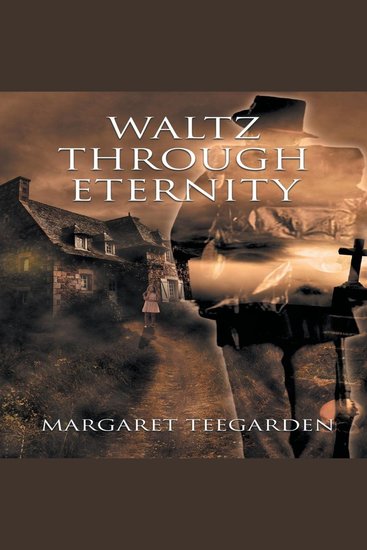
  • Waltz Through Eternity - cover

    Waltz Through Eternity

    Margaret Teegarden

    • 0
    • 0
    • 0
    Sit back and relax. Let your mind slip right into the characters of the pages that follow. When you completely drift into the lives of the characters you'll experience frustration, anger, hurt and despair and soon you'll feel pain and agony that lasts for all eternity. This type of suffering can only be relieved by truth and everlasting love.
    Show book
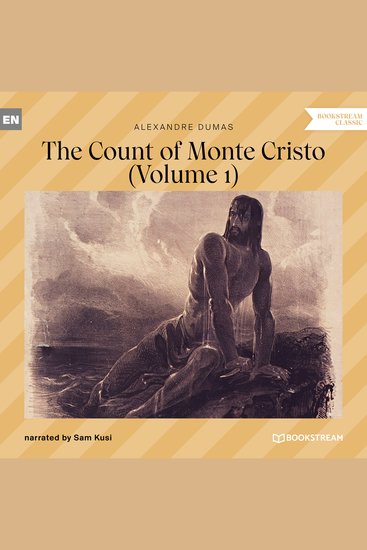
  • Count of Monte Cristo The - Volume 1 (Unabridged) - cover

    Count of Monte Cristo The -...

    Alexandre Dumas

    • 0
    • 0
    • 0
    Thrown in prison for a crime he has not committed, Edmond Dantes is confined to the grim fortress of If. There he learns of a great hoard of treasure hidden on the Isle of Monte Cristo and he becomes determined not only to escape, but also to unearth the treasure and use it to plot the destruction of the three men responsible for his incarceration. Dumas' epic tale of suffering and retribution, inspired by a real-life case of wrongful imprisonment, was a huge popular success when it was first serialized in the 1840s.
    VOLUME 1: On the 24th of February, 1815, the look-out at Notre-Dame de la Garde signalled the three-master, the Pharaon from Smyrna, Trieste, and Naples.
    Show book
  • White Fang - cover

    White Fang

    Jack London

    • 0
    • 0
    • 0
    It was the she-wolf who had first caught the sound of men's voices and the whining of the sled-dogs; and it was the she-wolf who was first to spring away from the cornered man in his circle of dying flame. The pack had been loath to forego the kill it had hunted down, and it lingered for several minutes, making sure of the sounds, and then it, too, sprang away on the trail made by the she-wolf. Running at the forefront of the pack was a large grey wolf—one of its several leaders.    It was he who directed the pack's course on the heels of the she-wolf. It was he who snarled warningly at the younger members of the pack or slashed at them with his fangs when they ambitiously tried to pass him. And it was he who increased the pace when he sighted the she-wolf, now trotting slowly across the snow. She dropped in alongside by him, as though it were her appointed position, and took the pace of the pack. He did not snarl at her, nor show his teeth, when any leap of hers chanced to put her in advance of him.    On the contrary, he seemed kindly disposed toward her—too kindly to suit her, for he was prone to run near to her, and when he ran too near it was she who snarled and showed her teeth. Nor was she above slashing his shoulder sharply on occasion. At such times he betrayed no anger. He merely sprang to the side and ran stiffly ahead for several awkward leaps, in carriage and conduct resembling an abashed country swain. This was his one trouble in the running of the pack; but she had other troubles.    On her other side ran a gaunt old wolf, grizzled and marked with the scars of many battles. He ran always on her right side. The fact that he had but one eye, and that the left eye, might account for this. He, also, was addicted to crowding her, to veering toward her till his scarred muzzle touched her body, or shoulder, or neck. As with the running mate on the left, she repelled these attentions with her teeth; but when both bestowed their attentions at the same time she was roughly jostled, being compelled, with quick snaps to either side, to drive both lovers away and at the same time to maintain her forward leap with the pack and see the way of her feet before her.    At such times her running mates flashed their teeth and growled threateningly across at each other. They might have fought, but even wooing and its rivalry waited upon the more pressing hunger-need of the pack. After each repulse, when the old wolf sheered abruptly away from the sharp-toothed object of his desire, he shouldered against a young three-year-old that ran on his blind right side. This young wolf had attained his full size; and, considering the weak and famished condition of the pack, he possessed more than the average vigour and spirit. Nevertheless, he ran with his head even with the shoulder of his one-eyed elder. When he ventured to run abreast of the older wolf (which was seldom), a snarl and a snap sent him back even with the shoulder again.    Sometimes, however, he dropped cautiously and slowly behind and edged in between the old leader and the she-wolf. This was doubly resented, even triply resented. When she snarled her displeasure, the old leader would whirl on the three-year-old. Sometimes she whirled with him. And sometimes the young leader on the left whirled, too. At such times, confronted by three sets of savage teeth, the young wolf stopped precipitately, throwing himself back on his haunches, with fore-legs stiff, mouth menacing, and mane bristling. This confusion in the front of the moving pack always caused confusion in the rear. The wolves behind collided with the young wolf and expressed their displeasure by administering sharp nips on his hind-legs and flanks. He was laying up trouble for himself, for lack of food and short tempers went together; but with the boundless faith of youth he persisted in repeating the manoeuvre every little while, though it never succeeded in gaining anything for him but discomfiture.
    Show book
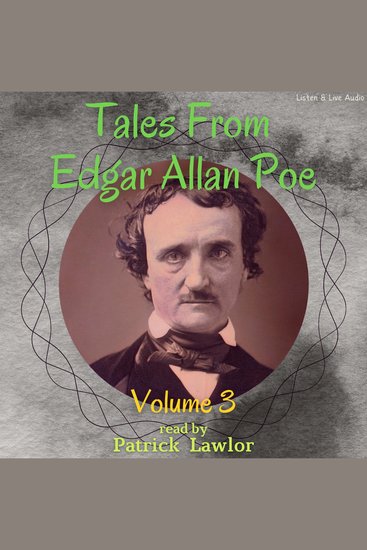
  • Tales from Edgar Allan Poe - Volume 3 - cover

    Tales from Edgar Allan Poe -...

    Edgar Allan Poe

    • 0
    • 0
    • 0
    Edgar Allan Poe was an American writer, poet, editor and literary critic, considered part of the American Romantic Movement.  
    Best known for his tales of mystery and the macabre, Poe was one of the earliest American practitioners of the short story and is considered the inventor of the detective-fiction genre.  He is further credited with contributing to the emerging genre of science fiction. Here is a third collection of some of his best stories:  "The Oblong Box", "M.S. Found In A Bottle", and "Loss of Breath".
    Don't miss the other volumes in the Tales from Edgar Allan Poe collection.
    Public Domain (P)2012 Listen & Live Audio, Inc.
    Show book
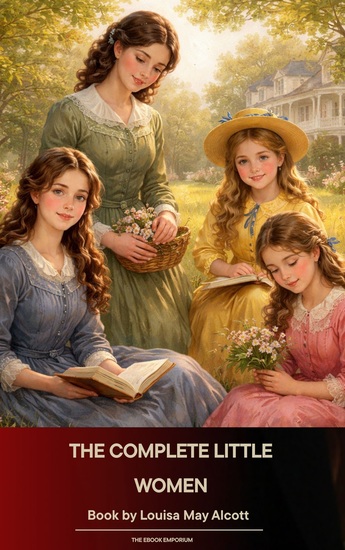
  • The Complete Little Women - cover

    The Complete Little Women

    Louisa May Alcott

    • 0
    • 0
    • 0
    What if the smallest moments shaped the greatest lives?
    
    The Complete Little Women brings together Louisa May Alcott's timeless story of the March sisters—Meg, Jo, Beth, and Amy—whose lives unfold with warmth, struggle, humor, and hope. Set during and after the American Civil War, this beloved classic celebrates family bonds, personal growth, and the journey from childhood to adulthood.
    
    Through everyday triumphs and heartbreaks, Alcott captures the beauty of ordinary life and the strength found in love, sacrifice, and perseverance. With unforgettable characters and gentle wisdom, Little Women continues to resonate with readers of all ages.
    
    This complete edition allows readers to experience the full arc of the March family's story in one cherished collection.
    
    Inside this eBook, you'll experience:
    
    The complete Little Women story in one collection
    
    A classic coming-of-age novel centered on sisterhood and family
    
    Themes of ambition, kindness, independence, and resilience
    
    A cornerstone of American and world literature
    
    Read in classrooms, shared in families, and adapted countless times for stage and screen, Little Women remains a story that feels like home.
    
    Return to a world of warmth, courage, and compassion. Buy now and enjoy The Complete Little Women.
    Show book
  • Pygmalion - cover

    Pygmalion

    George Bernard Shaw

    • 0
    • 0
    • 0
    Pygmalion is a play by George Bernard Shaw, named after the Greek mythological figure. It premiered at the Hofburg Theatre in Vienna on 16 October 1913 and was first presented in German on stage to the public in 1913. Its English-language premiere took place at Her Majesty's Theatre in the West End in April 1914 and starred Herbert Beerbohm Tree as phonetics professor Henry Higgins and Mrs Patrick Campbell as Cockney flower girl Eliza Doolittle.
    In ancient Greek mythology, Pygmalion fell in love with one of his sculptures, which then came to life. The general idea of that myth was a popular subject for Victorian era British playwrights, including one of Shaw's influences, W. S. Gilbert, who wrote a successful play based on the story called Pygmalion and Galatea that was first presented in 1871. Shaw would also have been familiar with the musical Adonis and the burlesque version, Galatea, or Pygmalion Reversed. Shaw's play has been adapted numerous times, most notably as the 1938 film Pygmalion, the 1956 musical My Fair Lady and its 1964 film version.
    Shaw mentioned that the character of Professor Henry Higgins was inspired by several British professors of phonetics: Alexander Melville Bell, Alexander J. Ellis, Tito Pagliardini, but above all, the cantankerous Henry Sweet.
    Show book