The Bridge-Builders
Rudyard Kipling
Publisher: Bu Classics Books
Summary
Witness an epic struggle of engineering and faith as a massive Victorian bridge project faces the wrath of nature and the judgment of ancient deities.
Publisher: Bu Classics Books
Witness an epic struggle of engineering and faith as a massive Victorian bridge project faces the wrath of nature and the judgment of ancient deities.
Between Flowers, Monsters and Mushrooms by Ben Featherstone is a wandering collection of wonderfully imperfect poetry, short stories and unique thoughts on life, forming a contemporary poetry and literary fiction audiobook. It is inspired from the humorous, peculiar sometimes dark margins of ordinary life experience. Expect stories and poems which go against standard structures and topics, written on and off from the age of 8 to 40 years old. Ben Featherstone is a composer and musician, some of his contemporary compositions are featured in this book, all of which are mastered at Abbey Road Studio's London. Moving through pubs, bedrooms, streets, memories and moments of quiet contemplation, Featherstone writes about beauty where it shouldn’t exist and tenderness where it is least expected. Love appears unfinished, men behave badly, women are luminous and dangerous, and meaning is often found by accident rather than design. This is not a book of answers. It is a book of noticing. Of walking without a map. Of humour rubbing shoulders with grief, and intimacy sitting uncomfortably between the cracks that let the light in. It is the fox looking upon the badger in the sea and realising he is not the furthest from home. At times romantic, at times raw, and often funny in the wrong places, Between Flowers, Monsters and Mushrooms is a poetry and short stories audiobook for listeners who prefer honesty over resolution, and beauty over certainty - leaning towards writing from the heart rather than following traditional poetry and story structures.Show book
Lady Blonze is hosting a Christmas party and wants to try a new idea to make it original. Her guest Blanche Boveal suggests a game where each guest has to act as a specific character consistently throughout the visit. At the end, everyone tries to guess each other's characters, and the best actor wins a prize. The story satirizes the upper-class society's attempts to create novel entertainment and their obliviousness to the potential consequences of their games. Saki's signature wit and dark humor are evident in the absurd situations the characters find themselves in while trying to act out their roles.Show book
Five short stories by classic science fiction writer H. Beam Piper.Show book
When Heath inherits his father's antique piano, he becomes consumed by mastering Beethoven's passionate sonata. But as his playing improves, a sinister thirst awakens within the instrument. Blending the psychological horror of Stephen King with Anne Rice's gothic sensibilities, this spine-tingling story explores the thin line between artistic devotion and madness. As the piano's hunger grows, Heath must face the terrifying possibility that some melodies are better left unplayed. If the Appassionata must be played, then the musician is really going to have to kill it!Show book
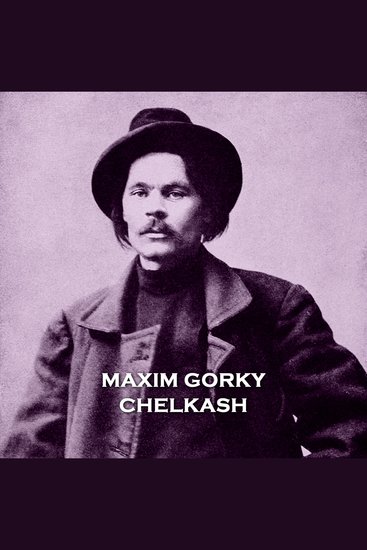
Alexei Maximovich Peshkov was born on 28th March 1868, in Nizhny Novgorod, Russia. Better known as Maxim Gorky he was orphaned at 11 and ran away from home at 12. At 19 he had already attempted suicide and thereafter travelled, by foot, across the Russian Empire for 5 years. His first book ‘Essays & Stories’ in 1898 was a sensation and so began a long career as an author of short stories, novels and plays. Gorky saw writing as a moral and political act that would help to change the unjust world around him. He was an ardent early advocate of the emerging Marxist movement and publicly opposed the Tsarist regime leading several times to his arrest. In 1904 he began his own theatre but the censor banned every play and Gorky was forced to abandon the project. But Gorky was a financially successful author, editor, and playwright and gave monies to political parties as well as for civil rights and social reform. The brutal shooting of workers, which set in motion the Revolution of 1905, pushed Gorky more decisively toward radical solutions. In 1906 he went to the United States to raise funds for the Bolsheviks. Those experiences including a scandal over travelling with his lover and not his wife deepened his contempt for the ‘bourgeois soul.’ Gorky now moved to Capri in Italy, both for health reasons and to escape the increasingly repressive times in Russia. An amnesty for the 300th anniversary of the Romanov dynasty saw him return to Russia in 1914. His politics remained close to the Bolshevik cause. But soon, after the 1918 revolution, his essays referred to Lenin as a tyrant for his senseless arrests and repression. He was soon appealing to the outside world for food aid after the catastrophic crop failure. In October 1921 Gorky returned to Italy, now in Fascist hands, and settled in Sorrento until 1932. His health worsened with the onset of tuberculosis. He wrote several successful books there but now decided to find an understanding with the communist regime. Stalin invited him home and his return was hailed as a major propaganda victory. He was decorated with the Order of Lenin, and a province, a park, and various streets re-named in his honour. But he had his faults too. In 1933, Gorky co-edited a book on the White Sea-Baltic Canal and denied even a single prisoner died during its construction, but thousands had. As well, knowing that some Nazis were homosexual, a phrase was attributed to him that said ‘exterminate all homosexuals and fascism will vanish’. Although he was himself was quoting another he was decidedly homophobic. With the increase of Stalinist repression in 1935 Gorky was placed under unannounced house arrest. Maxim Gorky died on the 18th June 1936 from pneumonia. He was 68. Stalin and Molotov were among those who carried Gorky's urn of ashes at his funeral. In Gorky’s story, a thief, Chelkash, ensnares a young man into his scheme to steal silk from a ship. When he then sells the stolen goods he is set upon by the young accomplice. What happens then is as unexpected as it is remarkable.Show book
Henry James was born 15th April 1843 in New York City. His youth was spent travelling with his family receiving what was an "extraordinarily haphazard and promiscuous" education as they journeyed through London, Paris, Geneva, Boulogne-sur-Mer and Newport, Rhode Island, according to the father's current interests and publishing ventures. James studied primarily with tutors and only briefly attended schools. Undoubtedly the quality of his writing has ensured his name is enshrined in the American literary tradition. James was a committed Anglophile and spent most of his adult life as an expatriate in Europe. Many of his novels juxtapose the Old World with the New World. Classics such as ‘The Portrait of a Lady’, ‘Daisy Miller’ and ‘The Ambassadors’, display the entanglement between American and European cultures and mentalities. They highlight the differences between the two worlds through following the experiences of American expatriates in Europe. A prolific author he was able to easily move across genres to create vivid and totally real worlds and situations and to offer sophisticated observations of human relations as well as realistic, social criticism. As a critic James was unafraid to venture into reviews and essays of those other literary giants around him. These together with his short stories and, of course, classic novels, make Henry James an author to be not only admired but read, and read often. In 1915 Henry James became a British citizen. On 28th February 1916, at the age of 72, Henry James died in Chelsea, London. He was nominated for the Nobel Prize in Literature in 1911, 1912 and 1916. He never won.Show book