Join us on a literary world trip!
Add this book to bookshelf
Grey
Write a new comment Default profile 50px
Grey
Subscribe to read the full book or read the first pages for free!
All characters reduced
Captain Courageous - cover

Captain Courageous

Rudyard Kipling

Publisher: DigiCat

  • 0
  • 0
  • 0

Summary

In "Captain Courageous," Rudyard Kipling crafts a poignant coming-of-age tale set against the backdrop of the sea, encapsulating themes of bravery, resilience, and self-discovery. Using a vivid and accessible narrative style, Kipling immerses readers in the vibrant world of fishing and the camaraderie among sailors. The novel is notable for its rich descriptions, skillful dialogue, and deep exploration of character, revealing the inner transformations of the young protagonist, Harvey Cheyne, as he grapples with his privileged upbringing and learns the value of hard work and integrity amidst nautical challenges. Rudyard Kipling, a Nobel Laureate born in India in 1865, embodies the complexities of colonial and post-colonial narratives. His varied experiences, ranging from his early life in British India to his later years in England, informed his exploration of moral and ethical dilemmas in human relationships, particularly in the face of adversity. "Captain Courageous" is a reflection of Kipling's fascination with the sea, as well as his acute insights into character development drawn from his interactions with diverse cultures and societies. This captivating narrative is highly recommended for readers seeking to delve into the intricacies of growing up and the essential qualities of courage and friendship. Kipling's masterful storytelling resonates across generations, making "Captain Courageous" not only an adventure at sea but also a timeless exploration of the human spirit.
Available since: 05/17/2022.
Print length: 244 pages.

Other books that might interest you

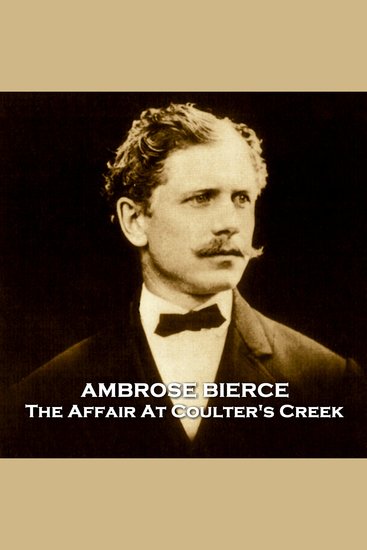
  • The Affair At Coulter's Creek - From their pens to your ears genius in every story - cover

    The Affair At Coulter's Creek -...

    Ambrose Bierce

    • 0
    • 0
    • 0
    Ambrose Gwinnett Bierce was born on 24th June 1842 at Horse Cave Creek in Meigs County, Ohio. His parents were poor but they introduced him to literature at an early age, instilling in him a deep appreciation of books, the written word and the elegance of language.  
    Growing up in Koscuisko County, Indiana poverty and religion were defining features of his childhood, and he would later describe his parents as “unwashed savages” and fanatically religious, showing him little affection but always quick to punish. He came to resent religion, and his introduction to literature appears to be their only positive effect. 
    At age 15 Bierce left home to become a printer’s devil, mixing ink and fetching type at The Northern Indian, a small Ohio paper. Falsely accused of theft he returned to his farm and spent time sending out work in the hopes of being published. 
    His Uncle Lucius advised he be sent to the Kentucky Military Institute. A year later he was commissioned as an Officer.  As the Civil War started Bierce enlisted in the 9th Indiana Infantry Regiment.  
    In April 1862 Bierce fought at the Battle of Shiloh, an experience which, though terrifying, became the source of several short stories. Two years later he sustained a serious head wound and was off duty for several months. He was discharged in early 1865.  
    A later expedition to inspect military outposts across the Great Plains took him all the way to San Francisco. He remained there to become involved with publishing and editing and to marry, Mary Ellen on Christmas Day 1871.  They had a child, Day, the following year.  
    In 1872 the family moved to England for 3 years where he wrote for Fun magazine. His son, Leigh, was born, and first book, ‘The Fiend’s Delight’, was published.  
    They returned to San Francisco and to work for a number of papers where he gained admiration for his crime reporting. In 1887 he began a column at the William Randolph Hearst’s San Francisco Examiner.  
    Bierce’s marriage fell apart when he discovered compromising letters to his wife from a secret admirer. The following year, 1889 his son Day committed suicide, depressed by romantic rejection. 
    In 1891 Bierce wrote and published the collection of 26 short stories which included ‘An Occurrence at Owl Creek Bridge’.  Success and further works including poetry followed.  
    Bierce with Hearst’s resources helped uncover a financial plot by a railroad to turn 130 million dollars of loans into a handout. Confronted by the railroad and asked to name his price Bierce answered “my price is $130 million dollars. If, when you are ready to pay, I happen to be out of town, you may hand it over to my friend, the Treasurer of the United States”.  
    He now began his first foray as a fabulist, publishing ‘Fantastic Fables’ in 1899.  But tragedy again struck two years later when his second son Leigh died of pneumonia relating to his alcoholism.  
    He continued to write short stories and poetry and also published ‘The Devil’s Dictionary’.  
    At the age of 71, in 1913 Bierce departed from Washington, D.C., for a tour of the battlefields where he had fought during the civil war. At the city of Chihuahua he wrote his last known communication, a letter to a friend. It’s closing words were “as to me, I leave here tomorrow for an unknown destination,” Ambrose Bierce then vanished without trace.
    Show book

  • The Pit and the Pendulum - cover

    The Pit and the Pendulum

    Edgar Allan Poe

    • 0
    • 0
    • 0
    "The Pit and the Pendulum" is a short story  written by Edgar Allan Poe and first published in 1842  in the literary annual The Gift: A Christmas and New  Year's Present for 1843. 
    The story is about the torments  endured by a prisoner of the Spanish Inquisition, though Poe skews historical facts. The narrator of the 
    story describes his experience of being tortured. The  story is especially effective at inspiring fear in the reader because of its heavy focus on the senses, such as sound, emphasizing its reality, unlike many of Poe's stories which are aided by the supernatural.
    Show book
  • A Cold Christmas and the Darkest of Winters - cover

    A Cold Christmas and the Darkest...

    Rasta Musick (Editor)

    • 0
    • 0
    • 0
    A Cinnabar Moth Publishing anthology, A Cold Christmas and the Darkest of Winters is a collection of short stories with themes that range from sad to dark to horrifying. Each story is set during Christmas or in Winter. Many talented authors worked to create these short stories, and we are proud to present them to you in this anthology. 
    The full list of contributing authors is included below: 
    Angelo Lorenzo 
    Vashelle Nino 
    Kisstopher Musick 
    T. War Powers Tilden 
    A.M. Weald 
    Chad Musick 
    Cynthia McDonald 
    Archita Mittra 
    Alexis Hansen 
    Ashe Thurman 
    Katie Groom 
    Elyse Russell 
    Joe Haward 
    Hector Duarte, Jr. 
    Suraya 
    Kasimma 
    Zoë Markham 
    Gwen C. Katz 
    André Santana 
    Roy Christopher 
    Frances Ogamba 
    Phoenix Blackwood
    Show book
  • Disappearing Act - A Host of Other Characters - cover

    Disappearing Act - A Host of...

    Robert Sheehan

    • 0
    • 0
    • 0
    Robert Sheehan is one of Ireland’s brightest stars of the screen, both at home and abroad. Best known for his roles in Love/Hate and The Umbrella Academy, Sheehan has received widespread critical acclaim for his acting talent 
     
    In his debut collection of short stories, Robert Sheehan disappears into characters, challenging the complacencies of everyday experience, often from entirely unexpected angles. 
     
    Informed by the author’s peripatetic life, Disappearing Act reflects on the absurdity of human behaviour. Sheehan delves deep into his characters’ streams of self-talk and self-imposed delusions, exploring the dark impulses that lurk below the shiny surfaces of many outwardly normal lives. 
     
    Dark, provocative and often humorous, the collection will stay with the listener long after the book is finished. 
     
    “A whacked-out kaleidoscopic miasma of delightful abandon and fun … you’ve seen Sheehan act – now watch him dazzle.” PATRICK MCCABE 
     
    “A dazzlingly eclectic collection of short stories” BEN ELTON 
     
    “Lots of great stories and voices. Reminded me of Irvine Welsh’s short stories” FRANKIE BOYLE
    Show book
  • The Count of Monte Cristo - cover

    The Count of Monte Cristo

    Alexandre Dumas

    • 0
    • 0
    • 0
    The Count of Monte Cristo (French: Le Comte de Monte-Cristo) is an adventure novel written by French author Alexandre Dumas (père) completed in 1844. It is one of the author's most popular works, along with The Three Musketeers. Like many of his novels, it was expanded from plot outlines suggested by his collaborating ghostwriter Auguste Maquet.The story takes place in France, Italy, and islands in the Mediterranean during the historical events of 1815–1839: the era of the Bourbon Restoration through the reign of Louis-Philippe of France. It begins on the day that Napoleon left his first island of exile, Elba, beginning the Hundred Days period when Napoleon returned to power. The historical setting is a fundamental element of the book, an adventure story centrally concerned with themes of hope, justice, vengeance, mercy, and forgiveness.Before he can marry his fiancée Mercédès, Edmond Dantès, a French nineteen-year-old first mate of the Pharaon, is falsely accused of treason, arrested, and imprisoned without trial in the Château d'If, a grim island fortress off Marseille. A fellow prisoner, Abbé Faria, correctly deduces that romantic rival Fernand Mondego, envious crewmate Danglars, and double-dealing magistrate De Villefort are responsible. Over the course of their long imprisonment, Faria educates Dantès and tells him of a cache of treasure he found. After Faria dies, Dantès escapes and finds the treasure. As the powerful and mysterious Count of Monte Cristo, he enters the fashionable Parisian world of the 1830s to avenge himself.
    Show book
  • Watch With Me - and Six Other Stories of the Yet-Remembered Ptolemy Proudfoot and His Wife Miss Minnie Née Quinch - cover

    Watch With Me - and Six Other...

    Wendell Berry

    • 0
    • 0
    • 0
    This volume of six linked stories and the novella from which the book derives its title is set in Port William from 1908 to the Second World War. Here Wendell Berry introduces two of his more indelible and poignant characters, Ptolemy Proudfoot and his wife Miss Minnie, remarkable for the comic and affectionate range that—with the mastery of this consummate storyteller working at the height of his powers—here approaches the Shakespearean. 


    Tol Proudfoot is huge, outsized, in the tradition of the mythic. The three-hundred-pound farmer, personally imposing and unkempt, is also the most graceful of presences, reserved and gallant toward his tiny wife, the ninety-pound schoolteacher. 


    Their contrasts are humorous, of course, and recall the tall tales of rural Americana. In the novella Watch with Me, we are given a story of such depth, breadth, and importance it earns being listed as one of the most important short stories written in the American language during the twentieth century.
    Show book