Join us on a literary world trip!
Add this book to bookshelf
Grey
Write a new comment Default profile 50px
Grey
Subscribe to read the full book or read the first pages for free!
All characters reduced
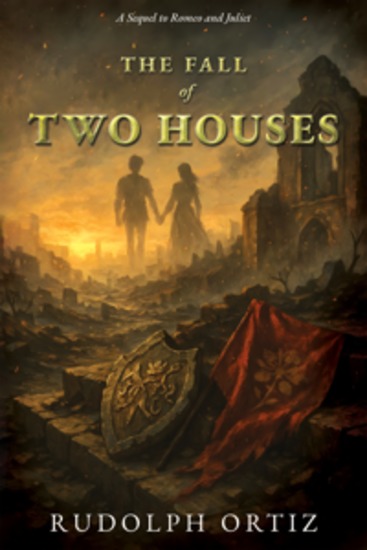
The Fall of Two Houses - A Sequel to Romeo and Juliet - cover

The Fall of Two Houses - A Sequel to Romeo and Juliet

rudolph ortiz

Publisher: rudolph ortiz

  • 0
  • 0
  • 0

Summary

The Fall of Two Houses is a lyrical, devastating sequel to Shakespeare’s Romeo and Juliet that explores what happens after the curtain falls—when the lovers are gone but the city still smolders. In the ruins of Verona, grief has not birthed peace. Instead, it has festered into silence, shame, and rage.Told in five acts and an epilogue, this full-length play follows Rosaline, Juliet’s cousin and Romeo’s first love, as she returns to a war-torn Verona and finds herself haunted by ghosts—both literal and emotional. Alongside a broken Friar Laurence, a mysterious child chronicler, and the city’s surviving citizens, Rosaline must confront the cost of silence, the mythologizing of tragedy, and the burden of those who outlive legends.As the houses of Montague and Capulet fall—some in flames, others by shame—the play examines generational trauma, inherited hate, and the question at the heart of all tragedy: What now?With rich roles for young and adult performers alike, The Fall of Two Houses offers a powerful platform for exploring themes of identity, grief, legacy, and truth. Characters who were once sidelined take center stage, and the voices that were silenced in Romeo and Juliet now rewrite the narrative in their own ink.This is not a love story.It is what comes after.The silence. The reckoning. The truth.Perfect for high school and college theater departments, drama competitions, and readers passionate about literary adaptation, The Fall of Two Houses is poetic and political, fierce and intimate. It holds up a mirror to the stories we inherit—and dares to ask who has the right to tell them.
Available since: 04/25/2025.
Print length: 109 pages.


Other books that might interest you

  • Bitter Punch - cover

    Bitter Punch

    Loh Guan Liang

    • 0
    • 0
    • 0
    Shortlisted for the 2018 Singapore Literature Prize 
     
     
    Bitter Punch is Loh Guan Liang’s second collection of poetry. With a wry eye for the everyday and its often forgotten characters, Loh explores what it means to live and love in the city. Even as it depicts the tension between ourselves and the spaces we inhabit, Bitter Punch still seeks sweetness in life’s hard, bitter moments. 
     
    "At the heart of Bitter Punch is the passing of love. Loh Guan Liang has constructed a personal map of elegiac half-escapes although his book is also a love letter to the enigmatic city that has been sustaining him. These poems will haunt you with its cool detachment, its overthinking, and its sombre rhythm in search of connection through words." 
    -Gwee Li Sui, poet and critic
    Show book
  • Poets & Their Trades – Lawyers - Poems from writers who were also lawyers - cover

    Poets & Their Trades – Lawyers -...

    John Donne, Wallace Stevens,...

    • 0
    • 0
    • 0
    The life and career of a Poet is often thought of as musing at a desk, or lying in a meadow, or on long journeys to find inspiration for their next masterwork.  But more often than not a poet was a part-time profession in subservient submission to their actual, salary-paying job.   
    In this volume we bring together those professionals we engage to bring the full force of the law to bear where we have been wronged, either personally or professionally.  Despite the complex morals of such work their verse sparkles with knowing and humane wisdom.
    Show book
  • Enough Rope - cover

    Enough Rope

    Dorothy Parker

    • 0
    • 0
    • 0
    “If I abstain from fun and such, / I'll probably amount to much, / But I shall stay the way I am, / Because I do not give a damn.” 
      
    American poet Dorothy Parker lived a life of heartache and hardship, but her writing became her weapon to fight back. She refused to temper her strong opinions, even at the cost of her editorial position at Vanity Fair. Parker continued to write—unfiltered and unapologetic—and found solidarity in community with other writers. Enough Rope was Parker’s first volume of poetry, featuring poems originally published in Life, Vanity Fair, and The New Yorker. Parker’s poetry has galvanized generations of strong-willed women, and the fire in her voice burns strong even a century after the first publication.
    Show book
  • Modern Poetry - Poems - cover

    Modern Poetry - Poems

    Diane Seuss

    • 0
    • 0
    • 0
    Diane Seuss's signature voice—audacious in its honesty, virtuosic in its artistry, outsider in its attitude—has become one of the most original in contemporary poetry. Her latest collection takes its title, Modern Poetry, from the first textbook Seuss encountered as a child and the first poetry course she took in college, as an enrapt but ill-equipped student, one who felt poetry was beyond her reach. Many of the poems make use of the forms and terms of musical and poetic craft—ballad, fugue, aria, refrain, coda—and contend with the works of writers overrepresented in textbooks and anthologies and those too often underrepresented. Seuss provides a moving account of her picaresque years and their uncertainties, and in the process, she enters the realm between Modernism and Romanticism, between romance and objectivity, with Keats as ghost, lover, and interlocutor. 


    In poems of rangy curiosity, sharp humor, and illuminating self-scrutiny, Modern Poetry investigates our time's deep isolation and divisiveness and asks: What can poetry be now? Do poems still have the capacity to mean? "It seems wrong / to curl now within the confines / of a poem," Seuss writes. "You can't hide / from what you made / inside what you made." What she finds there, finally, is a surprising but unmistakable love.
    Show book
  • Girl from the North Country - (2022 edition) - cover

    Girl from the North Country -...

    Conor McPherson, Bob Dylan

    • 0
    • 0
    • 0
    Duluth, Minnesota. 1934. A community living on a knife-edge. Lost and lonely people huddle together in the local guesthouse.
    The owner, Nick, owes more money than he can ever repay, his wife Elizabeth is losing her mind, and their daughter Marianne is carrying a child no one will account for.
    So, when a preacher selling bibles and a boxer looking for a comeback turn up in the middle of the night, things spiral beyond the point of no return...
    In Girl from the North Country, Conor McPherson beautifully weaves the iconic songbook of Bob Dylan into a show full of hope, heartbreak and soul. It premiered at The Old Vic, London, in July 2017, in a production directed by Conor McPherson, and later transferred to the West End, Broadway, Australia, Ireland and toured the UK.
    Show book
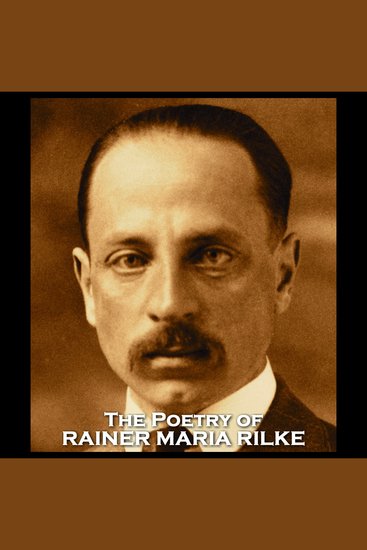
  • The Poetry of Rainer Maria Rilke - Collection from the hugely celebrated Austrian poet - cover

    The Poetry of Rainer Maria Rilke...

    Rainer Maria Rilke

    • 0
    • 0
    • 0
    René Karl Wilhelm Johann Josef Maria Rilke was born into a troubled marriage on the 4th December 1875 in Prague, then part of the Austro-Hungarian Empire.  His mother, having previously lost a baby girl, would dress the young boy up in girl’s clothing.   
    Later his father dispatched him to a military academy at age 10 but after a miserable 5 years the young Rilke left due to illness and instead entered first Prague and then Munich and finally Berlin university to study art history, philosophy and literature. 
    His initial forays into literature was in poetry.  His intense, mystical and lyrical style was much admired and over time inspired many in succeeding generations.    
    His short prose collection ‘Stories of God’, written in an impassioned burst over several nights was published in 1900 and offers a beguiling view of much of Rilke’s influences and outlook.  
    The following year he married the pioneering sculptor and artist Clara Westhoff.  The union produced one child, a daughter Ruth.   
    He lived in Paris for most of the Century’s first decade where he mixed with many great minds of the time.  Although he continued to write he also worked as a secretary to the sculptor, Rodin.   
    It was only after they settled in Switzerland in 1919 that his writing output was in full flow.  Here he wrote profusely in both German and French, which included much on his previous travels, his left-wing sympathies, his religious and existential thoughts, all part of a unique and consummate style. 
    From 1923 on, Rilke increasingly struggled with his health which was now in constant decline and often spent time rehabilitating at a sanatorium.   
    Rainer Maria Rilke died of leukaemia on the 29th December 1926 in Montreux, Switzerland.  He was 51.
    Show book