Join us on a literary world trip!
Add this book to bookshelf
Grey
Write a new comment Default profile 50px
Grey
Subscribe to read the full book or read the first pages for free!
All characters reduced
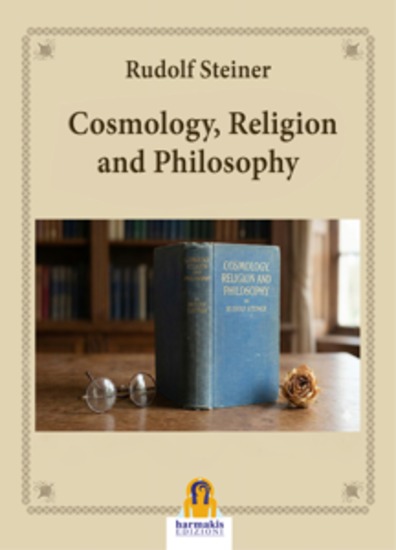
Cosmology Religion and Philosophy - cover

Cosmology Religion and Philosophy

Rudolf Steiner

Publisher: Harmakis Edizioni

  • 0
  • 0
  • 0

Summary

We are honored to present to the reader this seminal volume, a work of profound historical and spiritual significancewithin the corpus of Rudolf Steiner’s teachings. This collection preserves the complete series of lectures delivered during a pivotal moment in the history of the Anthroposophical movement: the opening of the celebrated “French Course” at the Goetheanum in Dornach. Commencing in the early autumn of September 1922, these lectures were not merely academic discourses; they represented a courageous effort to build cultural and spiritual bridges across a fractured Europe, invitingan international audience to engage with the deepest riddles of existence.
Available since: 01/26/2026.

Other books that might interest you

  • Among the Living and the Dead - A Tale of Exile and Homecoming on the War Roads of Europe - cover

    Among the Living and the Dead -...

    Inara Verzemnieks

    • 0
    • 0
    • 0
    "It's long been assumed of the region where my grandmother was born . . . that at some point each year the dead will come home," Inara Verzemnieks writes in this exquisite story of war, exile, and reconnection. Her grandmother's stories recalled one true home: the family farm left behind in Latvia, where, during WWII, her grandmother Livija and her grandmother's sister, Ausma, were separated. They would not see each other again for more than fifty years. Raised by her grandparents in Washington State, Inara grew up among expatriates, scattering smuggled Latvian sand over the coffins of the dead, singing folk songs about a land she had never visited. 


    When Inara discovers the scarf Livija wore when she left home, in a box of her grandmother's belongings, this tangible remnant of the past points the way back to the remote village where her family broke apart. There it is said the suspend their exile once a year for a pilgrimage through forests and fields to the homes they left behind. Coming to know Ausma and the trauma of her exile to Siberia under Stalin, Inara pieces together Livija's survival through years as a refugee. Weaving these two parts of the family story together in spellbinding, lyrical prose, she gives us a profound and cathartic account of loss, survival, resilience, and love.
    Show book
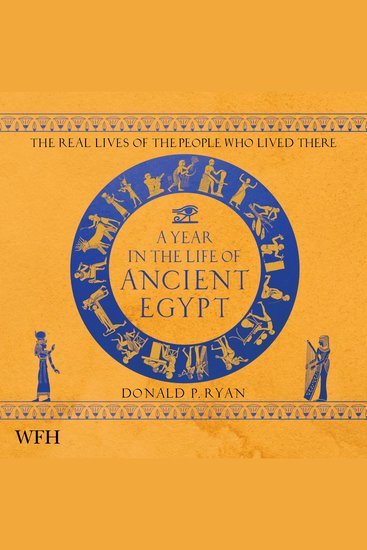
  • A Year in the Life of Ancient Egypt - cover

    A Year in the Life of Ancient Egypt

    Dr Donald P. Ryan

    • 0
    • 0
    • 0
    Spend a year in the company of the ancient Egyptians, during the twenty-sixth and final year of the reign of Amenhotep II (c.1400 BC), which saw a royal transition bringing Thutmose IV to the throne of Upper and Lower Egypt. 
     
    While builders from the secluded village of royal tomb workers rush to complete Amenhotep's tomb, and craftsmen labour to finish the numerous extravagant objects to accompany the god-king in his burial, most Egyptians go about their daily lives in ways unchanged for eons. 
     
    Following the Egyptian calendar year, which was divided into three seasons (inundation, sowing and harvest), we will meet a farmer and his family, an embalmer, an artisan, a royal physician, a priest and even a royal wife as they live their lives in Thebes and Memphis during the eighteenth dynasty of the New Kingdom in this remarkable year in ancient Egyptian history.
    Show book
  • Aliens - The Chequered History of Britain's Wartime Refugees - cover

    Aliens - The Chequered History...

    Paul Dowswell

    • 0
    • 0
    • 0
    The welcome given to refugees from fascist Europe is part of our fond nostalgia for Britain's role in the Second World War, nestling in our imagination next to images of evacuees clutching teddy bears, and milkmen picking their way through bomb rubble during the Blitz. But there is a darker side to this story. Then, as now, there was great suspicion, resentment and fear towards new arrivals, much of it kindled by the tabloid press. Then, as now, politicians dealt with a reluctance to accommodate refugees by hiding behind bureaucratic hurdles and obfuscation.
    Many of the 10,000 Kindertransport children who arrived here in the late 1930s have warm memories of the kindness they were shown, but half a million refugees were refused entry and most of them died as a result. And those who were accepted found their troubles far from over. While Britain fearfully awaited invasion in 1940, 30,000 Jews were interned as 'enemy aliens' and some were sent off to the colonies on dangerous and sometimes fatal voyages. Nor were Jews the only refugees clamouring for the thin gruel of public sympathy. Those fleeing fascism and civil war elsewhere in Europe found that whether they were met with kindness or hostility depended on the locals' political affiliations and newspapers of choice.
    Interweaving personal testimonies with historical sources, Paul Dowswell casts a fresh eye on the wartime era, painting a vivid picture of what life was really like for Britain's refugees.
    Show book
  • Ultimate Learning Spanish Blueprint The - 10 Essential Steps - cover

    Ultimate Learning Spanish...

    Andres Ramirez

    • 0
    • 0
    • 0
    Embark on a Journey through the Riches of Spanish: Your Comprehensive Path to Fluency 
    Imagine conversing with locals on a bustling street of Barcelona, deciphering the menu at an authentic tapas restaurant, and experiencing the soul-stirring literature of Gabriel García Márquez in its original form. All these become infinitely more within reach through "The Ultimate Spanish Learning Blueprint: 10 Essential Steps" - the only guide you'll ever need to navigate the beautiful and intricate Spanish language. 
    Begin your adventure with a solid foundation, as we delve into the nuances of Spanish language structureand pronunciation. These first keys to unlocking fluency are crafted for ease and understanding, setting you on a path with confidence. Next, bring the vibrant colors of Spanish culture into your home with step-by-step cultural immersion techniques, allowing you to live and breathe the language even before you set foot on Spanish soil. 
    As your journey progresses, watch your vocabulary bloom. No more feeling tongue-tied with essential phrases and expressions at your fingertips. Our holistic approach to grammar demystifies Spanish verbs and tenses, enabling you to weave your sentences together with the same grace and precision as a native speaker. And when it comes to conversation, our book guides you through shattering the invisible barrier of fear and stepping into everyday dialogues with newfound assurance. 
    Yet, what sets this blueprint apart are the tangible goals and personalized milestones that light up your path. Regular checkpoints ensure that motivation remains your constant companion, and any hurdles are deftly overcome. With a wealth of advanced learning strategies and a robust appendix of resources, this book is more than just an educational tool—it's a lifelong companion on your road to Spanish mastery. 
     
    Show book
  • How to Say No - An Ancient Guide to the Art of Cynicism - cover

    How to Say No - An Ancient Guide...

    Diogenes

    • 0
    • 0
    • 0
    The Cynics were ancient Greek philosophers who stood athwart the flood of society's material excess, unexamined conventions, and even norms of politeness and thundered "No!" Diogenes, the most famous Cynic, wasn't shy about literally extending his middle finger to the world. When asked why he was called Diogenes the Dog, he replied "because I fawn on those who give, I bark at those who don't, and I bite scoundrels." How to Say No is a delightful collection of brief ancient writings about Cynicism that captures all the outrageousness, wit, and wisdom of its remarkable cast of characters—from Diogenes in the fourth century BCE to the column-stander Symeon Stylites in late antiquity. 


    With their "less is more" approach to life, the Cynics speak urgently to our world of climate change, economic uncertainty, and psychic malaise. Although the Cynics weren't writers, their memorable utterances and behavior were recorded by their admirers and detractors, and M. D. Usher offers fresh new translations of appealing selections from this body of writing—ranging from street sermons and repartee to biography and snapshots of Cynics in action. 


    Complete with introductions to the volume, this lively book demonstrates why the Cynics still retain their power to surprise us and make us laugh—and to make us think and question how we live.
    Show book
  • The Politics of Maps - Cartographic Constructions of Israel Palestine - cover

    The Politics of Maps -...

    Izhak Schnell, Christine...

    • 0
    • 0
    • 0
    Blending science and technology studies, sociology, and geography with a host of archival material, in-depth interviews, and ethnographies, The Politics of Maps explores how the geographical sciences came to be entangled with the politics, territorial claim-making, and nation-state building of Israel/Palestine. Chapters chart the cartographic history of the region, from the introduction of Western scientific and legal paradigms that seemingly legitimized and depoliticized new land regimes to the rise of new mapping technologies and software that expanded access to cartography into the public sphere. Maps produced by various sectors like the "peace camps" or the Jewish community enhanced national belonging, while others, like that of the Green Line, served largely to divide. 


    The stories of Israel's many boundaries reveal that there is no absolute, technocratic solution to boundary-making. As boundaries continue to be controversial and the Israeli-Palestinian conflict remains intractable and unresolved, The Politics of Maps uses nationally-based cartographic discourses to provide insight into the complexity, fissures, and frictions within internal political debates, illuminating the persistent power of the nation-state as a framework for forging identities, citizens, and alliances.
    Show book