Join us on a literary world trip!
Add this book to bookshelf
Grey
Write a new comment Default profile 50px
Grey
Subscribe to read the full book or read the first pages for free!
All characters reduced
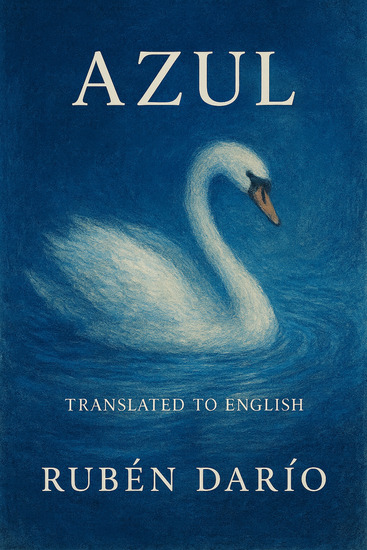
Azul - English version - cover

Azul - English version

Rubén Darío

Publisher: Legorreta

  • 0
  • 0
  • 0

Summary

Azul... (1888) by Rubén Darío is considered the foundational work of the Modernismo literary movement in Spanish-language literature. Written when Darío was only twenty-one, the book is a collection of poems and short stories that revolutionized the use of language, imagery, and rhythm in Hispanic poetry and prose. Published in Valparaíso, Chile, Azul... reflects Darío's fascination with beauty, art, and imagination. The title—meaning "Blue"—symbolizes idealism, purity, and the infinite, evoking the color of the sky and the sea. The book blends fantasy, musicality, and sensual imagery, drawing inspiration from French Symbolism and Parnassianism while introducing a distinctly Latin American voice. Among its most notable texts are El rey burgués, Sonatina, and El velo de la reina Mab, which explore the tension between materialism and artistic idealism. Through mythological references, exotic settings, and musical language, Darío defends art's power to elevate the spirit above the mundane. Azul... not only transformed Spanish literature but also established Rubén Darío as the "Prince of Spanish Letters," inspiring generations of poets to seek harmony, innovation, and beauty in expression.
Available since: 12/11/2025.
Print length: 100 pages.

Other books that might interest you

  • Your Therapist Says It’s Magical Thinking - Poems - cover

    Your Therapist Says It’s Magical...

    Sadie McCarney

    • 0
    • 0
    • 0
    Sadie McCarney’s Your Therapist Says It’s Magical Thinking is a buoyant second collection that playfully navigates the turbulent waters of life with mental illness and neurodivergence. In much of the book, history and science are treated the way they are often viewed by a brain in mental turmoil: places and events get switched around, facts get rewritten, and the fantastical reigns supreme. Through poems ranging from didactic (the horrible “self-care” advice received by the poet when she was struggling most) to historical fiction (patients in an asylum in 1800s England), to the quirky and unexpectedly fantastical (a rainbow carpool unicorn, a young child’s timeline reversing each morning, and an everything bagel that includes competing theories of time), McCarney digs deep into the muck of her own lived experience. She resurfaces with, if not gold, at least an old time capsule and a few treasured hunks of bone. Your Therapist Says It’s Magical Thinking highlights the sometimes dubious (but always jubilant) inner workings of a mentally unwell brain at play — especially within the context of a larger society that frequently seeks to tamp down this weird and rare form of magic.
    Show book
  • Leave Taking - cover

    Leave Taking

    Winsome Pinnock

    • 0
    • 1
    • 0
    'What doctor know about our illness? Just give you pills to sick you stomach and a doctor certificate. What they know about a black woman soul?'
    In North London, Del and Viv are soul-sick. Del doesn't want to be at home; staying out late – 3 p.m.-the-next-day late – is more her thing. Viv scours her schoolbooks trying to find a trace of herself between their lines.
    When Enid takes her daughters to the local obeah woman for some traditional Caribbean soul-healing, secrets are spilled. There's no turning back for Del, Viv and Enid as they negotiate the frictions between their countries and cultures.
    Two generations. Three incredible women. Winsome Pinnock's play Leave Taking is an epic story of what we leave behind in order to find home. It premiered in 1987, and was revived at the Bush Theatre, London, in 2018, in a production directed by the Bush's Artistic Director, Madani Younis.
    Winsome Pinnock has written numerous plays, including Talking in Tongues, for which she won the George Devine and Pearson Best New Play Awards.
    'The godmother of Black British playwrights' Guardian
    Show book
  • Nine Lessons and Carols - Stories for a Long Winter - cover

    Nine Lessons and Carols -...

    Chris Bush, Maimuna Memon

    • 0
    • 0
    • 0
    A play about connection and isolation, forged during the Covid pandemic, exploring what we hold on to in troubled times.
    Chris Bush's play Nine Lessons and Carols: Stories for a Long Winter, with songs by Maimuna Memon, was first staged at the Almeida Theatre, London, in 2020, directed by Rebecca Frecknall.
    Show book
  • Unmothered - cover

    Unmothered

    A J Akoto

    • 0
    • 0
    • 0
    A Debut collection from Black British poet A J Akoto. When is a mother a myth, and when is she a monster?
    In an intimate and unflinching collection, A J Akoto tracks the complex bind of mother-daughter relationships. Through separation and attempts to mend, longing, and the fluidity of myth/story-telling in defining histories and identities, she collapses the elision between womanhood and motherhood/daughterhood, bringing to the forefront that which usually remains unspoken.
    Show book
  • Kojak - The Prodigal Son - cover

    Kojak - The Prodigal Son

    Arthur Korb

    • 0
    • 0
    • 0
    A dramatic performance by the Power Performance Players of one of Kojak's cases from the fictional files of the New York Police Department.
    Show book
  • The Raven - cover

    The Raven

    Edgar Allan Poe

    • 0
    • 0
    • 0
    "Quoth the Raven, 'Nevermore.'"
    
    On a "bleak December" midnight, a weary student seeks refuge from his sorrow in ancient books, only to be interrupted by a mysterious tapping at his chamber door. What follows is a dark, psychological tug-of-war between a man paralyzed by the loss of his beloved Lenore and a "stately Raven" that perches atop a bust of Pallas. Through hypnotic rhythm and internal rhyme, Poe captures the precise moment when melancholy turns into incurable despair. The bird's singular, repetitive refrain becomes a mirror for the narrator's own self-torture, transforming a simple midnight visit into a timeless symbol of the human struggle with the finality of death.
    
    Poe famously wrote an essay, "The Philosophy of Composition," detailing how he meticulously crafted this poem to achieve a "unity of effect." Every element, from the choice of the raven as a "bird of ill omen" to the trochaic octameter of the verses, was designed to build a crescendo of dread.
    
    The Raven perches upon the bust of Pallas Athena (the goddess of wisdom), symbolizing the triumph of irrational grief over reason. By the poem's end, the narrator's soul is trapped within the shadow of the bird, signifying that for some types of grief, there is no escape and no "balm in Gilead."
    
    The Raven made Poe a household name almost overnight. Its musicality makes it one of the most effective pieces for oral recitation, while its psychological depth continues to fascinate scholars and horror fans alike. It is the definitive expression of the "Dark Romantic" movement—a beautiful, terrifying look at a heart that refuses to heal.
    
    Open the door to the shadows. Purchase "The Raven" today.
    Show book