Join us on a literary world trip!
Add this book to bookshelf
Grey
Write a new comment Default profile 50px
Grey
Subscribe to read the full book or read the first pages for free!
All characters reduced
Monsters of West Virginia - Mysterious Creatures in the Mountain State - cover

Monsters of West Virginia - Mysterious Creatures in the Mountain State

Rosemary Ellen Guiley

Publisher: Rowman & Littlefield Publishers

  • 0
  • 0
  • 0

Summary

Wild and wonderful West Virginia takes a turn for the weird with these accounts of Mothman, the Grafton Monster, Sheepsquatch, and more.   Every state and region has its own stellar cast of supernatural creatures, and West Virginia is no exception. Rosemary Ellen Guiley, the pioneering paranormal investigator, has spent a great deal of time in the Mountain State on the trail of entities, creatures, and all sorts of phenomena. These are her findings, featuring accounts of Mothman, the Grafton Monster, the Wampus Cat, the White Things, and other bizarre creatures, including Bigfoot, lizard people, and out-of-place panthers.  “Featuring tales of Mothman, the Sheepsquatch, and a host of lesser known West Virginia weirdness, Monsters of West Virginia is the perfect book for anyone with even a passing interest in West Virginia cryptozoology . . . a quick read by one of the most knowledgeable researchers of the paranormal in the country.” —Theresa’s Haunted History of the Tri-State
Available since: 06/14/2023.
Print length: 147 pages.

Other books that might interest you

  • RV - Everything You Should Know Before You Begin Your Life on the Road - cover

    RV - Everything You Should Know...

    Daniel Shore

    • 0
    • 0
    • 0
    In this guide, we embark on a journey beyond the confines of traditional living. Through these pages, you'll discover the allure of life on the road, where every mile holds the promise of adventure and every destination becomes a new chapter in your story. Whether you're a seasoned traveler or a curious wanderer, this book is your companion, offering insights into choosing the right RV, mastering the art of campground etiquette, and embracing the freedom of a life untethered. 
      
    But the RV lifestyle is more than just a mode of travel—it's a community, a culture, and a way of life. You'll meet fellow nomads who share their experiences, from breathtaking vistas to unexpected challenges, weaving a tapestry of camaraderie that transcends borders and backgrounds. From solo explorers to families on the go, everyone finds their place in the vibrant tapestry of RV living. 
      
    With practical advice, inspiring anecdotes, and expert guidance, This book is basically your passport to a world of endless possibilities. So buckle up, hit the road, and prepare to discover the extraordinary joys of life on wheels. Your adventure begins now.
    Show book
  • Footprint of a Heart - 18000 Miles of Stillness that Moves - cover

    Footprint of a Heart - 18000...

    Shayla Paradeis

    • 0
    • 0
    • 0
    *This Recording Includes Five Original Songs* 
    Imagine having all of you needs reduced to the things you can't live without; food, water, and shelter. 
    In Footprint of a Heart, Shayla Paradeis, whose trail name is Kiddo, ventures off the path of musical theater at age 21 and moves from Manhattan to Montana. Trading tap shoes for hiking boots, she sculpts a life outdoors as a long-distance hiker. By age 34, she hiked the Appalachian, Pacific Crest, and Continental Divide Trails, the Haute Route in the Alps, and the Te Araroa across New Zealand. As well as thousands of joyful miles running across the land of her dreams, Glacier National Park. All without a smart phone. 
    Kiddo shares the trailside moments of five long journeys, including barren deserts, windy ridges above tree line, ocean tides in estuaries, narrow spaces between the painted lines of highways and guardrails, and countless peaks, passes, meadows, and valleys. Her ventures take her through swarms of bugs, knee-deep mud, every kind of precipitation imaginable, and the threat of rattlesnakes, bears, charging bulls, and one angry mama turkey. 
    Journeys are often more internal than external. As she walks, she learns that counting miles can be a self-measurement as dangerous as body-image or money. The need to connect is the true north. With an openness taught through the trees, she experiences a fulfillment she never dreamed possible. Trails are no longer a thing to do, they're a place to be.
    Show book
  • Sustainable Travel For Dummies - cover

    Sustainable Travel For Dummies

    Lee Mylne

    • 0
    • 0
    • 0
    Sustainable Travel For Dummies is for travelers of all ages and budgets who want to reduce their carbon footprints, respect and protect the planet, contribute to local economies, and incorporate conservation into their travel experiences. This guide shows you what sustainable travel is, why it's important, and how to do it—with no travel shaming. Award-winning travel journalist Lee Mylne brings a global perspective on fun ways to travel responsibly. A must-have resource for globetrotters and for those whose travels keep them close to home, this book covers alternative transportation, unique accommodations, fulfilling cultural experiences, everything else the eco-savvy traveler needs to know. 


    ● Discover how to plan eco-friendly trips to destinations near and far 


    ● Reduce your carbon footprint while still enjoying life-affirming experiences 


    ● Learn about alternative methods of transportation and sustainable accommodations 


    ● Gain cultural awareness and get fun ideas for making the most of your travel 


    Sustainable Travel For Dummies is a must-listen for travelers who are new to sustainable and ethical travel and seeking practical tips for eco-conscious wandering.
    Show book
  • The Voyage of The Aegre - From Scotland to the South Seas in a Shetland boat - cover

    The Voyage of The Aegre - From...

    Nicholas Grainger

    • 0
    • 0
    • 0
    The Voyage of The Aegre is a dramatic true account of how a plan to sail a little fishing boat from the Highlands of Scotland down the coast to England turned into a trans-oceanic odyssey for Nick and Julie Grainger. It was the 1970s and their simple wooden boat was equipped with none of the aids modern yachts enjoy. Navigation was by sextant and compass, food cooked on a Primus, and weather forecasting by guesswork. Diligent preparation before they set sail eventually saved their lives in the violent storms and dangers they encountered, vividly described in this absorbing narrative. Their capsize at night in a fierce storm south of Tahiti and subsequent survival makes a gripping climax to the story. A born storyteller, the author has produced a stirring tale that ranks among classic sea adventures. 
    From a simpler age of sailing when you were led across oceans by the sun and the stars, this book deserves to join the classics. It is simply a top class read - Paul Heiney, Royal Cruising Club. 
    A terrific adventure - John Ridgway, 1966 North Atlantic rower, Round the World sailor, Adventurer, Author. 
    One of the greatest sailing stories I have ever read - John Quirk, Afloat magazine.
    Show book
  • History of Machu Picchu - The Greatest Symbol of the Inca Empire - cover

    History of Machu Picchu - The...

    Kelly Mass

    • 0
    • 0
    • 0
    Machu Picchu, one of the most iconic symbols of Inca civilization, is a 15th-century fortress perched high on a mountain crest in southern Peru's Eastern Cordillera. Sitting at an altitude of 2,430 meters (7,970 feet), it is located 80 kilometers (50 miles) northwest of Cusco, within the Machupicchu District of Urubamba Province. The fortress overlooks the Sacred Valley, and the Urubamba River winds through the valley below, cutting through the Cordillera and forming a tropical mountain canyon. This stunning geographical setting has made Machu Picchu one of the most visited and revered archaeological sites in the world. 
    Unlike the Mayans, the Incas had no written language, and thus, no records of the site existed during its operation. The first Europeans to visit Machu Picchu did so only in the 19th century, and as a result, much of its history remained shrouded in mystery. Modern archaeologists, relying on tangible evidence such as graves and structural remains, have attributed names and proposed functions for the buildings, but much of the site’s exact purpose remains speculative. 
    Most contemporary archaeologists believe that Machu Picchu was built as a royal estate for the Inca emperor Pachacuti, who ruled from 1438 to 1472. Constructed in 1450, the site functioned as a private residence for the emperor and his court. Over time, Machu Picchu became the most well-known image of Inca civilization and is often referred to as the "Lost City of the Incas." However, the estate was abandoned in the early 16th century, following the Spanish conquest of the Inca Empire. Recent radiocarbon dating indicates that the site was occupied from around 1420 to 1532.
    Show book
  • Egyptian Burial Practices - From Tombs to Pyramids - cover

    Egyptian Burial Practices - From...

    Omar Khalil

    • 0
    • 0
    • 0
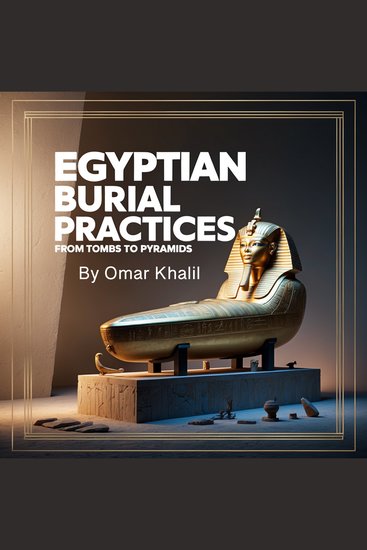
    The burial practices of ancient Egypt evolved significantly over millennia, reflecting changes in religious beliefs, social structures, and technological advancements. These practices were rooted in the belief in an afterlife, where the preservation of the body and the provision of necessary items were vital. From simple pit burials to grand pyramid constructions, the evolution of Egyptian burial customs offers valuable insights into the cultural and spiritual life of the civilization. 
    In the Predynastic period, burial customs were relatively simple, consisting of shallow pits in the desert sand. The dry, arid environment naturally mummified the bodies, preserving them for millennia. These early graves often contained personal belongings, such as pottery, jewelry, and tools, indicating a belief in a life beyond death. The positioning of the bodies, typically in a fetal position, also suggests a symbolic return to the womb, possibly signifying rebirth. 
    As Egypt unified and entered the Early Dynastic period, burial practices became more elaborate. The development of mastabas marked a significant shift in tomb architecture. These rectangular structures, made of mudbrick or stone, featured underground burial chambers and an above-ground offering chapel. Mastabas were primarily used by the elite, symbolizing their status and wealth. The inclusion of false doors and serdab chambers, which housed statues of the deceased, reflected the belief that the soul could interact with the living through offerings and rituals.
    Show book