Join us on a literary world trip!
Add this book to bookshelf
Grey
Write a new comment Default profile 50px
Grey
Subscribe to read the full book or read the first pages for free!
All characters reduced
Romantic Things - A Tree A Rock A Cloud - cover

Romantic Things - A Tree A Rock A Cloud

Mary Jacobus

Publisher: The University of Chicago Press

  • 1
  • 1
  • 0

Summary

Our thoughts are shaped as much by what things make of us as by what we make of them. Lyric poetry is especially concerned with things and their relationship to thought, sense, and understanding. In Romantic Things, Mary Jacobus explores the world of objects and phenomena in nature as expressed in Romantic poetry alongside the theme of sentience and sensory deprivation in literature and art. Jacobus discusses objects and attributes that test our perceptions and preoccupy both Romantic poetry and modern philosophy. John Clare, John Constable, Rainer Maria Rilke, W. G. Sebald, and Gerhard Richter make appearances around the central figure of William Wordsworth as Jacobus explores trees, rocks, clouds, breath, sleep, deafness, and blindness in their work. While she thinks through these things, she is assisted by the writings of Maurice Merleau-Ponty, Jacques Derrida, and Jean-Luc Nancy. Helping us think more deeply about things that are at once visible and invisible, seen and unseen, felt and unfeeling, Romantic Things opens our eyes to what has been previously overlooked in lyric and Romantic poetry.
Available since: 09/01/2012.
Print length: 232 pages.

Other books that might interest you

  • Win Every Argument - The Art of Debating Persuading and Public Speaking - cover

    Win Every Argument - The Art of...

    Mehdi Hasan

    • 0
    • 0
    • 0
    This program is read by and contains archival audio of the author from MSNBC, BBC Question Time, Oxford Union, and other sources. Win Every Argument shows how anyone can communicate with confidence, rise above the tit-for-tats on social media, and triumph in a successful and productive debate in the real world.MSNBC’s Mehdi Hasan isn’t one to avoid arguments. He relishes them as the lifeblood of democracy and the only surefire way to establish the truth. Arguments help us solve problems, uncover new ideas we might not have considered, and nudge our disagreements toward mutual understanding. A good argument, made in good faith, has intrinsic value—and can also simply be fun. Arguments are everywhere—and especially given the fierce debates we’re all embroiled in today, everyone wants to win. In this riveting guide to the art of argument and rhetoric, Hasan shows you how. As a journalist, anchor, and interviewer who has clashed with politicians, generals, spy chiefs, and celebrities from across the world, Hasan reveals his tricks of the trade for the first time. Whether you are making a presentation at work or debating current political issues with a friend, Mehdi Hasan will teach you how to sharpen your speaking skills to make the winning case.A Macmillan Audio production from Henry Holt & Company.
    Show book
  • Filthy Cuckold Sex Stories - cover

    Filthy Cuckold Sex Stories

    Ashley Winters, Vivica Reid,...

    • 0
    • 0
    • 0
    This sizzling-hot bundle packed full of five hot, filthy stories has everything you could want to get you going, including Hotwives, Bisexual, Lesbian, Sharing, Domination, Anal, Strap-On, and much much more.
    Show book
  • Crystallizing Public Opinion - Complete and Original Edition - cover

    Crystallizing Public Opinion -...

    Edward Bernays, Mitch Horowitz

    • 0
    • 0
    • 0
    The Bare-Knuckled Truths of Edward BernaysYou may not know Edward Bernays, but Edward Bernays knows you.  His 1923 classic Crystallizing Public Opinion set down the principles that corporations and government have used to influence and manipulate public attitudes over the past century, and the mass media continues that practice today.This seminal work on how public opinion is created and shaped, offers a glimpse into the world of propaganda and advertising. Bernays, who believes the public behaves like a herd of animals, shows how ideas about what to eat, and how we should look and dress can easily be put into our heads. He outlines how the masses can be controlled in whatever way the influencer chooses.This original and complete edition includes a new Introduction by PEN Award-winning historian, Mitch Horowitz.By adapting the ideas that this pioneering PR strategist, who considered himself part of an intellectual and economic elite entitled to govern public opinion and global policy, governments and advertisers have been able to “regiment the mind.” His work explains the popularity of today’s TV news shout-fests and angry social media posts because, as Bernays observed, crowds love a contest. This crowd-contest dynamic fuels the hostile and sarcastic comment chains that populate Twitter, Facebook, and other social media outlets.We know that beliefs can gain sudden popularity based on the public’s proclivity for seven factors: “flight-fear, repulsion-disgust, curiosity-wonder, pugnacity-anger, self-display-elation, self-abasement-subjection, parental-love-tenderness.”Named as one of the 100 most influential Americans of the 20th Century by Life magazine, Bernays’ clients included the American Tobacco Company, several U.S. presidents and the opponents of the Guatemalan revolution. This Austrian-born nephew of Sigmund Freud made a study of the different ways to use propaganda.  "Crystallizing Public Opinion" was his first major effort to sell himself and his philosophy of public relations.
    Show book
  • The Hindsight Bias - The Illusion of Foreseeing Outcomes After They Occur - cover

    The Hindsight Bias - The...

    William Rands

    • 0
    • 0
    • 0
    Hindsight bias, often referred to as the "knew-it-all-along" effect, is the cognitive phenomenon in which people perceive past events as having been more predictable than they actually were. After an event has occurred, individuals tend to believe they foresaw the outcome, even though there was no reasonable way to predict it at the time. This bias can distort our memories, judgments, and perceptions, leading us to think that we knew the outcome of a situation from the very beginning, even though the reality is quite different. 
    At its core, hindsight bias is rooted in how our brains process information. Once an event unfolds and its outcome is known, our minds tend to reconstruct our memories of the past to fit that outcome, making it appear as though we were more certain of the result all along. This creates a false sense of understanding and control, making it easier for us to believe that we could have anticipated the event, despite evidence to the contrary. It is a natural byproduct of how we seek coherence and meaning in our experiences, often bending the facts to align with our current understanding. 
    The implications of hindsight bias are vast and far-reaching, impacting a wide range of areas, including decision-making, learning, and judgment. In personal and professional contexts, it can lead to overconfidence, as individuals feel that they are more skilled at predicting outcomes than they truly are. This overconfidence can cloud judgment and hinder growth, as it prevents people from acknowledging mistakes or learning from their missteps. In legal contexts, it can distort the perception of whether certain decisions or actions were reasonable at the time they were made, often leading to unjust conclusions and unfair blame.
    Show book
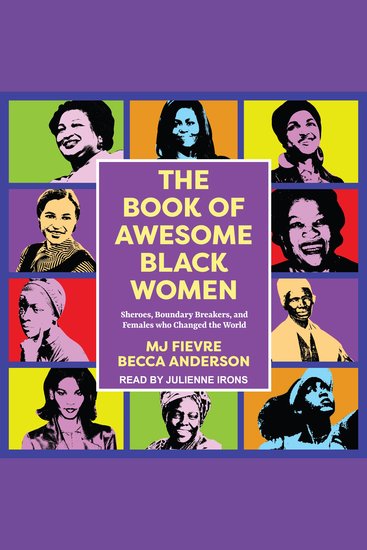
  • The Book of Awesome Black Women - Sheroes Boundary Breakers and Females Who Changed the World - cover

    The Book of Awesome Black Women...

    M.J. Fievre, Becca Anderson

    • 0
    • 0
    • 0
    An uncensored history of the power of Black women. Whether you learned about these women in school or not, these Black women changed society and inspired future generations. Learn all about women such as Sojourner Truth, Anita Hill, Wangari Maathai, Aretha Franklin, Simone Biles, Naomi Osaka, and so many more. Packed with mini biographies of big she-ros, The Book of Awesome Black Women features mighty Black women who are usually omitted from the history books. 


    The perfect gift for girls in your life. Driven by female empowerment, this collection of biographies tells the unique stories of strong voices that made a difference. From artists to activists, The Book of Awesome Black Women showcases a plethora of passions and skills to prove that strong is beautiful. 


    Inside The Book of Awesome Black Women, you'll learn to: 


    ● Recognize the importance of honoring Black intelligence, willpower, and passion 


    ● Celebrate the strength of these revolutionaries 


    ● Channel your inner womanhood 


    ● Discover powerful stories of accomplishments achieved by Black women
    Show book
  • The Impact of Technology on Society - Opportunities and Challenges - cover

    The Impact of Technology on...

    Craig Dames

    • 0
    • 0
    • 0
    Technology has been a driving force behind human progress, shaping societies and transforming the way people live, work, and communicate. From the earliest tools created by prehistoric humans to the advanced artificial intelligence of today, technological advancements have continuously redefined the boundaries of possibility. Understanding this evolution provides insight into how innovations have shaped civilization and what the future may hold. 
    The historical development of technology dates back to the invention of simple tools made from stone, wood, and metal. Early human civilizations relied on these tools for survival, gradually advancing to more sophisticated techniques in agriculture, construction, and warfare. The discovery of fire, the wheel, and the development of writing systems marked significant milestones that laid the foundation for future progress. The Industrial Revolution of the 18th and 19th centuries ushered in a period of rapid technological growth, introducing mechanized production, steam power, and transportation systems that reshaped economies and societies. 
    Key innovations have played a crucial role in shaping modern civilization. The invention of electricity revolutionized industries and led to the creation of household appliances, lighting, and communication systems. The 20th century saw remarkable advancements, including the telephone, radio, television, and, eventually, computers. These inventions not only improved the quality of life but also connected people across vast distances, fostering global communication and collaboration. The internet, developed in the late 20th century, became one of the most transformative innovations, changing the way individuals access information, conduct business, and interact socially.
    Show book