Join us on a literary world trip!
Add this book to bookshelf
Grey
Write a new comment Default profile 50px
Grey
Subscribe to read the full book or read the first pages for free!
All characters reduced
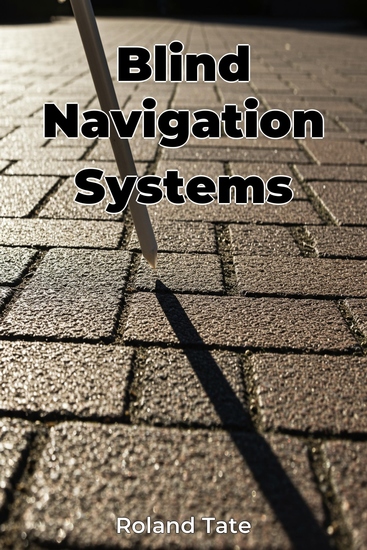
Blind Navigation Systems - cover

Blind Navigation Systems

Roland Tate

Translator A AI

Publisher: Publifye

  • 0
  • 0
  • 0

Summary

"Blind Navigation Systems" explores assistive technology empowering the visually impaired to navigate independently. It examines how digital tools and a deeper understanding of sensory strategies are revolutionizing mobility. The book highlights the evolution from tactile maps to advanced GPS-based systems, improving quality of life and fostering social inclusion.

 
Did you know that augmented reality smartphone applications are now providing real-time environmental feedback for users? Or that wearable sensors play a key role in obstacle avoidance? The book progresses from historical context to contemporary digital navigation tools, analyzing case studies and future trajectories. It emphasizes human-centered design, prioritizing user experience alongside technical specifications.

 
By considering cognitive load and emotional well-being, the book showcases how technology can augment spatial awareness. This book's unique approach makes it valuable for researchers, developers, and anyone interested in accessibility and independent living, bridging the gap between technology and accessible solutions.
Available since: 05/05/2025.
Print length: 79 pages.

Other books that might interest you

  • Acceptance and Commitment Therapy - Identify Your Core Values Apply ACT to OCD and PTSD and Regain Emotional Control - cover

    Acceptance and Commitment...

    Daniel Lotz

    • 0
    • 0
    • 0
    Break Free From What Holds You Back 
    Ever felt trapped by your own mind? Like your thoughts are quicksand pulling you deeper the more you struggle? You're not alone. 
    This audiobook speaks to anyone who knows what it's like when anxiety takes the wheel or when memories hijack your peace. It's for people who've tried "just thinking positive" and found it doesn't touch the real issues. 
    What you'll get: 
    •	Real talk about a therapy approach that doesn't promise to eliminate your difficult thoughts, but shows you something better - how to live fully even with them 
    •	A straightforward way to figure out what actually matters to you (not what you think should matter) 
    •	Specific help for OCD and PTSD that goes beyond the standard advice 
    •	Simple practices you can actually fit into your life 
    Who needs this: 
    •	If you're tired of being ruled by "what if" thoughts that spiral out of control 
    •	If traumatic experiences still color your world years later 
    •	If you've built your life around avoiding discomfort, only to find your world getting smaller 
    •	If therapy has helped but you want tools for the spaces between sessions 
    •	If you work in mental health and want fresh perspectives for your clients 
    The techniques shared here come from real clinical work with real people. They're explained in everyday language with examples that might make you think, "that's exactly how it feels." 
    Listen while driving, doing dishes, or before sleep. The beauty of these approaches is they don't require perfect focus or hours of meditation. Small shifts add up. Little moments of awareness create space for change. 
    This audiobook doesn't promise to fix you, because you're not broken. It offers a way to stop fighting yourself and start moving toward the life you want - even with uncertainty, even with difficult feelings, even with an imperfect mind.
    Show book
  • They Died on My Watch - 2024 Edition - cover

    They Died on My Watch - 2024...

    Noel Bailey

    • 0
    • 0
    • 0
     Who was the actress who died just before Christmas? She was the voice of …..... in …......
    Did Hitler commit suicide, or was he shot by Russian troops?
    Do you remember what year Princess Diana died in that car crash in Paris?
    How many husbands did Elizabeth Taylor divorce in her lifetime?
    What was that well known British actor who passed away right after David Bowie died? 
     Questions you might hear at the next table of your favourite eatery. Questions you may or may not know the answer to. They Died on My Watch can answer these and many more. It is a comprehensive reference work that should prove itself indispensable to any household. Most certainly a book to sustain interest when cruising at 35,000 feet between London and New York. It might be seen as the ultimate 'umpire' to settle any argument that may arise within a discussion involving a deceased celebrity, recent or not. 
    Show book
  • Goodfinding - A User's Guide to EQ and Your Brilliant Mind - cover

    Goodfinding - A User's Guide to...

    Ph.D. William G. DeFoore

    • 0
    • 0
    • 0
    You’re born with a brilliant mind, but it doesn’t come with a user’s guide or an on-off switch. Left to its own devices, it can feel like your worst enemy when its survival-based default program keeps you focused on what is wrong with you and your world. 
    This book is the user’s guide that puts you in charge of how your mind works. With positive psychology and emotional intelligence working for you, you will become the conscious creator you were born to be. 
    Goodfinding activates your brilliant mind with gratitude, appreciation, and optimism for your past, present, and future, deriving value and opportunity from all of your life experiences. 
    William G. DeFoore, Ph.D., a mental health counselor for more than fifty years, shares this roadmap to help you achieve your desired outcomes. The premise of the book is that you have a good heart, and when you use your brilliant mind effectively, it will be in direct service to that inner goodness. 
    Goodfinding will become your manual, guide, and companion as you expand into the best version of the person you choose to be. What you pay attention to grows, and finding the good helps the good find you.
    Show book
  • Second Alcibiades - Self-Knowledge and Prayer – Plato’s Dialogue on Piety Deliberation and the Limits of Political Ambition - cover

    Second Alcibiades -...

    Plato, Tim Zengerink

    • 0
    • 0
    • 0
    What if praying for the wrong thing led you further from the good? 
    In Second Alcibiades, Plato invites readers to a bold examination of prayer, intention, and the blindness of ambition. Socrates challenges the fiery young Alcibiades to reflect on whether he even understands what he should pray for before entering the political arena. 
    What you'll discover inside: 
    •	The Fragility of Political Ambition – A revealing dialogue between Socrates and Alcibiades on the ignorance behind power-seeking. 
    •	A Sharp Critique of Prayer – Philosophical guidance on why piety demands more than sincerity. 
    •	A Modern, Accessible Translation – Clear, faithful, and resonant for today’s listener. 
    •	Essential Themes of Plato’s Philosophy – Explore the timeless tension between desire, knowledge, and divine will. 
    More than a conversation—Second Alcibiades is a philosophical awakening.
    Show book
  • Cold Plunges and Contrast Baths (Hot Cold Hot Cold) - Finding Genius - cover

    Cold Plunges and Contrast Baths...

    Richard Jacobs

    • 0
    • 0
    • 0
    Richard Jacobs is a highly successful entrepreneur, accomplished podcast host, and author known for his significant contributions to various fields. As the founder of a research program and software platform, Richard has played a pivotal role in advancing groundbreaking work. 
    In October 2016, driven by a keen interest in emerging technologies such as artificial intelligence, 3D printing, regenerative medicine, Bitcoin, and blockchain, Richard embarked on a journey to unravel the mysteries of these fields. This passion culminated in the creation of the Future Tech Podcast. From the beginning, his goal was to find geniuses—the top 1% in their field who are almost impossible to reach from the outside. 
    Following a significant health crisis in 2017, Richard shifted his focus to health, medicine, and bioscience issues that impact us all, and the Finding Genius Podcast was born. His growing commitment to fostering understanding and innovation led him to establish the Finding Genius Foundation, a 501(c)(3) nonprofit supporting revolutionary research initiatives. 
    Driven by a mission to unearth transformative insights in the science of health and wellness, the foundation aims to make these insights accessible to everyday individuals who stand to benefit the most. Complementing this endeavor, Richard hosts two additional podcasts, The Good Question and Surviving Hard Times, both committed to delivering life-enriching and practical information. 
    Richard's extensive interviews with nearly 4,000 scientists, researchers, clinicians, CEOs, CSOs, entrepreneurs, and amateur scientists have resulted in a rich knowledge database and the Finding Genius book series, covering relevant and intriguing topics, including viruses, cancer, sleep health, and microplastics. He continues to be a driving force in entrepreneurship, podcasting, and philanthropy, leaving a lasting mark on the landscape of scientific exploration. 
    Show book
  • Peace As A Science - Towards A Unified Peace Theory - cover

    Peace As A Science - Towards A...

    Michelle Lightworker

    • 0
    • 0
    • 0
    What if peace isn’t a moral ideal… 
    but a measurable state of stability? 
      
      
    Peace As A Science reframes peace from aspiration to architecture — not as passivity or the absence of conflict, but as the stabilisation of complexity. 
      
    Drawing on neuroscience, systems theory, biology, physics, and lived human experience, this book explores a radical but grounded idea: 
      
    Peace behaves like a coherent field. 
      
    It can be observed in regulated nervous systems, traced in feedback loops and probability, strengthened through applied principles, and scaled — from the body to relationships, from culture to governance. 
      
    Through a peace lens, we reframe mental health as adaptive intelligence under rupture, neurodivergence as configuration, and justice as restorative rather than revenge — extending from identity through to education, healthcare, media, technology, and war. We move from inner experience to large-scale systems, asking how stability forms, how it breaks, and offering practical tools to repair and build peace. 
      
    It is rigorous, practical, occasionally funny, and deeply human. 
      
    Peace is dimensional and we explore how time travel might not require a machine, but awareness - because peaceful choices shift probability and alter trajectory. And yes, pop culture is part of the laboratory - because sometimes Yoda explains regulation better than a textbook. 


    Because if peace has structure, it can be studied. 
    If it can be studied, it can be practiced. 
    And if it can be practiced, it can be built. 
     
    Show book