Join us on a literary world trip!
Add this book to bookshelf
Grey
Write a new comment Default profile 50px
Grey
Subscribe to read the full book or read the first pages for free!
All characters reduced
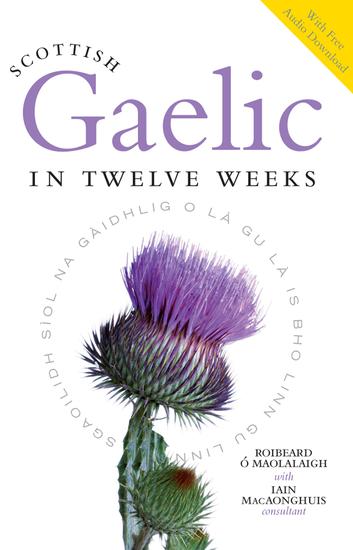
Scottish Gaelic in Twelve Weeks - With Audio Download - cover

Scottish Gaelic in Twelve Weeks - With Audio Download

Roibeard O'Maolalaigh

Publisher: Birlinn

  • 0
  • 0
  • 0

Summary

Scottish Gaelic in Twelve Weeks has been written both as a self-tuition course for beginners and also for use within the classroom. You may want to learn Gaelic because of a general interest in Celtic or Scottish history and culture, or because it was the everyday language of your ancestors. The cynical observer may wonder if the exercise is worthwhile, when only 1.5 per cent of Scotland's population speak the language.
However, Gaelic is far from dead; in some parts of the Highlands and Western Isles it is the everyday language and it represents an important part of the United Kingdom's cultural mix. There are Gaelic-learning classes in almost every area of Scotland. Each lesson in the book contains some essential points of grammar explained and illustrated, exercises, a list of new vocabulary (with a guide to pronunciation, using the International Phonetics Alphabet), and an item of conversation.
This new edition includes an audio download link.
Available since: 02/02/2023.
Print length: 240 pages.
Other books that might interest you

  • John Stuart Mill - Theories about the Economy and Utilitarianism - cover

    John Stuart Mill - Theories...

    Hector Davidson

    • 0
    • 0
    • 0
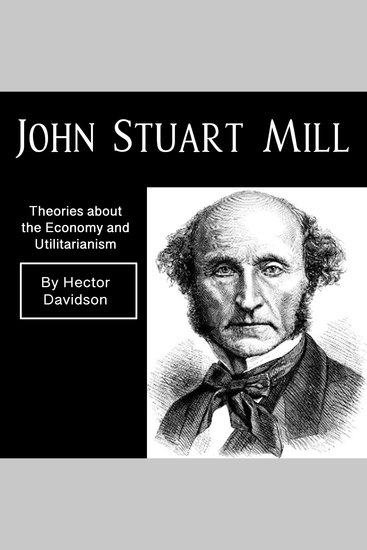
    John Stuart Mill, a British philosopher and political economist, remains one of the most influential thinkers of the 19th century. Born in 1806, Mill was exposed to rigorous intellectual training from an early age, particularly through his father, James Mill, a prominent utilitarian philosopher. This early exposure shaped Mill's understanding of the world, leading him to become a key figure in the development of utilitarianism, a moral theory that evaluates actions based on their ability to promote the greatest happiness for the greatest number of people. 
    Mill’s contribution to utilitarianism was both a continuation and a refinement of the ideas originally proposed by Jeremy Bentham, his intellectual predecessor. While Bentham’s version of utilitarianism focused primarily on the quantity of pleasure or pain produced by an action, Mill introduced a more nuanced view by distinguishing between higher and lower pleasures. According to Mill, pleasures of the intellect, imagination, and moral feelings were superior to those of mere physical satisfaction. This distinction between qualitative pleasures was central to Mill’s revision of utilitarian thought, emphasizing that the quality of happiness mattered as much as, if not more than, its quantity. 
    In this chapter, we explore the foundations of utilitarianism as laid out by Mill. He argued that the ultimate goal of human life is to achieve happiness, which can be defined as the presence of pleasure and the absence of pain. Mill believed that utilitarianism provided a clear and objective standard by which to judge actions, policies, and societal practices. The greatest happiness principle, which advocates for actions that maximize overall happiness, is a central tenet of Mill’s ethical framework. However, Mill also recognized the complexity of applying this principle in real-life situations, acknowledging the challenges of balancing individual rights with the greater good.
    Show book
  • Being and Neon - cover

    Being and Neon

    Luis de Miranda

    • 0
    • 0
    • 0
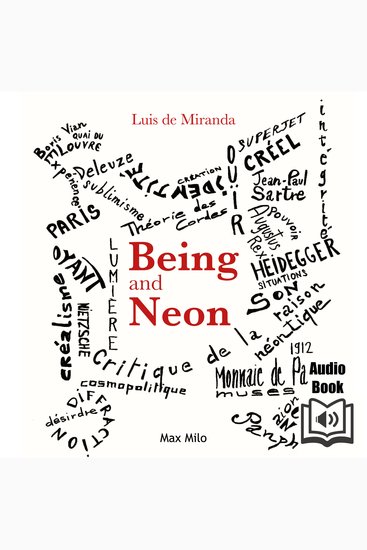
    “This little book is a jewel of intelligence, finesse and culture, which takes a technical object without complaint and turns it over and over as Heidegger taught us to do with Van Gogh's shoes. What is striking is the ambition of a meditation on the maps of contemporary modernity, on the famous Greater Paris, on the subject, on the plural, without the evasiveness of the postmodern, of the absurd quotation. Luis de Miranda goes for a walk, he tells you that he goes for a walk, but he leads you with great mastery and knows where he wants to go. There is nothing gratuitous about this encounter of the kebab shop on the dissection table of the City of Neon. It is rather a new Cartesian meditation after Descartes and Husserl: where the stove and its heat have given way to the whirling sound of gas in a tube. I am, I create, therefore I hear. “Born from an unexpected encounter with a neon sign on the Quai du Louvre, this book was composed based on a seminar given by the author in the winter of 2012. An inspired journey through the night, deciphering the halos of the past and the reflections of the present to give voice to a certain magic of the future.
    Show book
  • A Rare Recording of John Steinbeck's 1962 Nobel Prize in Literature Speech - cover

    A Rare Recording of John...

    John Steinbeck

    • 0
    • 0
    • 0
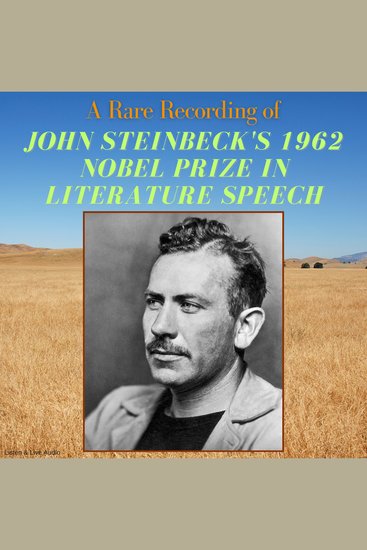
    John Ernst Steinbeck (February 27, 1902 - December 20, 1968), born in Salinas, CA, was an American writer who won the 1962 Nobel Prize in Literature "for his realistic and imaginative writings, combining as they do sympathetic humor and keen social perception." His writings include the novels Of Mice and Men (1937), the Pulitzer Prize–winning The Grapes of Wrath (1939), and East of Eden (1952). The following is Steinbeck's speech at the Nobel Banquet at the City Hall in Stockholm, December 10, 1962.
    Show book
  • Indigenous Spirituality and Global Wisdom - Discover how Indigenous spirituality reveals the timeless truths shared by all great religions - cover

    Indigenous Spirituality and...

    Mayur Katariya

    • 0
    • 0
    • 0
    What if the key to a more connected and mindful life lies in ancient wisdom, we've overlooked?  
    This audiobook explores the spiritual traditions of Indigenous Australians, with a focus on the practice of Dadirri—a deep form of listening and contemplation.  
    It also examines parallels between Indigenous spirituality and other global wisdom traditions, such as Zen Buddhism, Vedic traditions, and Christian mysticism. By the end of the book, learners will develop a deeper understanding of Indigenous spirituality, its holistic worldview, and how these practices can be integrated into their personal and spiritual lives.  
    This is not just a journey into history—it may transform the way you approach your own spiritual and personal growth.  
    This is a lesson in why the wisdom of Indigenous cultures remains profoundly relevant today, for all of us.
    Show book
  • The Fallacy of Freedom - cover

    The Fallacy of Freedom

    Gregory Heary

    • 0
    • 0
    • 0
    How can you achieve true freedom in a society laden with diverse and often conflicting beliefs? This book cuts through the noise, offering clarity on what it means to be free in a world governed by ideologies.Exploring the notion of freedom, this book presents a riveting analysis of its impact on society and individual minds. It highlights the tension between the advocates of free speech and expression and those who perceive these freedoms as threats. By dissecting the actions and motivations of both supporters and critics of freedom, the book provides a unique lens through which to view our own beliefs. The book delves deep into the battleground of ideologies where freedom clashes with traditional and modern beliefs. Proponents of freedom argue for its necessity in expression and innovation, while its opponents criticize its potential for leading to chaos and moral decay. Through a detailed analysis of these conflicting viewpoints, this book illuminates the complexities of freedom in society. It examines how historical and religious teachings shape our understanding and practice of freedom, advocating for a balanced mental hygiene that aligns with divine guidance. By embracing this approach, you're not just informed but transformed, equipped to use your freedom wisely and in ways that contribute to personal and communal well-being. This astute analysis not only clarifies what it means to be truly free but also challenges you to examine your own beliefs and the societal norms that shape them. It navigates the intricate dynamics of freedom and control, offering you a path to a more enlightened, purpose-driven life.Unlock the path to true freedom and mental clarity by picking up this book today!
    Show book
  • Marriage Tudor Style - Love Hate & Scandal - cover

    Marriage Tudor Style - Love Hate...

    Sylvia Barbara Soberton

    • 0
    • 0
    • 0
    Step into the world of scandalous Tudor-era marriages in this delicious book from Sylvia Barbara Soberton . . . 


    The newly-wed Anne Hastings faced her husband's wrath when her affair with William Compton was made public. Mary Tudor married to satisfy her brother's political need to ally with France, but when her decrepit royal husband died, she married the dashing Charles Brandon for love. William Parr, humiliated by his wife's extramarital affair, sought a divorce to marry the woman he loved. 


    Trapped in loveless marriages, women like Anne Parr and Anne Grey eloped with their lovers, risking their reputations and livelihoods to find personal happiness. 


    Courtiers like Mary Boleyn, Margaret Douglas, Edward Seymour, and Robert Dudley faced royal wrath when marrying for love. Some returned to royal favor, but others languished in prison, dying without obtaining a pardon. 


    Teeming with unforgettable stories, scandals and courtiers who followed their hearts over their duties, this book is a must-listen for anyone who loves a blend of intrigue, romance, and historical splendor set against the backdrop of the Tudor court.
    Show book