Join us on a literary world trip!
Add this book to bookshelf
Grey
Write a new comment Default profile 50px
Grey
Subscribe to read the full book or read the first pages for free!
All characters reduced
An Annotated Bibliography of the Apollo Program - cover

An Annotated Bibliography of the Apollo Program

Roger D. Launius, J. D. Hunley

Publisher: DigiCat

  • 0
  • 0
  • 0

Summary

An Annotated Bibliography of the Apollo Program offers an extensive exploration into the seminal space program that reshaped human understanding of space and possibility. This comprehensive collection encompasses a broad spectrum of literary styles, from analytical essays to detailed technical accounts, capturing the multifaceted nature of the Apollo missions. The work stands as a significant scholarly resource, reflecting on the technical, cultural, and sociopolitical implications of these historic endeavors. The anthology's wide-ranging contents are punctuated by notable pieces that probe deeply into the complexities of achievement and challenge, setting the tone for a reflective discourse on space exploration. Edited by esteemed historians Roger D. Launius and J. D. Hunley, the collection brings together contributions from leading experts who have shaped current discourse on space history. The contributors are not only recognized for their scholarly work but also for their ability to connect historical narratives with contemporary space exploration principles. This anthology aligns with broader cultural and scientific movements, offering a rich tapestry of interpretations that encapsulate the Apollo Program's place within the larger saga of human innovation and aspiration. Readers are invited to engage with this anthology not just as a collection of historical documents but as an insightful educational experience. The volume provides an unparalleled opportunity to delve into the myriad perspectives and technical analyses that encapsulate this defining era of space exploration. By navigating through these diverse contributions, one gains a profound appreciation for the Apollo Program's legacy and its enduring influence on both past and future generations. This collection is a vital resource for anyone seeking to expand their understanding of space history and the transformative power of human endeavor.
Available since: 08/10/2022.
Print length: 131 pages.


Other books that might interest you

  • Boris Flies To The Moon - cover

    Boris Flies To The Moon

    Kerry Kennedy

    • 0
    • 0
    • 0
    Children's story book for up to 6 years of age 
    Suitable 0-6 years 
    A short story about a cat named Boris who falls asleep one night and wakes up on a magic rug. 
    Follow the adventure of Boris and his magic rug. 
    Introducing his cat family, Bonnie, Zeus and Pirate 
    A magical tale of what dreams are made of
    Show book
  • Ireland - Historical Background and Interesting Facts - cover

    Ireland - Historical Background...

    Kelly Mass

    • 0
    • 0
    • 0
    This is a combo of two titles, which are about the following topics: 
    The Partition of Ireland: The Federal government of the U.K. of Great Britain and Ireland segmented Ireland into 2 independent polities: Northern Ireland and Southern Ireland. The government of Ireland Act 1920 was handed down May third, 1921. Both parts were to stay inside the UK, and the Act included arrangements for supreme reunification. 
    Northern Ireland was established with a devolved federal government and stayed a part of the U.K. Most occupants of Southern Ireland didn't recognize the self-proclaimed Irish Republic, choosing to recognize the larger Northern Ireland. The area of Southern Ireland withdrew from the U.K. and ended up being the Irish Free State, which is today the Republic of Ireland, following the Anglo-Irish Treaty. 
    The Irish Potato Famine: The year 1847, at times called "Black '47," was the absolute worst year of the period. Around 1 million people died and over a million left the nation throughout the Great Cravings, triggering the nation's population to come by 20% to 25%, with certain cities coming by as much as 67 percent between 1841 and 1851. And between the years 1845 and 1855, about 2.1 million people were leaving Ireland, primarily aboard package ships but also on steamboats and barks. This actually made it one of the biggest mass migrations from a single isle in all of history. 
    Let’s explore this tragic event in history, and let’s see what led up to this, what happened afterwards, and how historians look at it now.
    Show book
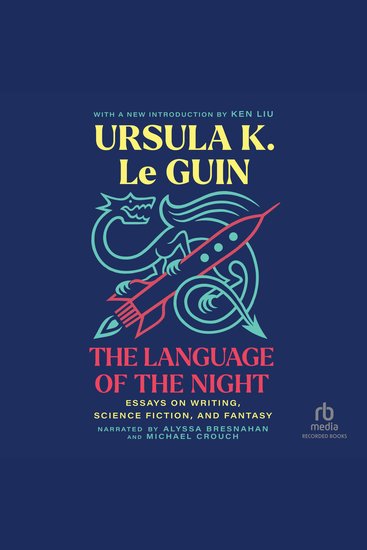
  • The Language of the Night - Essays on Writing Science Fiction and Fantasy - cover

    The Language of the Night -...

    Ursula K. Le Guin

    • 0
    • 0
    • 0
    Featuring a new introduction by Ken Liu, this revised edition of Ursula K. Le Guin’s first full-length collection of essays covers her background as a writer and educator, her thoughts on writing, and her commentary on literary science fiction and fantasy and their future. 
     
    “We like to think we live in daylight, but half the world is always dark; and fantasy, like poetry, speaks the language of the night.”—URSULA K. Le GUIN 
     
    Le Guin’s sharp and witty voice is on full display in this collection of twenty-four essays, revised by the author a decade after its initial publication in 1979. The collection covers a wide range of topics and Le Guin’s origins as a writer, her advocacy for science fiction and fantasy as mediums for true literary exploration, the writing of her own major works such as A Wizard of Earthsea and The Left Hand of Darkness, and her role as a public intellectual and educator. The book and each thematic section are brilliantly introduced and contextualized by Susan Wood, a professor at the University of British Columbia and a literary editor and feminist activist during the 1960s and ’70s. 
     
    A fascinating, intimate look into the exceptional mind of Le Guin, whose insights remain as relevant and resonant today as when they were first published.
    Show book
  • I Heard What You Said - A Black Teacher A White System - cover

    I Heard What You Said - A Black...

    Jeffrey Boakye

    • 0
    • 0
    • 0
    An Amazon Best Non-Fiction Book of 2022'Essential reading' - The Guardian'Sharp and witty with moments of startling candour' - The i'Makes a powerful case' - Rt Hon Lady Hale‘Revealing and beautifully written’ - David Harewood________Before Jeffrey Boakye was a black teacher, he was a black student. Which means he has spent a lifetime navigating places of learning that are white by default. Since training to teach, he has often been the only black teacher at school. At times seen as a role model, at others a source of curiosity, Boakye’s is a journey of exploration – from the outside looking in.In the groundbreaking I Heard What You Said, he recounts how it feels to be on the margins of the British education system. As a black, male teacher – an English teacher who has had to teach problematic texts – his very existence is a provocation to the status quo, giving him a unique perspective on the UK’s classrooms.Through a series of eye-opening encounters based on the often challenging and sometimes outrageous things people have said to him or about him, Boakye reflects on what he has found out about the habits, presumptions, silences and distortions that black students and teachers experience, and which underpin British education.Thought-provoking, witty and completely unafraid, I Heard What You Said is a timely exploration of how we can dismantle racism in the classroom and do better by all our students.________'Hugely important' - Baroness Lawrence'Deeply compelling, intellectually rigorous and essential' - Nels Abbey'Personal and political, profound and playful' - Darren Chetty'Written with passion, fury, knowledge and, in spite of the painful subject, wit' - Patrice Lawrence
    Show book
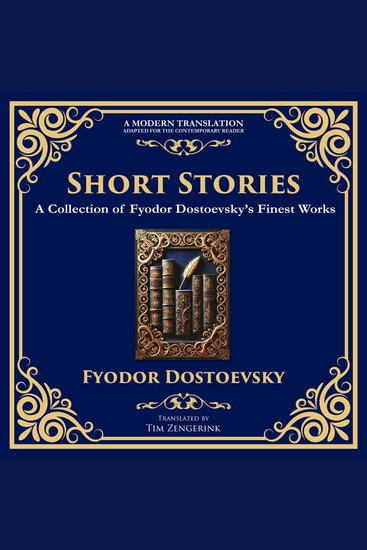
  • Short Stories - The Dark Corners of the Human Soul - cover

    Short Stories - The Dark Corners...

    Fyodor Dostoevsky, Tim Zengerink

    • 0
    • 0
    • 0
    Short stories. Big questions. Endless impact. 
    Short Stories by Fyodor Dostoevsky collects a powerful set of literary gems, each one revealing another layer of the human condition.  
    Whether it's loneliness in White Nights, spiritual awakening in The Dream of a Ridiculous Man, or heartbreaking silence in A Gentle Creature, each story speaks across time with raw emotion and deep wisdom. 
    This modern audiobook adaptation presents Dostoevsky’s most powerful short fiction in fresh, accessible language. 
    What You’ll Hear in This Modern Translation: 
    •	A variety of stories exploring guilt, compassion, inner conflict, and fragile hope 
    •	Compelling characters navigating spiritual and emotional crises 
    •	Accessible narration that stays faithful to Dostoevsky’s unique voice 
    Included in This Edition: 
    Each story has been carefully translated and adapted to retain Dostoevsky’s power while ensuring clarity and flow for the modern listener. 
    Listen today—and explore the depths of the human heart in under an hour at a time.
    Show book
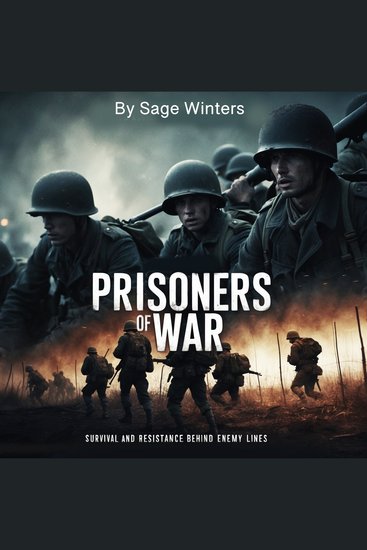
  • Prisoners of War - Survival and Resistance behind Enemy Lines - cover

    Prisoners of War - Survival and...

    Sage Winters

    • 0
    • 0
    • 0
    Throughout history, the experiences of prisoners of war (POWs) have captured the complexities of human endurance, resilience, and the moral challenges of conflict. In the midst of war, being taken captive often represents a turning point—one where survival becomes an individual’s primary focus, yet the determination to resist the enemy may persist despite overwhelming odds. This book explores the world of POWs, examining the strategies they employed to endure, resist, and sometimes escape the harsh conditions imposed by their captors.  
      
    Prisoners of war are not merely bystanders in conflicts; they are active participants in a different kind of battle. The battlefield shifts from the open fields of combat to the confines of prison camps, where physical deprivation, psychological manipulation, and moral dilemmas take center stage. Despite these hardships, many POWs found ways to preserve their dignity and humanity. They organized covert resistance movements, forged powerful bonds with their fellow captives, and made daring escape attempts, each story a testament to the indomitable human spirit.  
      
    International laws, such as the Geneva Conventions, were designed to protect the rights and well-being of POWs. However, history reveals that these laws were often ignored or inadequately enforced, leaving countless captives to endure severe mistreatment. The book delves into these legal frameworks while highlighting the real-life stories of those who lived through captivity, offering a vivid account of their experiences. 
    Show book