Join us on a literary world trip!
Add this book to bookshelf
Grey
Write a new comment Default profile 50px
Grey
Subscribe to read the full book or read the first pages for free!
All characters reduced
The Firebase Handbook - Practical Techniques for Designing and Managing Real-Time Databases - cover

The Firebase Handbook - Practical Techniques for Designing and Managing Real-Time Databases

Roberta Johnson

Publisher: HiTeX Press

  • 0
  • 0
  • 0

Summary

"The Firebase Handbook: Practical Techniques for Designing and Managing Real-Time Databases" is an essential guide for developers eager to master the capabilities of Firebase, a powerful platform for building robust web and mobile applications. This comprehensive resource unravels the complexities of Firebase's suite of tools and services, providing readers with the knowledge needed to leverage authentication, real-time databases, cloud functions, and more. Each chapter is meticulously crafted to guide developers from foundational setup to advanced optimization techniques, ensuring applications are both high-performing and scalable.The book delves into real-world applications, offering practical insights and best practices for designing efficient data models, managing security, and implementing offline capabilities. It empowers developers with strategies for proactive performance monitoring and seamless integration of analytics to enhance user engagement. By charting a clear path through Firebase's ecosystem, this handbook serves as both a foundational resource for beginners and a technical reference for experienced practitioners, fostering innovation and efficiency in application development.
Available since: 01/10/2025.
Print length: 295 pages.

Other books that might interest you

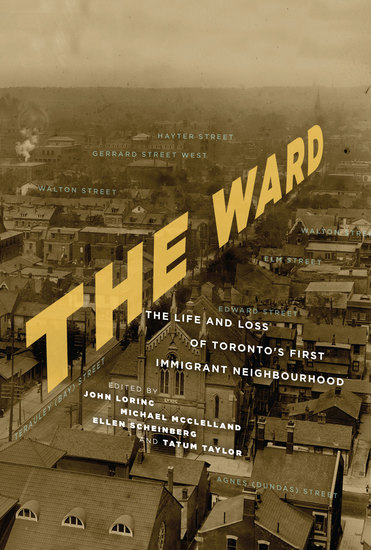
  • The Ward - The Life and Loss of Toronto’s First Immigrant Neighbourhood - cover

    The Ward - The Life and Loss of...

    John Lorinc, Michael McClelland,...

    • 0
    • 0
    • 0
    The story of the growth and destruction of Toronto's first 'priority neighbourhood.'
       
    From the 1840s until the Second World War, waves of newcomers who migrated to Toronto – Irish, Jewish, Italian, African American and Chinese, among others – landed in 'The Ward.' Crammed with rundown housing and immigrant-owned businesses, this area, bordered by College and Queen, University and Yonge streets, was home to bootleggers, Chinese bachelors, workers from the nearby Eaton';s garment factories and hard-working peddlers. But the City considered it a slum, and bulldozed the area in the late 1950s to make way for a new civic square.
       
    The Ward finally tells the diverse stories of this extraordinary and resilient neighbourhood through archival photos and contributions from a wide array of voices, including historians, politicians, architects, story-tellers, journalists and descendants of Ward residents. Their perspectives on playgrounds, tuberculosis, sex workers, newsies and even bathing bring The Ward to life and, in the process, raise important questions about how contemporary cities handle immigration, poverty and the geography of difference.
       
    ‘The Ward shines a light on one of Toronto's most historically significant and most forgotten neighbourhoods. Instead of a straight history, the book's editors opted to present the Ward through multiple short essays, each with its own unique point of view. The result is a fascinating and varied look at an area that once concurrently defined the city and acted as its biggest shame. As a result of the Ward's eventual razing, there are few artifacts left to teach newer generations about this important part of Toronto's history. This book helps correct that.’
       
    – 2016 Toronto Book Awards Jury Citation
       
    '[The Ward] should be of interest to Canadians anywhere, reminding us that we all came from some place else.'
       
    – Michael Enright, CBC Sunday Edition
       
    Contents & Contributors
       
    Introduction – John Lorinc
       
    Searching for the Old Ward – Shawn Micallef
       
    No Place Like Home – Howard Akler
       
    Beforethe Ward: Macauleytown – Stephen A. Otto
       
    My Grandmother the Bootlegger – Howard Moscoe
       
    Against All Odds: The Chinese Laundry – Arlene Chan
       
    VJ Day – Arlene Chan
       
    Merle Foster's Studio: 'A Spot Of Enchantment' – Terry Murray
       
    Missionary Work: The Fight for Jewish Souls – Ellen Scheinberg
       
    King of the Ward – Myer Siemiatycki
       
    Where the Rich Went for Vice – Michael Redhill
       
    A Fresh Start: Black Toronto in the 19th Century – Karolyn Smardz Frost
       
    Policing the Lord’s Day – Mariana Valverde
       
    'The Maniac Chinaman' – Edward Keenan
       
    Elsie's Story – Patte Roseban
       
    Lawren Harris's Ward Period – Jim Burant
       
    'Fool's Paradise': Hastings' Anti-Slum Crusade – John Lorinc
       
    Strange Brew: The Underground Economy of Blind Pigs – Ellen Scheinberg
       
    The Consulate, the Padroni and the Labourers – Andrea Addario
       
    Excerpt: The Italians in Toronto – Emily P. Weaver
       
    Arthur Goss: Documenting Hardship– Stephen Bulger
       
    Fresh Air: The Fight Against TB – Cathy Crowe
       
    The Stone Yard – Gaetan Heroux
       
    William James: Toronto's First Photojournalist – Vincenzo Pietropaolo
       
    The Avenue Not Taken – Michael McClelland
       
    Timothy Eaton’s Stern Fortifications – Michael Valpy
       
    Settling In: Central Neighbourhood House – Ratna Omidvar & Ranjit Bhaskar
       
    Toronto’s Girl with the Curls – Ellen Scheinberg
       
    Chinese Cafés: Survival and Danger – Ellen Scheinberg & Paul Yee
       
    Defiance and Divisions: The Great Eaton's Strike – Ruth A. Frager
       
    Elizabeth Street: What the City Directories Reveal – Denise Balkissoon
       
    Growing Up on Walton Street – Cynthia MacDougall
       
    Revitalizing George Street: The Ward's Lessons – Alina Chatterjee & Derek Ballantyne
       
    Taking Care of Business in the Ward &ndash Ellen Scheinberg
       
    'A Magnificent Dome': The Great University Avenue Synagogue – Jack Lipinsky
       
    Reading the Ward: The Inevitability of Loss – Kim Storey & James Brown
       
    Toronto’s First Little Italy – John Lorinc
       
    The Elizabeth Street Playground, Revisited – Bruce Kidd
       
    Divided Loyalties – Sandra Shaul
       
    Crowded by Any Measure – John Lorinc
       
    A Peddler and His Cart: TheWard’s Rag Trade – Deena Nathanson
       
    Toronto's Original Tenement: Wineberg Apartments – Richard Dennis
       
    Excerpt: Tom Thomson's Diary – Tom Thomson
       
    An Untimely Death – Brian Banks
       
    Paper Pushers – Ellen Scheinberg 
       
    The BMR's Wake-Up Call – Laurie Monsebraaten
       
    Excerpt: Report of the Medical Health Officer … – Charles J. Hastings
       
    Dr. Clarke's Clinic – Thelma Wheatley
       
    Slum-Free: The Suburban Ideal – Richard Harris
       
    The Glionna Clan and Toronto's First Little Italy – John E. Zucchi
       
    'The Hipp' – Michael Posner
       
    Before Yorkville– John Lorinc
       
    Sex Work and the Ward’s Bachelor Society – Elise Chenier
       
    Public Baths: Schvitzing on Centre Avenue – Ellen Scheinberg
       
    The Health Advocates: McKeown on Hastings – John Lorinc
       
    Remembering Toronto's First Chinatown – Kristyn Wong-Tam
       
    Tabula Rasa – Mark Kingwell
       
    Unrealized Renewal  – J. David Hulchanski
       
    A Short History of the 'Civic Square' Expropriation – John Lorinc
       
    Storytelling is Part of the Story – Tatum Taylor
       
    How We Think About What (Little) Survives – Patrick Cummins
       
    Institutional Memory – Scott James & Victor Russell
       
    Alternative Histories – MichaelMcClelland
    Show book

  • Thinking Small and Large - How Microbes Made and Can Save Our World - cover

    Thinking Small and Large - How...

    Peter Forbes

    • 0
    • 0
    • 1
    The environmental crisis will not be solved by battery technology. We are looking for answers in the wrong places.


    Life began with the hydrogenation of CO2, and this is the process we must return to in order to heal the planet. Ground-breaking ongoing research into bacterial processes means our knowledge of bacterial processes is ever-expanding, and we can harness this new knowledge to develop a parallel carbon economy using engineered bacteria for fuel, food, and materials. This would enable rewilding on a vast scale, with the small land footprint of bacterial technologies solving the current conflict in land use between farming and fuel and materials production.


    In this fascinating and illuminating book, Peter Forbes shines a light on this crucial technology and offers a tantalising glimpse at what is possible. To solve the big problems, sometimes you have to think small.
    Show book
  • The Last Wilderness - cover

    The Last Wilderness

    Murray Morgan, Tim McNulty

    • 0
    • 0
    • 0
    Murray Morgan's classic history of the Olympic Peninsula, originally published in 1955, evokes a remote American wilderness "as large as the state of Massachusetts, more rugged than the Rockies, its lowlands blanketed by a cool jungle of fir and pine and cedar, its peaks bearing hundreds of miles of living ice that gave rise to swift rivers alive with giant salmon." 


    Drawing on historical research and personal tales collected from docks, forest trails, and waterways, Morgan recounts vivid adventures of the area's settlers—loggers, hunters, prospectors, homesteaders, utopianists, murderers, profit-seekers, conservationists, Wobblies, and bureaucrats—alongside stories of coastal first peoples and striking descriptions of the peninsula's wildlife and land. 


    Freshly redesigned and with a new introduction by poet and environmentalist Tim McNulty, this humor-filled saga and landmark love story of one of the most formidably beautiful regions of the Pacific Northwest will inform and engage a new generation of listeners.
    Show book
  • Goldeneye 007 - cover

    Goldeneye 007

    Alyse Knorr

    • 0
    • 0
    • 0
    Bond—James Bond. In the 80s and 90s, the debonair superspy's games failed to live up to the giddy thrills of his films. That all changed when British studio Rare unleashed GoldenEye 007 in 1997. In basements and college dorms across the world, friends bumped shoulders while shooting, knifing, exploding, and slapping each other's digital faces in the Nintendo 64 game that would redefine the modern first-person shooter genre and become the most badass party game of its generation. 


    But GoldenEye's success was far from a sure thing. For years of development, GoldenEye's team of rookie developers were shooting in the dark with no sense of what the N64 or its controller would be like, and the game's relentless violence horrified higher-ups at squeaky clean Nintendo. As development lagged far behind the debut of the tie-in film GoldenEye, the game nearly came out an entire Bond movie too late. 


    Through extensive interviews with GoldenEye's creators, writer and scholar Alyse Knorr traces the story of how this unlikely licensed game reinvigorated a franchise and a genre. Learn all the stories behind how this iconic title was developed, and why GoldenEye 007 has continued to kick the living daylights out of every other Bond game since.
    Show book
  • Our Last Best Act - Planning For the End of Our Lives to Protect the People and Places We Love - cover

    Our Last Best Act - Planning For...

    Mallory McDuff

    • 0
    • 0
    • 0
    As we begin to contemplate death and to embark on practical planning for life's end, many of us long to leave a legacy beyond a transfer of money and property—one that ensures a sustainable earth for our loved ones, our communities, and generations to come. But where do we even begin? 


    With the sudden deaths of both of her parents, Mallory McDuff found herself in a similar position. Utterly unprepared both emotionally and practically, she began to research sustainable practices around death and dying. For McDuff, an educator and environmentalist, what started as a highly personal endeavor expanded into a yearlong exploration and assessment of green burials, aquamation, green cemeteries, home funerals, and human composting. 


    In Our Last Best Act, McDuff bridges the gap between environmental action and religious faith by demonstrating that when the two are combined, they become a powerful force for the greater good. Full of practical information, this book equips listeners to make decisions for their own end-of-life planning. In a world experiencing a climate crisis and a culture that avoids discussions about death and dying, this book opens the conversation about the choices we make—and how it's possible for our death to honor our values, create a sustainable legacy, and help to heal the earth.
    Show book
  • The Honey Trap - How the Good Intentions of Urban Beekeepers Risk Ecological Disaster - cover

    The Honey Trap - How the Good...

    Dana L. Church

    • 0
    • 0
    • 0
    The last decade has seen an explosion of urban beekeeping in the US, Canada, and Europe, a well-intentioned response to perceived threats to the global honey bee population. Many thousands of people have taken up this seemingly environmentally friendly hobby, tending backyard and rooftop hives (or paying a company to do so) and encouraging honey bees to make honey and pollinate flowers. What could be wrong with that? 


    Quite a lot, in fact. In The Honey Trap, scientist and author Dana Church demonstrates that despite reports to the contrary, honey bees are nowhere near extinction. Rather, their nurturing by urban beekeepers is having far-reaching and potentially devastating consequences for the 19,999 other species of bees on the planet, with knock-on effects for plants, both cultivated and wild, and our ecosystems more generally. 


    With engaging storytelling and a wealth of knowledge about bees and their ways, Church unravels the complexities of human interactions with our winged friends and demonstrates how dangerously selfish our thinking can be. It's a wake-up call for humanity to embrace sustainable practices and protect these vital pollinators before it's too late.
    Show book