Join us on a literary world trip!
Add this book to bookshelf
Grey
Write a new comment Default profile 50px
Grey
Subscribe to read the full book or read the first pages for free!
All characters reduced
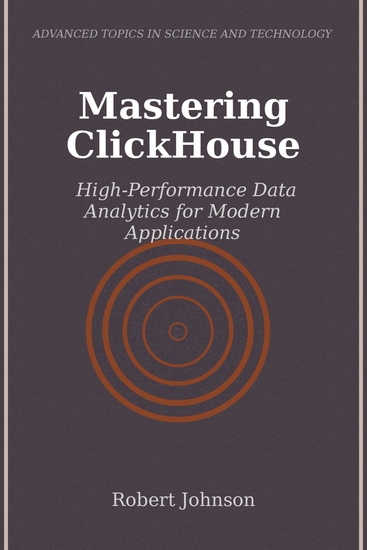
Mastering ClickHouse - High-Performance Data Analytics for Modern Applications - cover

Mastering ClickHouse - High-Performance Data Analytics for Modern Applications

Roberta Johnson

Publisher: HiTeX Press

  • 0
  • 0
  • 0

Summary

"Mastering ClickHouse: High-Performance Data Analytics for Modern Applications" serves as an indispensable guide for data professionals seeking to leverage the power of ClickHouse, the acclaimed open-source columnar database management system designed for online analytical processing (OLAP). This comprehensive resource delves into all aspects of ClickHouse, from its foundational architecture to advanced integration techniques, enabling readers to understand and exploit its full potential for processing massive datasets with remarkable speed and efficiency.Structured to cater to both novices and seasoned experts, this book provides step-by-step guidance on setting up ClickHouse environments, configuring the system for optimal performance, and implementing robust security measures. Readers will learn about efficient data ingestion techniques and query optimization strategies to maximize analytics throughput. Real-world use cases illustrate the versatility of ClickHouse across different industries, highlighting its ability to enhance decision-making processes through advanced analytics, real-time data insights, and seamless integration within diverse technology stacks. Whether you aim to refine your current data infrastructure or embark on a new analytics journey, this book offers the essential insights and practical skills needed to innovate and excel with ClickHouse.
Available since: 01/03/2025.
Print length: 302 pages.
Other books that might interest you

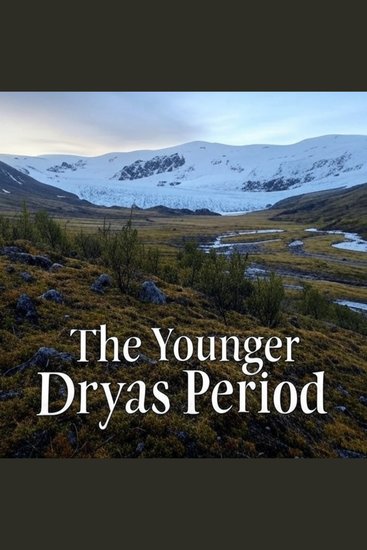
  • Younger Dryas Period The: The History of the Earth’s Drastic Climate Change at the End of the Pleistocene Era - cover

    Younger Dryas Period The: The...

    Editors Charles River

    • 0
    • 0
    • 0
    From about 12,900 to 11,700 before present (BP), near Ice Age conditions returned to the Northern Hemisphere of the planet. It was a sudden shift from the warm temperatures that had prevailed for nearly 2,000 years. This period is referred to by archaeologists, geologists, and earth scientists as the Greenland Stadial, but it is more commonly known as the Younger Dryas. The Younger Dryas marked the end of the last glacial period, the end of the Pleistocene Era, and the beginning of the Holocene Era, which is the current era. It was a period of great change, when climate change happened quite quickly, directly affecting the flora, fauna, and humans of the Northern Hemisphere in the process. The impact on the human populations was perhaps most important because, in some places, it virtually destroyed emerging cultures, while in other places, it might have propelled humans to develop new survival traits and technologies later used to move humanity into the Neolithic era. Although scholars now know quite a bit about the Younger Dryas, many elements of it are still debated. Other aspects serve as a predictor of what humans can expect in the future. 
    	There is, however, still plenty of information about the Younger Dryas that remains unknown or open to debate. Not all scholars agree on the dates of the Younger Dryas or how long it lasted. Even more controversial are the alternate theories about what caused the Younger Dryas and the effect it had on the Northern Hemisphere’s bio-populations. This book examines the background of the Younger Dryas, its effects on bio-populations, and how it contributed to the emergence of the Neolithic Era. Alternative theories will be examined and compared to more standard ideas currently prevailing in academia.
    Show book
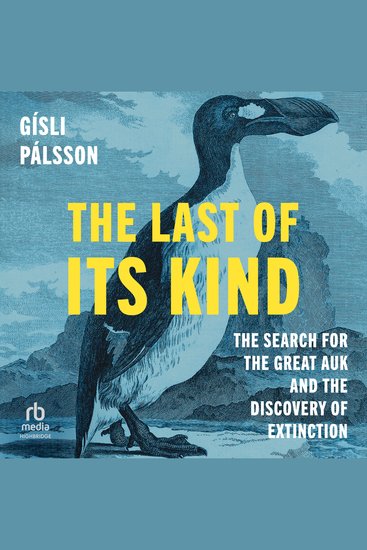
  • The Last of Its Kind - The Search for the Great Auk and the Discovery of Extinction - cover

    The Last of Its Kind - The...

    Gisli Palsson

    • 0
    • 0
    • 0
    The great auk is one of the most tragic and documented examples of extinction. A flightless bird that bred primarily on the remote islands of the North Atlantic, the last of its kind were killed in Iceland in 1844. Gísli Pálsson draws on firsthand accounts from the Icelanders who hunted the last great auks to bring to life a bygone age of Victorian scientific exploration while offering vital insights into the extinction of species. 


    Pálsson vividly recounts how British ornithologists John Wolley and Alfred Newton set out for Iceland to collect specimens only to discover that the great auks were already gone. At the time, the Victorian world viewed extinction as an impossibility or trivialized it as a natural phenomenon. Pálsson chronicles how Wolley and Newton documented the fate of the last birds through interviews with the men who killed them, and how the naturalists' Icelandic journey opened their eyes to the disappearance of species as a subject of scientific concern—and as something that could be caused by humans. 


    Blending a richly evocative narrative with rare, unpublished material as well as insights from ornithology, anthropology, and Pálsson's own North Atlantic travels, The Last of Its Kind reveals how the saga of the great auk opens a window onto the human causes of mass extinction.
    Show book
  • Quantum Mind - cover

    Quantum Mind

    Philip Gardiner

    • 0
    • 0
    • 0
    What is the meaning of existence? Is there a "Grand Architect"? Is there an ultimate truth searched for by countless generations and lost in the mists of time? 
     
    Today we have a new science, a new terminology to explain and expound upon the biggest beliefs and religious systems. It has become apparent that the truth and understanding of our inner selves is, in the end, our ultimate quest. The void between belief and reality is indicative of the troubled planet we live on. As we all approach a dynamic future, the answers will emerge, although they might not be what we're expecting.
    Show book
  • Social Media Strategies - Unlocking Success in Social Media Marketing - cover

    Social Media Strategies -...

    Celeste Rooney

    • 0
    • 0
    • 0
    Social Media Strategies: Unlocking Success in Social Media Marketing 
    Take your social media marketing skills to the next level with Social Media Strategies, the ultimate guide to crafting a winning online presence. This audiobook is packed with actionable tips, proven techniques, and advanced insights to help you master the art of engaging audiences, building brand loyalty, and driving measurable results. 
    Whether you’re a business owner, a marketer, or an influencer, this audiobook provides the tools you need to thrive in the ever-changing social media landscape. From understanding platform algorithms to creating content that resonates, you’ll learn the secrets of successful social media marketing and how to use them to grow your brand. 
    What You'll Learn: 
    Platform-Specific Strategies: Maximize your impact on Facebook, Instagram, LinkedIn, TikTok, and more. 
    Content Creation Essentials: Craft posts, videos, and campaigns that captivate and convert. 
    Engagement Tactics: Build genuine connections with your audience to foster trust and loyalty. 
    Analytics and Optimization: Leverage data to refine your strategy and ensure consistent growth. 
    Ad Campaign Mastery: Design and execute cost-effective social media ad campaigns for maximum ROI. 
    Packed with real-world examples and practical advice, Social Media Strategies is your go-to resource for achieving online marketing success. Whether you're just starting or looking to enhance your current efforts, this audiobook will equip you with the knowledge and confidence to excel in the digital marketing world. 
    Start unlocking the power of social media and transform your marketing game today!
    Show book
  • Anesthesiology - Pain Management and Anesthesia in Surgery - cover

    Anesthesiology - Pain Management...

    Ava Westwood

    • 0
    • 0
    • 0
    Anesthesiology is a specialized branch of medicine focused on pain management, patient sedation, and vital function monitoring during surgical and medical procedures. It plays a crucial role in ensuring patient comfort, safety, and procedural success. Modern anesthesiology has evolved significantly from its early days when crude methods were used to alleviate pain. Today, anesthesiologists employ advanced drugs, monitoring systems, and techniques to provide precise, controlled anesthesia tailored to each patient’s needs. 
    The field of anesthesiology encompasses several key areas, including general anesthesia, regional anesthesia, and local anesthesia. General anesthesia induces a state of unconsciousness and is typically used for major surgeries. Regional anesthesia blocks sensation in specific regions of the body, such as spinal or epidural anesthesia used in childbirth and orthopedic procedures. Local anesthesia is used for minor surgical interventions and numbs a small, targeted area without affecting consciousness. 
    Anesthesiologists are highly trained physicians who not only administer anesthesia but also manage critical care, pain control, and perioperative medicine. Their expertise extends beyond the operating room to intensive care units, pain management clinics, and emergency medicine settings. The process of anesthesia administration involves careful patient evaluation, selection of appropriate anesthetic agents, continuous monitoring, and postoperative pain control to ensure a smooth recovery.
    Show book
  • Nature’s Ghosts: The world we lost and how to bring it back - cover

    Nature’s Ghosts: The world we...

    Sophie Yeo

    • 0
    • 0
    • 0
    Winner of the 2024 Richard Jefferies Award for nature writingShortlisted for the 2024 Wainwright Prize for Writing on ConservationA Times Science Book of the Year 
    ‘Sophie writes fantastically, chronicling the most important issues facing nature conservationists today.’ Chris Packham 
    For thousands of years, humans have been the architects of the natural world. Our activities have permanently altered the environment – for good and for bad. 
    In Nature’s Ghosts, award-winning journalist Sophie Yeo examines how the planet would have looked before humans scrubbed away its diversity: from landscapes carved out by megafauna to the primeval forests that emerged following the last Ice Age, and from the eagle-haunted skies of the Dark Ages to the flower-decked farms of more recent centuries. 
    Uncovering the stories of the people who have helped to shape the landscape, she seeks out their footprints even where it seems there are none to be found. And she explores the timeworn knowledge that can help to fix our broken relationship with the earth. 
    Along the way, Sophie encounters the environmental detectives – archaeological, cultural and ecological – reconstructing, in stunning detail, the landscapes we have lost. 
    Today, the natural world is more vulnerable than ever; the footprints of humanity heavier than they have ever been. But, as this urgent book argues, from the ghosts of the past, we may learn how to build a more wild and ancient future. 
    Sophie Yeo's Nature’s Ghosts is a non-fiction masterpiece that takes us on a journey through the science of ecology, exploring the habitats and ecosystems that have been altered by human activity. The book emphasises the need for protection of these resources, offering a glimpse into the past to help us understand how we can shape a better future. 
    For fans of Robert Macfarlane (Is a River Alive?), Robin Wall Kimmerer (The Democracy of Species), Isabella Tree (Wilding), Jennifer Ackerman (What an Owl Knows), and Derek Gow (Birds, Beasts and Bedlam). 
    HarperCollins 2024
    Show book