Junte-se a nós em uma viagem ao mundo dos livros!
Adicionar este livro à prateleira
Grey
Deixe um novo comentário Default profile 50px
Grey
Assine para ler o livro completo ou leia as primeiras páginas de graça!
All characters reduced
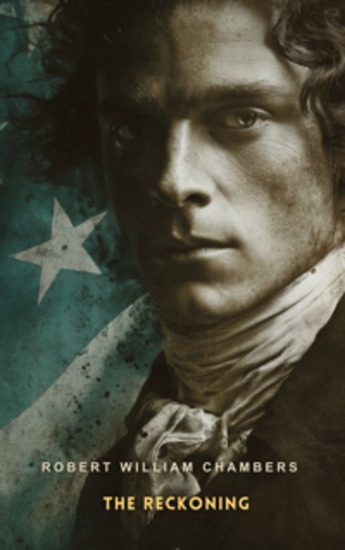
The Reckoning - cover
LER

The Reckoning

Robert William Chambers

Editora: Interactive Media

  • 0
  • 0
  • 0

Sinopse

In this dramatic historical romance, a steadfast patriot becomes entangled in intrigue as revolution sweeps through the colonies. Pursued by enemies and divided by loyalty, he faces peril, hidden identities, and an unexpected love that challenges his resolve. As tensions rise, he must confront betrayal and courageously choose a path that will shape his fate and the future of those he protects.
Disponível desde: 24/01/2026.
Comprimento de impressão: 316 páginas.

Outros livros que poderiam interessá-lo

  • Betty Brown the St Giles Orange Girl - From their pens to your ears genius in every story - cover

    Betty Brown the St Giles Orange...

    Hannah More

    • 0
    • 0
    • 0
    Hannah More was born on February 2nd, 1745 at Fishponds in the parish of Stapleton, near Bristol. She was the fourth of five daughters. 
    The City of Bristol, at that time, was a centre for slave-trading and Hannah would, over time, become one of its staunchest critics.  
    She was keen to learn, possessed a sharp intellect and was assiduous in studying.  Hannah first wrote in 1762 with The Search after Happiness (by the mid-1780s some 10,000 copies had been sold). 
    In 1767 Hannah became engaged to William Turner.  After six years, with no wedding in sight, the engagement was broken off.  Turner then bestowed upon her an annual annuity of £200.  This was enough to meet her needs and set her free to pursue a literary career.   
    Her first play, The Inflexible Captive, was staged at Bath in 1775. The famous David Garrick himself produced her next play, Percy, in 1777 as well as writing both the Prologue and Epilogue for it.  It was a great success when performed at Covent Garden in December of that year.  
    Hannah turned to religious writing with Sacred Dramas in 1782; it rapidly ran through nineteen editions. These and the poems Bas-Bleu and Florio (1786) mark her gradual transition to a more serious and considered view of life. 
    Hannah contributed much to the newly-founded Abolition Society including, in February 1788, her publication of Slavery, a Poem recognised as one of the most important of the abolition period.   
    Her work now became more evangelical.  In the 1790s she wrote several Cheap Repository Tracts which covered moral, religious and political topics and were both for sale or distributed to literate poor people.  The most famous is, perhaps, The Shepherd of Salisbury Plain, describing a family of incredible frugality and contentment. Two million copies of these were circulated, in one year. 
    In 1789, she purchased a small house at Cowslip Green in Somerset. She was instrumental in setting up twelve schools in the area by 1800. 
    She continued to oppose slavery throughout her life, but at the time of the Abolition Bill of 1807, her health did not permit her to take as active a role in the movement as she had done in the late 1780s, although she maintained a correspondence with Wilberforce and others.  
    In July 1833, the Bill to abolish slavery throughout the British Empire passed in the House of Commons, followed by the House of Lords on August 1st. 
    Hannah More died on September 7th, 1833.
    Ver livro
  • Elementary Watson! From the Casebook of Sherlock Holmes - Read by Dennis Edward Delaney - cover

    Elementary Watson! From the...

    Arhur Conan Doyle

    • 0
    • 0
    • 0
    About this Audiobook 
    Cover Design by David Earl DeWitt | ZacaPublishing.com. 
    Original and Public Domain Source Material was used to Publish this Collection. 
    Available at Spotify & Other Distributors! 
    – 
    A Collection of Great Sherlock Holmes stories including The Final Problem, the first appearance of the criminal mastermind Professor Moriarty! 
    – 
    Your Stories: 
    – 
    Preface by Arthur Conan Doyle 
    - 
    The Adventure of the Sussex Vampire 
    - 
    The Adventure of the Lion's Mane 
    - 
    The Adventure of the Creeping Man 
    - 
    The Adventure of Shoscombe Old Place 
    - 
    How Watson Learned the Trick 
    - 
    The Boscombe Valley Mystery 
    - 
    The Adventure of the Veiled Lodger 
    - 
    The Final Problem 
    - 
    Run Time:  
    04:38:15.62 
    -
    Ver livro
  • Arthur Mervyn - cover

    Arthur Mervyn

    Charles Brockden Brown

    • 0
    • 0
    • 0
    "Arthur Mervyn" is a novel written by Charles Brockden Brown, published in 1799. It stands as one of Brown's more popular works, characterized by his dark, gothic style and subject matter. This novel is recognized as one of the most influential pieces of American and Philadelphia Gothic literature
    Ver livro
  • The Lost Christmas Tales - cover

    The Lost Christmas Tales

    Charles Dickens

    • 0
    • 0
    • 0
    “A heartfelt and lovely Christmas tale for kids, moms, dads and book lovers everywhere!" The Washington PostCharles John Huffam Dickens FRSA was an English writer and social critic. He created some of the world's best-known fictional characters and is regarded by many as the greatest novelist of the Victorian era. A true Christmas treasure for the whole family!
    Ver livro
  • Morphine - This story is perhaps the greatest depiction and description in literature of the human psyche going through addiction - cover

    Morphine - This story is perhaps...

    Mikhail Bulgakov

    • 0
    • 0
    • 0
    Mikhail Bulgakov was born on 15th May 1891 in Kiev, in the Kiev Governorate of the Russian Empire, into a Russian family.  He was one of seven children. 
     
    In 1901, Bulgakov attended the First Kiev Gymnasium, and developed a keen interest in Russian and European literature, theatre and opera.  After the death of his father in 1907, his mother assumed responsibility for his education.  After graduating Bulgakov entered the Medical Faculty of Kiev University and then took up a post as physician at the Kiev Military Hospital. 
     
    At the outbreak of the First World War, he volunteered as a doctor and was sent directly to the front, where he was badly injured at least twice.  To suppress chronic pain, especially in the abdomen, he injected morphine.  It took years to wean himself off. 
     
    He now took up medical posts in various towns and in 1919, he was mobilised by the Ukrainian People's Army and assigned to the Northern Caucasus.  There, he became seriously ill with typhus and barely survived.  
     
    After this illness, Bulgakov abandoned his medicine to pursue writing.  He moved to Vladikavkaz and had two plays staged there with great success.  He wrote too for various newspapers and other outlets, but his critics were many.  And growing. 
     
    When a Moscow's theatre director severely criticised Bulgakov, Stalin personally protected him, saying that a writer of Bulgakov's quality was above ‘party words’ like ‘left’ and ‘right’.   Indeed, it is said that Stalin watched ‘The Days of the Turbins’ at least 15 times. 
     
    It was not to last and by March 1929, Bulgakov's career was ruined when Government censorship stopped publication of any of his work and plays. 
     
    In despair, Bulgakov wrote a personal letter to Stalin.  He requested permission to emigrate.  He received a phone call from the Soviet leader, who asked the writer whether he really desired to leave. He replied that a Russian writer cannot live outside of his homeland.  Stalin thus gave him permission to continue working. In May 1930, he re-joined the theater, as stage director's assistant.  
     
    During the last stressful decade of his life, and in poor health, Bulgakov continued to work on ‘The Master and Margarita’, wrote plays, critical works, stories, and continued translations and dramatisations of novels.  Many of them were not published, others were derided by critics.  
     
    On 10th March 1940, Mikhail Afanasyevich Bulgakov died from nephrosclerosis.  He was 48. 
     
    ‘The Master and Margarita’ was not published in any form until the mid-1960’s 
     
    In this story Bulgakov relates the terrifying and hellish descent into addiction that seems so avoidable and yet so chillingly not.
    Ver livro
  • War and Peace - cover

    War and Peace

    Leo Tolstoy

    • 0
    • 0
    • 0
    "War and Peace" is a monumental novel written by Russian author Leo Tolstoy, first published between 1865 and 1869. The book is set in the period of the Napoleonic Wars and offers a panoramic view of Russian society at that time. It follows the lives of five aristocratic families through the historical events of the early 19th century, including Napoleon's invasion of Russia in 1812. The novel explores themes of fate, free will, history, and the complexities of family and human relationships.
    Ver livro