Join us on a literary world trip!
Add this book to bookshelf
Grey
Write a new comment Default profile 50px
Grey
Subscribe to read the full book or read the first pages for free!
All characters reduced
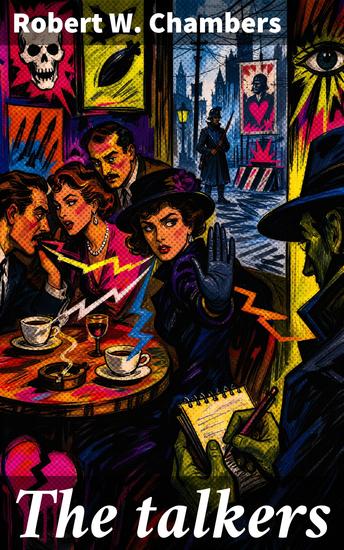
The talkers - cover

The talkers

Robert W. Chambers

Publisher: Good Press

  • 0
  • 0
  • 0

Summary

In *The Talkers*, Robert W. Chambers turns from the supernatural and society fiction for which he was best known to a wartime novel shaped by the anxieties of espionage, rumor, and divided loyalties. Set against the atmosphere of the First World War, the book examines the destructive power of careless speech and covert intrigue, blending romance, suspense, and patriotic melodrama. Chambers's style is fluent, vivid, and highly readable, marked by brisk dialogue and emotional immediacy; the novel belongs to the large body of early twentieth-century Anglo-American war fiction concerned less with trench realism than with the moral and psychological pressures of total war. Chambers, an American novelist and artist educated in Paris, had already established a remarkably varied career, ranging from decadent fantasy in *The King in Yellow* to popular historical and romantic fiction. His cosmopolitan background, visual sensibility, and responsiveness to contemporary public feeling made him especially attuned to the climate of wartime unease. *The Talkers* reflects both his instinct for popular narrative and his engagement with the patriotic discourse of the 1910s, when silence, vigilance, and national service became urgent cultural themes. This novel will reward readers interested in wartime propaganda, early modern popular fiction, and the cultural imagination of World War I. It is especially recommended for those who value fiction as a record of national mood as well as an art of entertainment.
Available since: 06/29/2026.
Print length: 190 pages.

Other books that might interest you

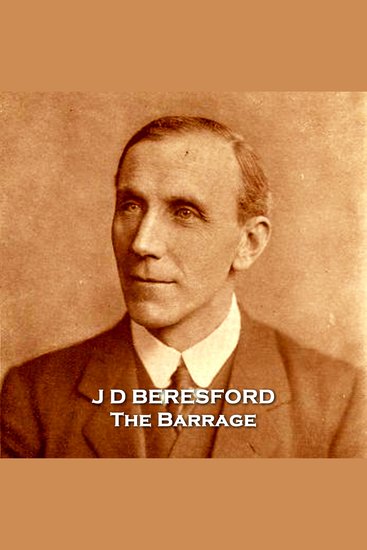
  • The Barrage - From their pens to your ears genius in every story - cover

    The Barrage - From their pens to...

    J D Beresford

    • 0
    • 0
    • 0
    John Davys Beresford was born on 17th March 1873.  His life was blighted by infantile paralysis which left him partially disabled. 
    After an education at Oundle school he trained to be an architect.  However, he quickly decided that his life was to be centred on a literary career.  His first offerings were in drama and as a journalist. 
    As well as being a book reviewer for the Manchester Guardian he contributed to New Statesman, The Spectator, Westminster Gazette, and the Theosophist magazine The Aryan Path.   
    His spiritual journey in early adulthood had claimed him as an agnostic, in defiance of his clergyman father.  This view he later abandoned in preference to describing himself as a Theosophist and a pacifist. 
    As well as many novels, many themed with spiritual and philosophical elements.  Beresford was also a gifted short story writer particularly across the science-fiction, horror and ghost genres. 
    All of these elements helped him to obtain a prominent place in Edwardian Literary London. 
    John Davys Beresford died on the 2nd February 1947. He was 73.
    Show book
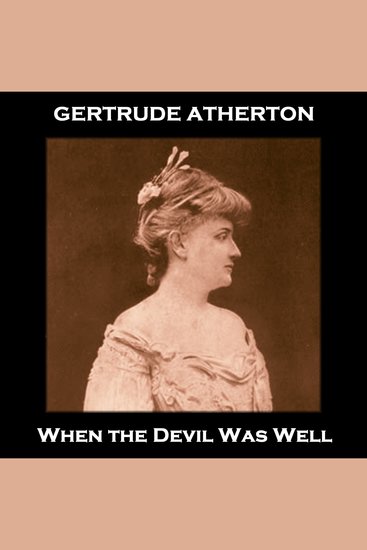
  • When the Devil Was Well - From their pens to your ears genius in every story - cover

    When the Devil Was Well - From...

    Gertrude Atherton

    • 0
    • 0
    • 0
    Gertrude Franklin Horn was born on October 30th, 1857, in San Francisco, California. Her parents separated in 1860 when she was two years old, and she was raised by her maternal grandfather, Stephen Franklin, a devout Presbyterian. He insisted she be well read, and was a great influence on her.  
    She attended St. Mary's Hall high school in Benicia, California, and, briefly, the Sayre School in Lexington, Kentucky. 
    In Kentucky, the rebellious Gertrude met George H.B. Atherton, who was courting her mother. His attentions wandered to Gertrude and, after she accepted his sixth proposal, they eloped on February 15th, 1876.  
    She went to live with him and his domineering Chilean mother. Gertrude found life stultifying. As a result of her disappointment she began to develop an independent life. But two tragedies changed her life dramatically: her son George died of diphtheria, and her husband died at sea. She was left with their daughter Muriel but and needed to support herself. Her mother-in-law agreed to raise Muriel. 
    Her first publication was ‘The Randolphs of Redwood: A Romance’, and serialised in The Argonaut in 1882. When she told her family, she was ostracized.  
    Gertrude’s first novel, ‘What Dreams May Come’, was published in 1888 under the pseudonym Frank Lin. 
    With the death of her grandfather and her mother-in-law she returned to California to resume care of Muriel. In 1891, while writing a weekly column for The San Francisco Examiner, she met Ambrose Bierce, with whom she carried on a love-hate relationship. 
    She wrote ‘Doomswoman’ in 1892, it was published in Lippincott's Monthly Magazine and as a book in 1893. The story focuses on Chonita Moncada y Iturbi and her love of Diego Estenega, as he dreams of modernizing California.  
    In 1892, Atherton left for New York to write for the New York World. She wrote letters to Bierce, confiding her loneliness, her dismay at freelance writing and her dislike of eastern literary circles. Whilst there though she published another California novel, ‘Before the Gringo Came’ (1894). 
    Following this was ‘Patience Sparhawk and Her Times’ (1897), but it proved to be controversial. Its rejection encouraged her to leave for London.  
    In 1898, she completed ‘The Californians’, her first novel set in the post-Spanish era. Critics received this much more positively: The Spectator said "The novel fairly establishes her claim to be considered as one of the most vivid and entertaining interpreters of the complex characters of emancipated American womanhood."  
    Further works followed, many from her California series dealing with the social history of California.  
    Gertrude wrote several stories of supernatural horror, including ‘Death and the Woman’, and ‘Crowned with One Crest’, as well as ‘The Foghorn’, and the much anthologised ‘The Striding Place’.  
    She was an early feminist well acquainted with the plight of women although she spoke against its militancy. Add to this her strong-will, independent-mind, and sometimes her oversteps into controversy, especially over anti-communism and its easy to identify why her novels had such sharp and strong characters. 
    Gertrude Atherton died on June 14th, 1948. She is buried in Cypress Lawn cemetery in Colma, California.
    Show book

  • Medusa's Coil - cover

    Medusa's Coil

    H. P. Lovecraft

    • 0
    • 0
    • 0
    Venture into the dark and mysterious world of H. P. Lovecraft’s Medusa's Coil, a tale that combines supernatural horror with a chilling sense of foreboding. When a man arrives at an isolated mansion, he uncovers the terrifying secrets hidden within, secrets that reveal an ancient evil lurking beneath the surface. As the story unfolds, he becomes entangled in a web of dread, deception, and doom, leading to an unforgettable climax that will haunt the listener long after the tale ends. 
    Narrated by Ken Kowalik, this audiobook captures Lovecraft’s unique blend of atmospheric suspense and cosmic horror. Kowalik’s performance brings a rich, ominous depth to the story, enhancing the eerie ambience and drawing listeners into the gripping tension of Lovecraft’s writing. 
    Perfect for fans of Lovecraftian horror, Medusa's Coil delivers a compelling journey into the uncanny and the unknown. Prepare for an audio experience filled with suspense, terror, and the dark allure of Lovecraft’s most haunting themes.
    Show book
  • A Man with Two Lives - From their pens to your ears genius in every story - cover

    A Man with Two Lives - From...

    Ambrose Bierce

    • 0
    • 0
    • 0
    Ambrose Gwinnett Bierce was born on 24th June 1842 at Horse Cave Creek in Meigs County, Ohio. His parents were poor but they introduced him to literature at an early age, instilling in him a deep appreciation of books, the written word and the elegance of language.  
    Growing up in Koscuisko County, Indiana poverty and religion were defining features of his childhood, and he would later describe his parents as “unwashed savages” and fanatically religious, showing him little affection but always quick to punish. He came to resent religion, and his introduction to literature appears to be their only positive effect. 
    At age 15 Bierce left home to become a printer’s devil, mixing ink and fetching type at The Northern Indian, a small Ohio paper. Falsely accused of theft he returned to his farm and spent time sending out work in the hopes of being published. 
    His Uncle Lucius advised he be sent to the Kentucky Military Institute. A year later he was commissioned as an Officer.  As the Civil War started Bierce enlisted in the 9th Indiana Infantry Regiment.  
    In April 1862 Bierce fought at the Battle of Shiloh, an experience which, though terrifying, became the source of several short stories. Two years later he sustained a serious head wound and was off duty for several months. He was discharged in early 1865.  
    A later expedition to inspect military outposts across the Great Plains took him all the way to San Francisco. He remained there to become involved with publishing and editing and to marry, Mary Ellen on Christmas Day 1871.  They had a child, Day, the following year.  
    In 1872 the family moved to England for 3 years where he wrote for Fun magazine. His son, Leigh, was born, and first book, ‘The Fiend’s Delight’, was published.  
    They returned to San Francisco and to work for a number of papers where he gained admiration for his crime reporting. In 1887 he began a column at the William Randolph Hearst’s San Francisco Examiner.  
    Bierce’s marriage fell apart when he discovered compromising letters to his wife from a secret admirer. The following year, 1889 his son Day committed suicide, depressed by romantic rejection. 
    In 1891 Bierce wrote and published the collection of 26 short stories which included ‘An Occurrence at Owl Creek Bridge’.  Success and further works including poetry followed.  
    Bierce with Hearst’s resources helped uncover a financial plot by a railroad to turn 130 million dollars of loans into a handout. Confronted by the railroad and asked to name his price Bierce answered “my price is $130 million dollars. If, when you are ready to pay, I happen to be out of town, you may hand it over to my friend, the Treasurer of the United States”.  
    He now began his first foray as a fabulist, publishing ‘Fantastic Fables’ in 1899.  But tragedy again struck two years later when his second son Leigh died of pneumonia relating to his alcoholism.  
    He continued to write short stories and poetry and also published ‘The Devil’s Dictionary’.  
    At the age of 71, in 1913 Bierce departed from Washington, D.C., for a tour of the battlefields where he had fought during the civil war. At the city of Chihuahua he wrote his last known communication, a letter to a friend. It’s closing words were “as to me, I leave here tomorrow for an unknown destination,” Ambrose Bierce then vanished without trace.
    Show book
  • Vertical Motion - cover

    Vertical Motion

    Can Xue

    • 0
    • 0
    • 0
    "There's a new world master among us, and her name is Can Xue." —Robert Coover 
     
    Two young girls sneak onto the grounds of a hospital, where they find a disturbing moment of silence in a rose garden. A couple grows a plant that blooms underground, invisibly, to their long-time neighbor's consternation. A cat worries about its sleepwalking owner, who receives a mysterious visitor while he's asleep. After a ten-year absence, a young man visits his uncle, on the twenty-fourth floor of a high-rise that is floating in the air, while his ugly cousin hesitates on the stairs . . .  


    Can Xue is a master of the dreamscape, crafting stories that inhabit the space where fantasy and reality, time and timelessness, the quotidian and the extraordinary, meet. The stories in this striking and lyrical new collection—populated by old married couples, children, cats, and nosy neighbors, the entire menagerie of the everyday—reaffirm Can Xue's reputation as one of the most innovative Chinese writers in a generation.
    Show book
  • Sometimes People Just Have Things They Have to Do - cover

    Sometimes People Just Have...

    A. J. Payler

    • 0
    • 0
    • 0
    Everyone—everyone said that getting the Artery Boys back together was impossible… and once, high-powered music manager Alec Rodenbaugh might even have agreed. 
    But nothing in this world is truly impossible for someone who wants it badly enough. And even if what seemed like the perfect cover might instead turn out to be the perfect crime… well, sometimes, people just have things they have to do. 
    From A. J. Payler, author of The Killing Song, Bank Error in Your Favor, and Terror Next Door comes Sometimes, People Just Have Things They Have to Do—a story of people beyond betrayal and forgiveness.
    Show book