Join us on a literary world trip!
Add this book to bookshelf
Grey
Write a new comment Default profile 50px
Grey
Subscribe to read the full book or read the first pages for free!
All characters reduced
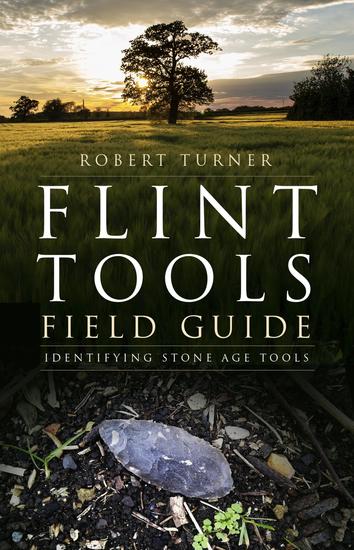
Flint Tools Field Guide - Identifying Stone Age Tools - cover

Flint Tools Field Guide - Identifying Stone Age Tools

Robert Turner

Publisher: The History Press

  • 0
  • 0
  • 0

Summary

Our prehistoric ancestors used flint tools every day; they were of vital importance for cutting and scraping, used for hunting, preparing food, making clothing and building shelters, and their remnants are scattered around the countryside.
Unearthing such a find is a magical moment – a direct link to events thousands of years before – but how do you identify the piece of flint you find out in the field? Is it only a lump of flint, or did it really have an important function as a tool prized by our ancestors? And how old is it, exactly?
In Flint Tools Field Guide, archaeologist and flint knapper Robert Turner opens a window into prehistoric archaeology, using hand-drawn illustrations and photographs to explain how to identify tools and their uses, as well as approximate their age. This is an important insight into how people lived and worked so many years ago.
Available since: 08/22/2024.
Print length: 128 pages.
Other books that might interest you

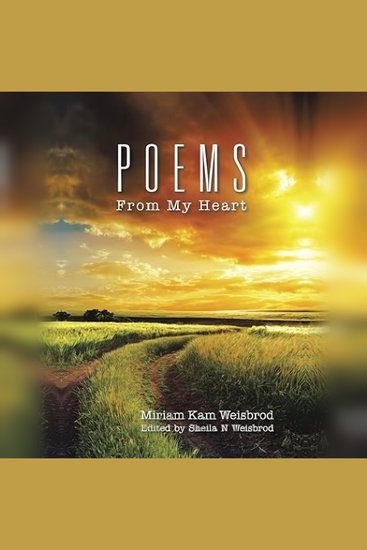
  • Poems from my Heart - cover

    Poems from my Heart

    Miriam Kam Weisbrod, Sheila...

    • 0
    • 0
    • 0
    She was ninety-five when she finally told her story. 
    Miriam Kam Weisbrod lived a life most people only read about — she sailed to Panama in 1941 to marry a soldier, found her honeymoon interrupted by the bombing of Pearl Harbor, and went on to call Japan, France, Italy, and Germany home before she ever picked up a pen. It wasn't until she lost her husband in 1980 that she began writing — and it wasn't until decades later, at ninety-five years old, that she finally gathered a lifetime of memory into verse. 
    Poems From My Heart is that lifetime, told poem by poem. Beginning in a cradle painted white and ending in quiet reflections on faith and mortality, Miriam's poetry moves through childhood in Depression-era Brooklyn, the ache of wartime love, the noisy joy of raising four children, and the slow, tender business of growing old. Along the way there's humor too — a poem scolding Mother Nature herself, a stubborn beard that comes between two lovers, a bottle of castor oil that no child of the 1920s could escape. 
    Each poem is paired with simple black-and-white illustrations, and the collection closes with a genuine piece of history: a 1941 newspaper clipping of Miriam herself, smiling and waving as she boards the ship that would carry her toward the rest of her life. 
    This isn't poetry written from craft or ambition. It's poetry written from memory — plainspoken, unpolished, and completely honest, the kind that only comes from someone who has truly lived what she's writing about. If you've ever wanted to hand someone you love a piece of your own history, or if you simply believe that ordinary lives deserve to be told extraordinarily, Poems From My Heart is a book worth making room for on your shelf.
    Show book
  • The Neutral Eye - Seeing Past The Labels of Fear Greed & God - cover

    The Neutral Eye - Seeing Past...

    Suraaj Parab

    • 0
    • 0
    • 0
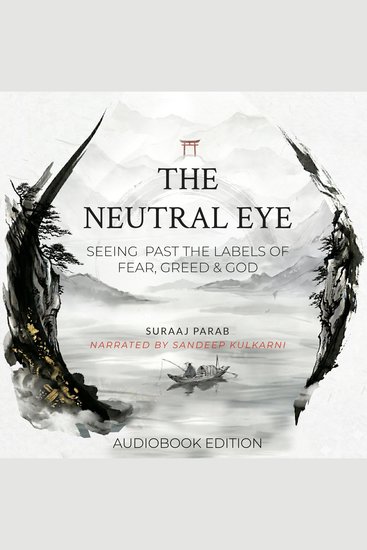
    "The truth does not require your emotional consent to exist." 
    We live in a world of "muffling"—wrapped in inherited bias and the frantic greed of the herd, decorating our cages and calling it "success." 
    In The Neutral Eye, Grammy® voting member and 23-time international award-winning composer Suraaj Parab offers a surgical deconstruction of the human ego. Brought to life by the resonant delivery of award-winning vocalist Sandeep Kulkarni, this is an audio experience of absolute precision. 
    Drawing from the discipline of a master musician and clinical observer, Suraaj introduces The Neutral Eye—a way of hearing and seeing the world stripped of emotional distortion. 
    Through ten hauntingly minimalist chapters, you will learn to: 
    Apply Daily Debridement: surgically remove old social scripts. 
    Identify Mechanical Failure: see fear and greed as arithmetic glitches. 
    Find the Residue: discover the "silent apex" beneath the noise. 
    Reclaim Your Sovereignty: step out of the muffled state. 
    The Neutral Eye is an immersive audio artifact for those ready to stop "having" and start "being." 
    The cage is open. It is time to listen.
    Show book
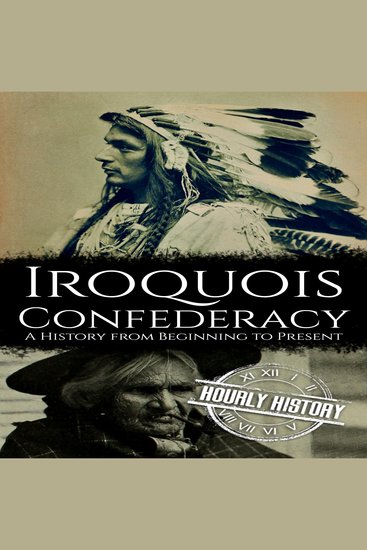
  • The Iroquois Confederacy - A History from Beginning to Present - cover

    The Iroquois Confederacy - A...

    Hourly History

    • 0
    • 0
    • 0
    The American Revolution not only changed the continent of North America, but the ideas it represented would go on to change the world. The notion of a state where individual liberty was guaranteed to all citizens and where hereditary positions of power did not exist would directly lead to the French Revolution and to other movements around the world that sought to bring fundamental political and societal changes. What is often forgotten is that the radical US Constitution borrowed concepts and ideas from a much older democracy that had existed in North America long before European settlers first arrived. 
    The Iroquois Confederacy was a political union of five (later six) Native American nations that controlled much of the Northeastern part of North America from the time of its foundation until the eighteenth century. The people of this confederacy—the Haudenosaunee (“people of the longhouse”)—lived within what some historians claim was the first participatory democracy in human history. These people fought successful wars against other tribes in the region, and in the eighteenth century, they found themselves caught up first in conflicts between colonial powers, including the Netherlands, France, and Britain, and then in an uprising against British rule by settlers in North America. 
    This is the story of the Iroquois Confederacy before and after the arrival of European settlers and of their unique culture and political organization.
    Show book
  • Square Pegs - Inclusivity compassion and fitting in - a guide for schools - cover

    Square Pegs - Inclusivity...

    Fran Morgan, Ellie Costello

    • 0
    • 0
    • 0
    Over the last few years, changes in education have made it increasingly hard for those children who don't 'fit' the system - the square pegs.
    Budget cuts, the loss of support staff, an overly academic curriculum, problems in the special educational needs and disabilities (SEND) system and difficulties accessing mental health support have all compounded pre-existing problems with behaviour and attendance. The 'attendance = attainment' and zero-tolerance narrative is often at odds with the way schools want to work with their communities, and many school leaders don't know which approach to take.
    This book will be invaluable in guiding leaders and teaching staff through the most effective ways to address this challenge. It covers a broad spectrum of opportunity, from proven psychological approaches to technological innovations. It tests the boundaries of the current system in terms of curriculum, pedagogy and statutory Department for Education guidance. And it also presents a clear, legalese-free view of education, SEND and human rights law, where leaders have been given responsibility for its implementation but may not always fully understand the legal ramifications of their decisions or may be pressured into unlawful behaviour.
    Suitable for all professionals working in education and the related issues surrounding children and young people's mental health, as well as policymakers, academics and government ministers.
    Show book
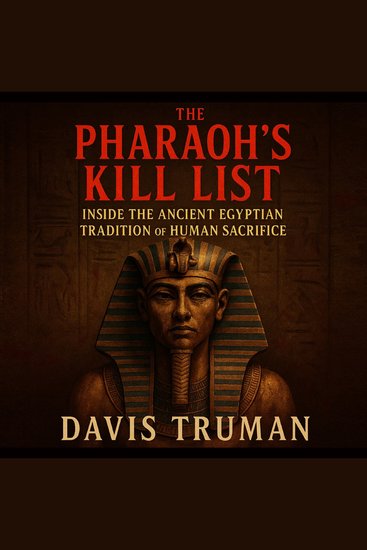
  • The Pharaoh’s Kill List - Inside the Ancient Egyptian Tradition of Human Sacrifice - cover

    The Pharaoh’s Kill List - Inside...

    Davis Truman

    • 0
    • 0
    • 0
    Buried beneath the sands of Ancient Egypt lies a secret history far darker than the pyramids, pharaohs, and golden treasures we think we know… 
    For centuries, whispers of a forbidden ritual have haunted archaeologists and historians, a chilling practice woven into the rise and fall of Egypt’s most powerful rulers. In The Pharaoh’s Kill List: Inside the Ancient Egyptian Tradition of Human Sacrifice, bestselling researcher Davis Truman pulls back the curtain on a world where divine kingship demanded blood, loyalty was enforced through death, and every royal tomb carried secrets meant to stay hidden forever. 
    What Truman uncovers is not the Egypt of school textbooks. This is the Egypt of ritual executions, buried servants, silenced enemies, and elite corpses chosen to accompany the pharaoh into the afterlife. Through newly analyzed evidence, forgotten stelae, and translations of long-overlooked texts, this book dives deep into: 
    •	The origins of human sacrifice in early dynastic Egypt—and why it suddenly disappeared 
    •	Shocking archaeological finds that reveal entire retinues killed to serve their king beyond death 
    •	The political assassinations buried behind royal propaganda 
    •	The Pharaohs who expanded, concealed, or weaponized sacrificial rituals 
    •	How religion, fear, and absolute power shaped one of the most secretive traditions in the ancient world 
    Perfect for fans of ancient history, true crime, Egyptology, anthropology, and dark historical mysteries, this book delivers a gripping blend of scholarship and narrative storytelling. Every chapter pulls you deeper into the ritual logic of a civilization where gods walked among men—and where appeasing them required unthinkable acts. 
    If you believe you already know Ancient Egypt…Prepare to be proven wrong. 
    Enter the tomb. Face the truth. Discover what—and who—the Pharaohs were willing to sacrifice.
    Show book
  • The Unnamable - cover

    The Unnamable

    H.P. Lovecraft

    • 0
    • 0
    • 0
    This audiobook is narrated by an AI Voice. The Unnamable represents a conversation between Randolph Carter and Joel Manton (alter-ego of Maurice W. Moe) in an old cemetery in Arkham (modeled after the Charter Street Burying Ground in Salem). Manton expresses disapproval of Carter's creation of horror stories. He considers them immature and, furthermore, claims that there is no such thing as "Unnamable". However, he will soon realize his mistake. 
     
    It is difficult to call The Unnamed a story. It is more like a fictionalized literary essay, a precursor to a future series of essays titled In Defence of Dagon, in which Lovecraft will present a theory of the supernatural story and attempt to prove that horror literature should not be dismissed as exclusively immature, targeted at the masses.
    Show book