Join us on a literary world trip!
Add this book to bookshelf
Grey
Write a new comment Default profile 50px
Grey
Subscribe to read the full book or read the first pages for free!
All characters reduced
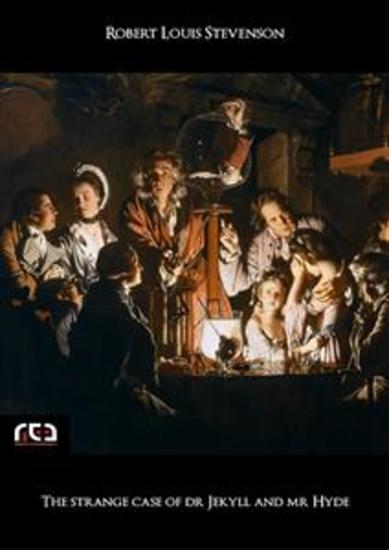
The strange case of Dr Jekyll and Mr Hyde - cover

The strange case of Dr Jekyll and Mr Hyde

Robert Louis Stevenson

Publisher: REA Multimedia

  • 0
  • 0
  • 0

Summary

The Strange Case of Dr Jekyll and Mr Hyde is an 1886 Gothic novella by Scottish author Robert Louis Stevenson. It follows Gabriel John Utterson, a London-based legal practitioner who investigates a series of strange occurrences between his old friend Dr Henry Jekyll and a murderous criminal named Edward Hyde.
The Strange Case of Dr Jekyll and Mr Hyde is one of the most famous pieces of English literature, and is considered to be a defining book of the gothic horror genre. The novella has also had a sizable impact on popular culture, with the phrase "Jekyll and Hyde" being used in vernacular to refer to people with an outwardly good but sometimes shockingly evil nature.
Available since: 08/02/2023.

Other books that might interest you

  • Immortal An - From their pens to your ears genius in every story - cover

    Immortal An - From their pens to...

    Sidney Benson Thorp

    • 0
    • 0
    • 0
    The bookshelves of British literature are incredible collections that have gathered together centuries of very talented authors.  From these Isles their fame spread and whilst among their number many are now forgotten or neglected their talents endure.  Among them is Sidney Benson Thorp.
    Show book
  • A Piece of Steak - American author of The Call Of The Wild & White Fang brings a biting story about a poverty stricken aging boxer and his plight - cover

    A Piece of Steak - American...

    Jack London

    • 0
    • 0
    • 0
    John Griffith Chaney was born on January 12th, 1876 in San Francisco.   
     
    His father, William Chaney, was living with Flora Wellman when she became pregnant.  Chaney insisted she have an abortion.  Flora's response was to turn a gun on herself.  Although her wounds were not severe the trauma made her temporarily deranged. 
     
    In late 1876 his mother married John London and the young child was brought to live with them as they moved around the Bay area, eventually settling in Oakland where now, calling himself Jack, he completed grade school. 
     
    Jack worked hard at several jobs, sometimes 12-18 hours a day, but his dream was university.  He studied hard and borrowed the money to enrol in the summer of 1896 at the University of California in Berkeley. 
     
    In 1897, at 21, Jack searched out newspaper accounts of his mother's suicide attempt and for the name of his biological father. He wrote to Chaney, then living in Chicago, who claimed he could not be Jack’s father because he was impotent and casually asserted that London's mother had relations with other men.  Jack, devastated by the response, quit Berkeley and went to the Klondike. Other accounts suggest that his dire finances presented Jack with the excuse he needed to leave. 
     
    In the Klondike Jack began to gather material for his writing but also accumulated many health problems, including scurvy, which together with hip and leg problems he would carry for the rest of his life. 
     
    During the late 1890's Jack was regularly publishing short stories and by the turn of the century full blown novels. 
     
    By 1904 Jack had married, fathered two children and was now in the process of divorcing.  A stint as a reporter on the Russo-Japanese war of 1904 was equal amounts trouble and experience. But that experience was always put to good use in a continuing and remarkable output of work. 
     
    In 1905 he married Charmian Kittredge who at last was a soul and companion who brought him some semblance of peace despite his advancing alcoholism and his incurable wanderlust. 
     
    Twelve years later Jack had amassed both wealth and a literary reputation through such classics as ‘The Call of the Wild’, ‘White Fang’ and many others. He had a reputation as a social activist and was a tireless friend of the workers.   
     
    Jack London died suffering from dysentery, late-stage alcoholism and uremia, aged only 40, on November 22nd 1916 at his property in Glen Elen in California 
     
    In ‘A piece of Steak’ an ageing prizefighter seeks one last win. Not for glory, or to revisit fame, but simply to put food on the table and keep his family together.  But to do that he must beat a highly rated up and coming adversary.
    Show book
  • Case of Charles Dexter Ward The (Ungekürzt) - cover

    Case of Charles Dexter Ward The...

    H. P. Lovecraft

    • 0
    • 0
    • 0
    Charles Dexter Ward is a young man from a prominent Rhode Island family who has disappeared from a mental asylum. He had been incarcerated during a prolonged period of insanity, during which he exhibited minor and inexplicable physiological changes. His empty cell is found to be very dusty. The bulk of the story concerns the investigation conducted by the Wards' family doctor, Marinus Bicknell Willett, in an attempt to discover the reason for Ward's madness and physiological changes. Willett learns that Ward had spent the past several years attempting to discover the grave of his ill-reputed ancestor, Joseph Curwen. The doctor slowly begins to reveal the truth behind the legends surrounding Curwen, an eighteenth-century shipping entrepreneur and alleged alchemist, who was in reality a necromancer and mass murderer. A raid on Curwen's farm was remarkable for the shouted incantations, lights, explosions, and some not-quite-human figures shot down by the raiders. The raiders swore any witnesses to strict secrecy about what they saw and heard. As Willett's investigations proceed, he finds that Charles had recovered Curwen's ashes, and through the use of magical formulae contained in documents found hidden in Curwen's home in Providence, was able to call forth Curwen from his "essential saltes" and resurrect him. Willett also finds that Curwen, who resembles Charles enough to pass for him, murdered and replaced his modern descendant and resumed his evil activities. Although Curwen convinces onlookers that he is Charles, his anachronistic mindset and behavior lead authorities to certify him insane and imprison him in an asylum.
    
    While Curwen is locked up, Willett's investigation leads him to a bungalow in Pawtuxet Village, which Ward had purchased while under the influence of Curwen. The house is on the site of the old farm which was Curwen's headquarters for his nefarious doings; beneath is a vast catacomb that the wizard had built as a lair during his previous lifetime. During a horrific journey through this labyrinth, in which Willett sees a deformed monster in a pit, he discovers the truth about Curwen's crimes and also the means of returning him to the grave. It is also revealed that Curwen has been engaged in a long-term conspiracy with certain other necromancers, associates from his previous life who have somehow escaped death, to resurrect and torture the world's wisest people to gain knowledge that will make them powerful and threaten the future of mankind. While in Curwen's laboratory, Willett accidentally summons an ancient entity who is an enemy of Curwen and his fellow necromancers. The doctor faints, awakening much later in the bungalow. The entrance to the vaults has been sealed as if it had never existed, but Willett finds a note from the being written in Latin instructing him to kill Curwen and destroy his body. Willett confronts Curwen at the asylum and succeeds in reversing the resurrection spell, returning the sorcerer to dust. News reports reveal that Curwen's prime co-conspirators and their households have met brutal deaths, and their lairs have been destroyed.
    Show book
  • A Danse-Macabre - From their pens to your ears genius in every story - cover

    A Danse-Macabre - From their...

    Bernard Capes

    • 0
    • 0
    • 0
    Bernard Edward Joseph Capes was born on the 30th August 1854 in London.  He was one of 11 children. 
    His early work was as a journalist and this developed into writing many short stories for the periodicals of the time including Blackwood's, Cassell's, Cornhill Magazine, Illustrated London News, Macmillan's Magazine, Mall Magazine, Pearson's Magazine, The Idler, and The Queen. 
    It took him many years to decide that writing full-time could be a sustainable career path.  His initial success came with ‘The Mill of Silence’.  As well as being published it garnered second prize at a competition sponsored by the Chicago Record.  He exceeded that by winning it the following year with ‘The Lake of Wine’.   
    Capes quickly became both prolific and popular.  As well as his stories and articles for the periodicals he wrote around 40 volumes across novels, poetry, history as well as romance and mystery novels. 
    Bernard Capes died on 2nd November 1918 in the flu epidemic.
    Show book
  • West-Running Brook - cover

    West-Running Brook

    Robert Frost

    • 0
    • 0
    • 0
    "West-Running Brook" is a collection of poetry by the renowned American poet Robert Frost, first published in 1928. The title poem serves as the centerpiece of the collection, with the overarching theme of the flow of time and the interconnectedness of past, present, and future. 
    In "West-Running Brook," Frost uses the metaphor of a brook that flows contrary to the usual direction, symbolizing the poet's own journey against the current of conventional wisdom and tradition. The brook becomes a powerful symbol of resilience and individuality, as well as a reflection of the poet's own introspection and exploration of the human experience. 
    Throughout the collection, Frost's signature style of writing in accessible yet profound language is evident. His poetry often explores themes of nature, rural life, and the complexities of human existence. With vivid imagery and keen observation, Frost invites readers to contemplate the beauty and mystery of the natural world, as well as the deeper truths and universal truths that lie beneath the surface. 
    Among the notable poems in the collection are "Spring Pools," which reflects on the cyclical nature of life and the passage of time; "The Silken Tent," a metaphor for the delicate balance between strength and flexibility in human relationships; and "Desert Places," which explores themes of isolation and existential despair amidst the vastness of the natural world. 
    "West-Running Brook" showcases Frost's mastery of form and language, as well as his ability to capture the complexities of the human condition with depth and nuance. Through its exploration of timeless themes and its lyrical beauty, the collection remains a testament to Frost's enduring legacy as one of America's most beloved poets.
    Show book
  • Conversation On Conversation - From their pens to your ears genius in every story - cover

    Conversation On Conversation -...

    Harriet Beecher Stowe

    • 0
    • 0
    • 0
    The bookshelves of American literature are incredible collections that have gathered together centuries of very talented authors.  From this continent their fame spread and whilst among their number many are now forgotten or neglected their talents endure.  Among them is Harriet Beecher Stowe.
    Show book