Join us on a literary world trip!
Add this book to bookshelf
Grey
Write a new comment Default profile 50px
Grey
Subscribe to read the full book or read the first pages for free!
All characters reduced
An apology for idlers and other essays - Embracing Leisure: Reflections on Idleness and Non-Conformity - cover

An apology for idlers and other essays - Embracing Leisure: Reflections on Idleness and Non-Conformity

Robert Louis Stevenson

Publisher: Good Press

  • 0
  • 0
  • 0

Summary

In "An Apology for Idlers and Other Essays," Robert Louis Stevenson presents a compelling examination of the concept of idleness, reflecting on its value in a rapidly industrializing society. The essays articulate a nuanced perspective that defends leisure and the contemplative life, exploring themes of creativity, complacency, and the art of living idly. Stevenson's literary style is characterized by eloquent prose and a conversational tone, drawing readers into his introspections with vivid imagery and sharp observations. The cultural context of the late 19th century, marked by the tension between work and leisure, infuses these essays with a sense of urgency and relevance that transcends his time. Robert Louis Stevenson, famed for his novels such as "Treasure Island" and "Strange Case of Dr Jekyll and Mr Hyde," was also an astute essayist whose experiences as a writer and traveler shaped his understanding of life'Äôs complexities. His own struggles with health and societal expectations prompted him to advocate for the importance of reflection and leisure, positioning idleness not as an absence of productivity, but as a fertile ground for inspiration and self-discovery. I recommend "An Apology for Idlers and Other Essays" to readers who seek a thought-provoking exploration of life'Äôs rhythms. Stevenson's insightful commentary resonates in today's fast-paced world, offering a refreshing reminder of the necessity of idleness for a balanced existence. This book is not only for those who appreciate literary prowess but for anyone yearning to reintegrate leisure into their lives.
Available since: 07/10/2023.
Print length: 39 pages.

Other books that might interest you

  • The New World Order - cover

    The New World Order

    H. G. Wells

    • 0
    • 0
    • 0
    The New World Order is a non-fiction book written by H.G. Wells and was published by Secker & Warburg in January 1940. In The New World Order, Wells proposed a framework of international functionalism that could guide the world towards achieving world peace. To achieve these ends, Wells asserted that a socialist and scientifically planned world government would need to be formed to defend human rights.Wells's motivation for writing The New World Order was based upon the outbreak of World War II. Wells was concerned that the Allies had no clear statement of aims for fighting in the war and that this would lead to the continuation of the pre-existing balance of power. In The New World Order, Wells writes that without a revolution in international affairs and the establishment of human rights, then further destructive wars were inevitable.
    Show book
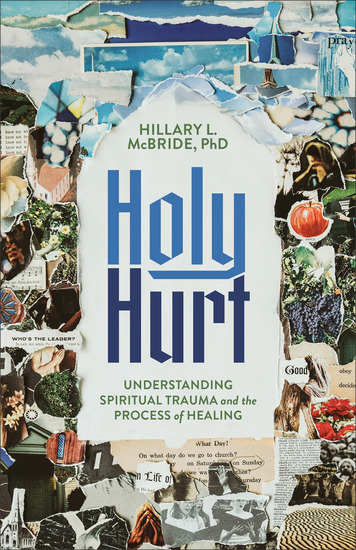
  • Holy Hurt - Understanding Spiritual Trauma and the Process of Healing - cover

    Holy Hurt - Understanding...

    Hillary L. McBride

    • 0
    • 0
    • 0
    Rebuilding trust, connection, and hope after spiritual trauma 
     
    Too often the institutions and communities that are meant to be the most holy in our lives end up deeply hurting us. Religious trauma, spiritual abuse, and faith-based wounds can leave lasting scars that impact every aspect of our lives. 
     
    In Holy Hurt, award-winning clinical psychologist Hillary L. McBride delivers a profound message: spiritual trauma is real, widespread, and has far-reaching consequences. More importantly, she provides hope and practical guidance for those seeking healing from religious trauma and spiritual abuse. You'll discover 
     
    ● evidence-based healing strategies rooted in clinical research and trauma therapy techniques; 
    ● real stories of recovery from survivors of spiritual abuse and religious trauma; 
    ● practices at the end of each chapter designed to support your healing journey; 
    ● expert insights from leading trauma therapists, spiritual abuse counselors, and recovery specialists; and 
    ● tools for prevention to help create healthier faith communities and protect against spiritual manipulation. 
     
    McBride expertly combines clinical research, trauma literature, and compelling interviews with experts to create a comprehensive guide for spiritual trauma recovery. Each chapter includes first-person accounts of healing and practices to help readers process their experiences and begin their journey toward wholeness. 
     
    This essential resource empowers trauma survivors, family members, clergy, counselors, and anyone seeking to understand the complex dynamics of spiritual abuse. Whether you're healing from religious trauma, supporting someone who has experienced it, or working to prevent it in faith communities, Holy Hurt offers the clinical expertise and compassionate guidance you need.
    Show book
  • The Land Is Sung - Zulu Performances and the Politics of Place - cover

    The Land Is Sung - Zulu...

    Thomas M. Pooley

    • 0
    • 0
    • 0
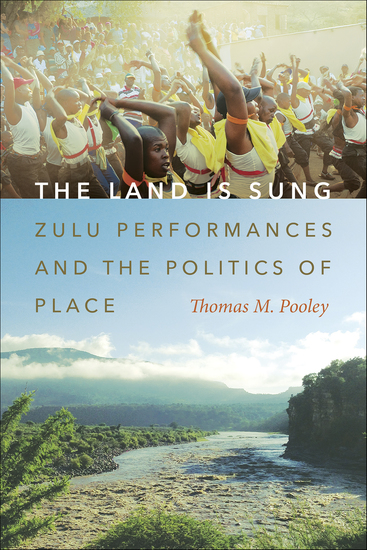
    What does it mean to belong? In The Land is Sung, musicologist Thomas M. Pooley shows how performances of song, dance, and praise poetry connect Zulu communities to their ancestral homes and genealogies. For those without land tenure in the province of KwaZulu-Nata, performances articulate a sense of place. Migrants express their allegiances through performance and spiritual relationships to land are embodied in rituals that invoke ancestral connection while advancing well-being through intergenerational communication. Engaging with justice and environmental ethics, education and indigenous knowledge systems, musical and linguistic analysis, and the ethics of recording practice, Pooley's analysis draws on genres of music and dance recorded in the midlands and borderlands of South Africa, and in Johannesburg's inner city. His detailed sound writing captures the visceral experiences of performances in everyday life. The book is richly illustrated and there is a companion website featuring both video and audio examples.
    Show book
  • Lessons from the Light - What Near-Death Experiences Teach Us about Living in the Here and Now - cover

    Lessons from the Light - What...

    PhD Kenneth Ring, Evelyn...

    • 0
    • 0
    • 0
    Unlike many other books on the subject of near-death experiences (NDEs), Lessons from the Light is intended mainly for those who have never had an NDE themselves but wish to learn from those who have. In clear language, the practical lessons for living and dying are to be found from the study of NDEs. Written by one of the foremost authorities on NDEs, Dr. Kenneth Ring, Lessons from the Light is a book for those who looking to gain knowledge and wisdom to enhance their own lives by incorporating the insights stemming from what many people have come to believe is the ultimate spiritual experience of our time. Listeners will discover for themselves what others have had nearly to die to learn, and how their own lives can blossom in ways that are typical for persons who have undergone NDEs directly. 


    Although Lessons from the Light recounts many moving stories of NDEs, it is not just another book filled with inspiring testimonies but has helpful guidance and practical exercises concerning how listeners can make use of this knowledge to live with greater self-insight, self-compassion, and concern for others, as well as to be better prepared for death, dying, and bereavement. Listeners can apply what they have learned to their own lives and absorb and internalize these lessons from the Light in such a way as to lead to deep personal and spiritual transformation.
    Show book
  • How To Write Evocative Poetry - A Guidebook For Unlocking Creativity Expressing Truth & Captivating Imagination - cover

    How To Write Evocative Poetry -...

    Zachary Phillips

    • 0
    • 0
    • 0
    Journey into the captivating world of poetic expression with renowned author and poet, Zachary Phillips. Whether you are an aspiring poet or a seasoned writer looking to elevate your craft, this enlightening guide is your key to unlocking the power of words and creating evocative, soul-stirring poetry. 
    Within these pages, Zachary Phillips masterfully weaves together the art of language, imagery, and emotion, presenting a comprehensive toolkit designed to ignite your creativity and help you transcend the ordinary. From crafting vivid metaphors to exploring the depths of your emotions, each section delves into the intricate process of capturing the essence of life through carefully chosen words. 
    Drawing inspiration from the natural world, personal experiences, and universal themes, Zachary Phillips provides invaluable advice on how to tap into your innermost thoughts and translate them into evocative verse. Through thought-provoking exercises and examples, you'll learn to evoke sensations, spark memories, and transport your readers to uncharted emotional landscapes. 
    But this book is more than just a practical guide—it is an invitation to discover your unique voice and unleash your poetic potential. With Zachary Phillips as your trusted guide, you'll gain the confidence to experiment with different poetic forms, play with unconventional techniques, and embrace the vulnerability of self-expression. 
    ‘How to Write Evocative Poetry’ is a transformative journey that will inspire you to breathe life into your words, infuse your poetry with depth and resonance, and leave an indelible mark on the hearts and minds of your readers. Let your imagination soar as you embark on a poetic odyssey that will forever change the way you view and create art.
    Show book
  • Kushan Empire The: The History and Legacy of the Powerful Ancient Dynasty in South Asia - cover

    Kushan Empire The: The History...

    Editors Charles River

    • 0
    • 0
    • 0
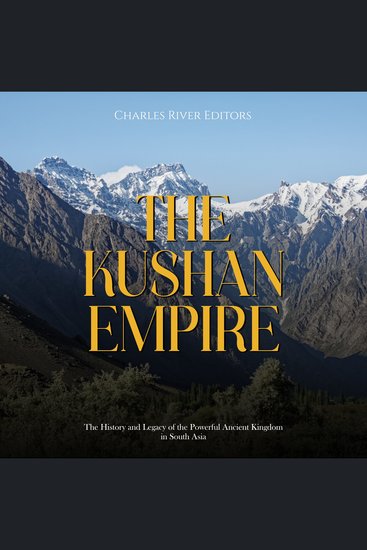
    Long before it was known as Afghanistan, and even longer before it acquired its current reputation, Afghanistan’s modern borders were fairly congruent with the ancient country known as Bactria. Bactria was the seat of several different kingdoms during the course of many centuries, but none were as successful as the Kushan Empire, the dominant political entity in Central Asia from the early 2nd century BCE until the early 3rd century CE, during which time the Kushan rulers played a major role in the first iteration of the trade networks known collectively as the Silk Road. The Kushans began as nomadic steppe warriors who eventually grew tired of constantly migrating and subsequently put their skills and experience to use by conquering Bactria and creating a kingdom that was stronger economically than it was militarily. Taking advantage of their location on the Silk Road trade routes, the Kushan kings charged fees and tolls for goods passing through their empire and developed over-land and sea routes that brought goods from China to Rome and vice versa. But silk, textiles, gold, silver, and other commodities were not the only things that entered the Kushan Empire from the East and West; the Kushan Empire was a focal point for the spread of ideas, diplomats, and diseases. Although the Romans and the Chinese never had direct contact, they both had diplomatic relations with the Kushan kings, who proved to be outstanding diplomats. The Kushan Empire eventually became a transit point of people and ideas, where enormous wealth was exchanged alongside early forms of monotheism, such as Zoroastrianism and Buddhism. The Kushan kings recognized these cultural benefits and so practiced a policy of patronizing different religious philosophies and maintaining peaceful relations with other powers along the Silk Roads to keep the flow of goods moving. 
    Show book