Join us on a literary world trip!
Add this book to bookshelf
Grey
Write a new comment Default profile 50px
Grey
Subscribe to read the full book or read the first pages for free!
All characters reduced
Across the Plains - cover

Across the Plains

Robert Louis Stevenson

Publisher: BookRix

  • 0
  • 0
  • 0

Summary

Across the Plains is the novel that will definitely keep you involved with the journey of the emigrant, as presented by the author. The minute details of the contemporary American towns and country has the power to nostalgically amuse and hanker for more of it. The movement of the emigrant train, the plains of Nebraska, the deserts of Wyoming, etc present a picture that is very hard to erase from the memory, for the observation of the author is so versatile that even a layman can steal his share as a reader. Across the Plains is considered one of the all time best novels by the author.
Available since: 12/19/2023.
Print length: 246 pages.

Other books that might interest you

  • Skylab: The History and Legacy of America’s First Space Station - cover

    Skylab: The History and Legacy...

    Charles River Editors

    • 0
    • 0
    • 0
    During the Space Race, many people envisioned a future in which space travel would be a common undertaking for ordinary citizens. Just as riding in an airplane was once a daring endeavor, travel by rocket could be refined and made safer over time. That collective aspiration to someday take part in dreams NASA brought to life was integral to inspiring public interest in the space program. However, in the years following Apollo 11 in 1969, popular enthusiasm for space travel waned, and dreams of vacationing like the Jetsons gave way to more grounded goals. The level of interest NASA enjoyed would never again be comparable to the culturally defining moments of the agency’s most celebrated missions during the Mercury, Gemini and Apollo Programs.  
    	Nonetheless, in 1972 and 1973, NASA sent nine astronauts to spend extended periods of time living in a craft named Skylab, the very first experimental American space station. Though Skylab would not last long, and the International Space Station remains far more famous, Skylab’s history is one of ingenuity and challenge, as well as how NASA found itself without a mission after the triumph of the Apollo Program. 
    Show book
  • Maritime Strike - The Untold Story of the Royal Navy Task Group Off Libya in 2011 - cover

    Maritime Strike - The Untold...

    John Kingwell

    • 0
    • 0
    • 0
    Leadership under pressure: the personal account of the commander of the Royal Naval Task Group deployed to Libya in 2011.In April 2011, the newly created Royal Navy Response Force Task Group deployed to the Mediterranean to provide a range of military options in response to the Arab Spring. For the next six months the group planned and prepared for a range of potential operations including noncombatant evacuations from Libya, Yemen and Syria, maritime interdiction operations off the Libyan coast, and amphibious landings.  On 3 June the group began launching attack helicopter strikes into Libya and in the nights that followed planned 47 and executed 22 strikes destroying a range of targets including: 54 vehicles, 2 rigid hull boats, 2 BM 21 rocket launchers, 4 main battle tanks, 1 zsu antiaircraft vehicle and 3 command and control nodes. The operation saw the first operational use of Apaches from the sea and the first embarkation of US Army combat search and rescue teams and Blackhawk helicopters in an RN warship.  This is a personal account by the Group’s Commander, which brings to life the challenges of command – including authorizing strikes and mitigating risk to UK aircrew – in a complex and challenging environment. It reveals how closely the RN Group worked with its French counterpart, the support provided by the United States, together with the complexity of working alongside NATO and of simultaneously dealing with a range of UK authorities.  This is a story of leadership under pressure and the remarkable professionalism of all involved and the bravery of Army aircrew. It was modern defense and joinery at its best – British Army and USAF helicopters operating from RN ships, supported by Fleet Air Arm aircraft and fixed wing jets as part of a largely air campaign.
    Show book
  • Exploits of Ben Arnold The: Wa-Si-Cu Tam-A-He-Ca - An Authentic Narrative of Sixty Years in the Old West as Indian Fighter Gold Miner Cowboy Hunter and Army Scout - cover

    Exploits of Ben Arnold The:...

    Ben Arnold, Lewis F. Crawford

    • 0
    • 0
    • 0
    The Exploits Of Ben Arnold, Wa-Si-Cu Tam-A-He-Ca is an Authentic Narrative Of Sixty Years In The Old West As Indian Fighter, Gold Miner, Cowboy, Hunter And Army Scout. He gives many first hand accounts of the treaty signings with the Indians.  He speaks of his meetings with Sitting Bull, Crazy Horse, Spotted tail and many others. The many times the government lied and cheated the Indians out of their land and what the government agreed to pay them. Also many vivid descriptions of daring feats and real life events that are told here for the first time. A must book for those interested in the history of the settlement of the wilderness along the Missouri River and West of it. There is also a harsh criticism of General Crook's failure in the the Little Bighorn Massacre.
    Show book
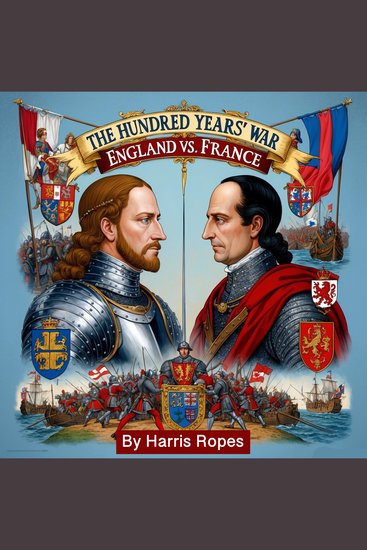
  • The Hundred Years' War - England Vs France - cover

    The Hundred Years' War - England...

    Harris Ropes

    • 0
    • 0
    • 0
    The Hundred Years' War, a conflict that lasted from 1337 to 1453, was shaped by a variety of complex political, social, and dynastic factors. It was not a war that emerged overnight but rather a culmination of long-standing tensions between England and France. At the heart of the conflict were competing territorial claims, royal succession disputes, and issues of sovereignty that had been simmering for centuries. 
    One of the most significant catalysts for the war was the feudal system that governed both England and France. In the medieval period, rulers held vast territories that often extended beyond their borders, which led to intricate relationships between monarchs and their vassals. The English monarchy, under King Edward III, had long-held claims to the French throne due to the inheritance of the Duchy of Guyenne, which was located in the southwest of France. This land, granted to the English king by the French crown centuries earlier, became a point of contention when King Philip VI of France attempted to assert control over it. The French monarchy's desire to regain full sovereignty over its territory clashed with the English king’s interests, setting the stage for the war. 
    Additionally, the death of the French king Charles IV in 1328 sparked a succession crisis. The French throne was left without a direct male heir, leading to a dispute over the rightful successor. The French crown passed to Philip VI, but Edward III, the King of England, claimed that his mother, Isabella, was the sister of Charles IV and thus, he had a stronger claim to the throne. This dynastic dispute became the primary reason for the conflict, as Edward III demanded recognition of his claim.
    Show book

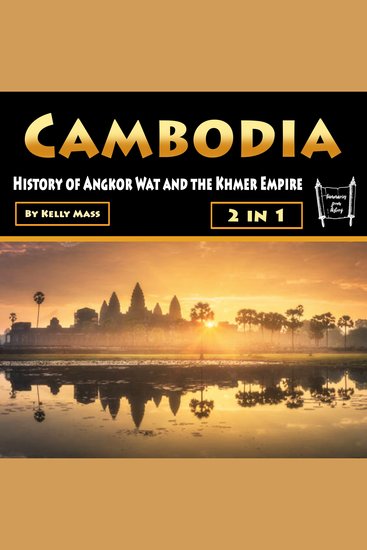
  • Cambodia - History of Angkor Wat and the Khmer Empire (3 in 1) - cover

    Cambodia - History of Angkor Wat...

    Kelly Mass

    • 0
    • 0
    • 0
    Learn more about the history of those countries. The topics addressed will be these: 
    Angkor Wat-- The temple was built as the state temple for the Khmer Empire at the demand of Suryavarman II in the early 12th century in Yaodharapura (, contemporary Angkor), the Khmer Empire's capital. It was constructed in the early 12th century to honor the Hindu god Vishnu, but by the end of the century, it had been changed to a Buddhist temple. 
    Angkor Wat is a fascinating structure, dating back hundreds of years, and it’s impressive how much of it has remained intact. 
    The Khmer Empire--Historians describe Cambodia as the Khmer State or the Angkorian Empire (Khmer:) from the 9th century to the 15th century, when it was a Hindu/Buddhist empire in Southeast Asia. The empire, which developed from the old societies of Funan and Chenla, governed and/or "vassalized" the majority of mainland Southeast Asia and parts of Southern China, covering from the suggestion of the Indochinese Peninsula northward to modern-day Yunnan province in China, and from Vietnam westward to Myanmar. The Khmer Empire was greater at its peak than the Byzantine Empire (Eastern Roman Empire) that existed at the exact same period. 
    The Siamese-- Siam was just a much different name for what's now referred to as Thailand. The Siamese are the people who live there, though they're never ever called as such any longer. 
    Thailand is a fascinating country, with its own culinary arts, culture, history, royalty, infrastructure, and influence on the world. To learn more about these “Thai” people before they were called Thai, when they were Siamese, is to learn about those people’s roots.
    Show book
  • Nine Guiding Principles for Women in Higher Education - cover

    Nine Guiding Principles for...

    Karyn Z. Sproles

    • 0
    • 0
    • 0
    Although there are more women in higher education than ever before—and increasingly in leadership positions—their paths to success are more difficult than those paved for men. Nine Guiding Principles for Women in Higher Education is a concise and accessible resource aimed at helping women faculty succeed in their academic careers. Karyn Z. Sproles offers guidance, humor, and courage to women in higher education, paying particular attention to those with children and women of color. 


    Based on a wide range of scholarship, stories from dozens of women, and Sproles's personal experience from thirty-four years as a professor, department chair, and dean, Nine Principles offers advice on facing down impostor syndrome; avoiding social isolation; building networks of mentors; preparing for tenure; balancing teaching, scholarship, and home life; and more. 


    Practical and visionary, the nine principles guide listeners from the beginning of their careers through to leadership roles. Women in academia will find the tools they need to balance success with the rest of life's demands. Each chapter ends with a quick list of advice for easy reference. Rounding out the book is a workshop section that can be used by individual listeners or as a guide for conducting workshops and faculty development programs.
    Show book