Join us on a literary world trip!
Add this book to bookshelf
Grey
Write a new comment Default profile 50px
Grey
Subscribe to read the full book or read the first pages for free!
All characters reduced
Micrographia - cover

Micrographia

Robert Hooke

Publisher: CLXBX

  • 0
  • 0
  • 0

Summary

Robert Hooke's Micrographia is a groundbreaking work in the history of science, renowned for its pioneering observations and exquisite illustrations of the microscopic world. First published in 1665, it stands as one of the most influential scientific texts of the 17th century, inspiring generations of natural philosophers, scientists, and curious minds.

In Micrographia, Hooke documents his meticulous observations using one of the earliest microscopes, revealing details of nature invisible to the naked eye. From the intricate structure of plants and insects to the delicate patterns of everyday materials, Hooke's work uncovers the astonishing complexity and beauty of the natural world. Most famously, he coined the term "cell" to describe the basic structural units of living organisms, laying the foundation for modern biology.

The book is celebrated not only for its scientific insights but also for its detailed illustrations. Hooke's copperplate engravings bring the microscopic world to life, combining artistic skill with scientific accuracy. These images allowed readers of his time—and readers today—to see a previously hidden universe, transforming the way humanity perceives the natural world.

Micrographia is more than a catalog of observations; it is a testament to curiosity, careful experimentation, and the power of technology to expand human understanding. Hooke's keen eye, methodical approach, and eloquent descriptions make the work both a scientific milestone and a literary achievement. His exploration of the microscopic world challenges readers to marvel at the complexity of life and the wonders of creation.

Essential for students of science, history, and literature, Micrographia remains a timeless work that celebrates the intersection of observation, invention, and imagination. It continues to inspire curiosity, demonstrating how careful study and innovative tools can reveal the hidden structures and patterns that govern the natural world.
Available since: 03/29/2026.
Print length: 523 pages.


Other books that might interest you

  • Race for Nuclear Weapons during World War II The: The History and Legacy of Both Sides’ Efforts to Build an Atomic Bomb - cover

    Race for Nuclear Weapons during...

    Editors Charles River

    • 0
    • 0
    • 0
    Before the Second World War, military conflicts were fought under orthodox conditions, usually termed “conventional warfare,” but several innovations had significantly changed combat, leading inextricably to the race for a nuclear weapon in the 1930s and 1940s. Conflicts had been fought by armies on horseback with guns of varying sophistication since the 16th century, but mechanized warfare and machine guns changed this calculus and set the stage for future combat by the end of World War I. Other sinister changes entered the fray during this conflict, such as chemical weapons like chlorine and mustard gas. The total warfare brought about by World War I and ensuing wars like the Spanish Civil War made the quest for the most powerful weapons somewhat necessary. 
    The Manhattan Project would ultimately yield the “Little Boy” and “Fat Man” bombs that released more than 100 Terajoules of energy at Hiroshima and Nagasaki, but as it turned out, the Axis were not far behind with their own nuclear weapons program. When the Nazis’ quest for a nuclear weapon began in earnest in 1939, no one really had a handle on how important nuclear weapons would prove to war and geopolitics. The attacks on Hiroshima and Nagasaki in August 1945, along with the Cold War-era tests and their accompanying mushroom clouds, would demonstrate the true power and terror of nuclear weapons, but in the late 1930s these bombs were only vaguely being thought through, particularly after the successful first experiment to split the atom by a German scientist. The nuclear age itself was in its infancy, barely 35 years old, but within a few short years the advent of nuclear war loomed over the world and the prospect of the enemy winning the nuclear race kept Allied leaders awake at night.
    Show book
  • Forex Trading Price Action Secrets - Beginners Guide For Currency Trading Strategies Tools And Techniques For Consistent Profitability - cover

    Forex Trading Price Action...

    Will Weiser

    • 0
    • 0
    • 0
    If you want to discover how to become a thriving Forex trader, this book is for you!  
      
    BUY THIS BOOK NOW AND GET STARTED TODAY! 
    In this book you will discover: 
    ·       HOW TO TRADE FOREX NEWS 
    ·       HOW TO TRADE DEAD MARKETS IN FOREX 
    ·       HOW TO CREATE A FOREX TRADING STRUCTURE 
    ·       HOW TO TRADE THE US DOLLAR 
    ·       BEST FOREX BROKERS FOR NON-US TRADERS 
    ·       HOW TO TRADE GDP IN FOREX 
    ·       HOW TO TRADE USD-CAD 
    ·       HOW TO TRADE INTEREST RATES IN FOREX 
      
    BUY THIS BOOK NOW AND GET STARTED TODAY!
    Show book
  • Byja Blueprint - An Introductory Guide to Direct Primary Care for Doctors Patients and Businesses - cover

    Byja Blueprint - An Introductory...

    MD Byron Jasper

    • 0
    • 0
    • 0
    Byja Blueprint: An Introductory Guide to Direct Primary Care for Doctors, Patients, and Businesses by Dr. Byron Jasper is a comprehensive exploration into the innovative healthcare model of Direct Primary Care (DPC). This book seeks to educate readers on the fundamental differences between DPC and traditional healthcare models, highlighting the financial, operational, and relational benefits of adopting DPC. 
      
    Dr. Jasper presents Direct Primary Care as a transformational solution to the limitations of the traditional insurance-based medical system, which often results in rushed patient visits, excessive paperwork, and high costs. Through DPC, patients gain access to personalized, timely care with transparent pricing, while physicians experience reduced administrative burdens and increased job satisfaction. 
      
    This book explores various aspects of DPC, including its benefits for patients, such as more individualized care and direct access to their doctors, and for businesses, which can achieve significant cost savings and enhance employee health and productivity. It also addresses common misconceptions about Direct Primary Care, such as its perceived exclusivity and limitations in scope, by providing factual clarifications and real-life stories of patients and doctors thriving under this model. 
    Byja Blueprint serves as both an educational resource and an inspirational guide, advocating for a healthcare system that prioritizes the doctor-patient relationship and delivers high-quality, affordable care. Dr. Jasper's insights and practical advice make this book a valuable resource for healthcare professionals considering the DPC model, patients seeking a more tailored healthcare experience, and businesses looking for effective employee health solutions.
    Show book
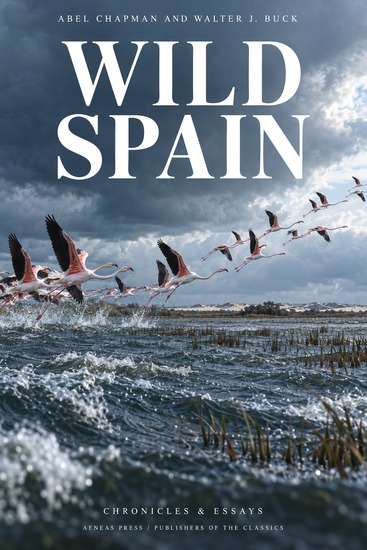
  • Wild Spain - Sport and Natural History in the Peninsula - cover

    Wild Spain - Sport and Natural...

    Walter J. Buck, Abel Chapman

    • 0
    • 0
    • 0
    Spain away from the roads - the Coto Doñana marshes, the sierra, the bustard and the ibex - by a naturalist who shot much of what he describes and then spent his old age arguing for its protection. The marshes he wrote about are now a national park. This edition binds 59 plates of painting with the text, among them works by Rosa Bonheur, Albert Bierstadt and J. M. W. Turner, and restores and colours its three in-text illustrations.
    Show book
  • Deep Blue - Why we love the sea - cover

    Deep Blue - Why we love the sea

    Veruska De Vita

    • 0
    • 0
    • 0
    '. . . there is a quiet here that doesn't exist on land, a fluid suspension that reminds me that humans were never meant to be so rigid, so fixed in place. In the sea, we are both vulnerable and free . . .'
    Deep Blue is a love letter to the sea, exploring humans' deep connection with the ocean and the bliss of swimming, diving, dipping and simply being in salt water.
    Join Veruska De Vita, a learner free diver and open-water swimmer, as she delves into why the ocean calls to us. Along the way she talks to those who find healing and wellness in swimming groups and cold-water immersion, scientists who study complex marine environments, elite athletes who swim super-human distances along our coasts and free divers who plumb the depths with one breath.
    Water is primordial. It gives life. It represents hope and renewal. This book is not only for sea worshippers. It promises to inspire everyone to jump with joy into the waves – and offers reflections on our intimate relationship with the sea, which supports life on earth and requests that we respect it.
    Show book
  • First Ascent of Mount Rainier - cover

    First Ascent of Mount Rainier

    Hazard Stevens

    • 0
    • 0
    • 0
    In the summer of 1870, Hazard Stevens and P. B. Van Trump set out to accomplish what no one had yet done: reach the summit of Mount Rainier. 
    In this firsthand account, Stevens recounts their pioneering ascent of the massive Washington volcano, from the challenges of approaching the mountain to the difficult climb across glaciers, snowfields, and rugged terrain. With little knowledge of the route and none of the modern equipment available to today’s mountaineers, the two climbers faced an uncertain and demanding journey toward the summit. 
    Stevens’s account offers a fascinating glimpse into the earliest days of mountaineering in the Pacific Northwest. His vivid descriptions capture the hazards, scenery, exhaustion, and exhilaration of climbing one of North America’s great peaks—and the determination required to stand where no climber had stood before. 
    A firsthand record of a landmark achievement, First Ascent of Mount Rainier preserves the story of one of the most important early climbs in American mountaineering. 
    Cover Photo by Mani Kant Sharma : https://www.pexels.com/photo/rocky-mountains-in-snow-and-trees-below-18584073/
    Show book