Join us on a literary world trip!
Add this book to bookshelf
Grey
Write a new comment Default profile 50px
Grey
Subscribe to read the full book or read the first pages for free!
All characters reduced
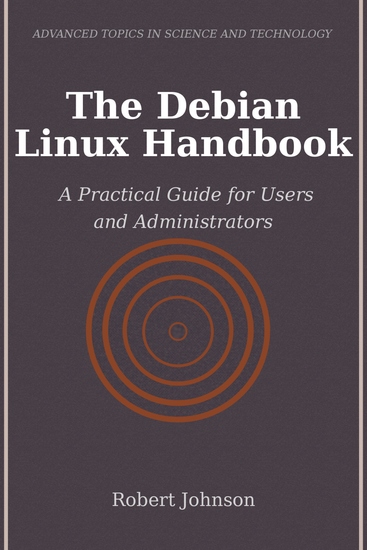
The Debian Linux Handbook - A Practical Guide for Users and Administrators - cover

The Debian Linux Handbook - A Practical Guide for Users and Administrators

Robert A. Johnson

Publisher: HiTeX Press

  • 0
  • 0
  • 0

Summary

Discover the power and versatility of Debian Linux with "The Debian Linux Handbook: A Practical Guide for Users and Administrators." This comprehensive guide offers both novice users and seasoned administrators an in-depth exploration of one of the most trusted Linux distributions available today. With its emphasis on practical, step-by-step instructions, this book equips readers with the essential tools to master Debian's robust environment, from installation to advanced system management.Each chapter delves into crucial aspects of Debian, ensuring a well-rounded understanding of topics like software package management with APT, system administration, networking, and security. Readers will learn how to harness the command line interface to automate tasks, troubleshoot issues, and optimize system performance. Drawing upon Debian's foundational principles of stability and open-source philosophy, the book provides insights into configuring systems for both personal and enterprise use with ease and confidence.Written with clarity and precision, "The Debian Linux Handbook" is more than just a technical manual; it is a gateway into the vibrant Debian community. Engage with the globally recognized Debian Project, embrace best practices for secure and efficient computing, and unlock the full potential of your Linux environment. Whether you're setting up a server, managing desktop solutions, or contributing to the Debian ecosystem, this book is an indispensable resource in your journey toward Linux mastery.
Available since: 02/06/2025.
Print length: 404 pages.
Other books that might interest you

  • Guided Meditation for Anxiety - cover

    Guided Meditation for Anxiety

    Meditative Hearts

    • 0
    • 0
    • 0
    Are you tired of feeling overwhelmed by anxiety? Do worries and fears consume your thoughts, making it difficult to find peace of mind? What if there was a gentle yet powerful tool to help you navigate through life's challenges with calm and clarity?  
    Introducing "Guided Meditation for Anxiety" – your pathway to inner peace and emotional resilience. This transformative audiobook offers a sanctuary of tranquility in a world filled with chaos and uncertainty.  
    Imagine a soothing voice leading you through meditation exercises specifically designed to dissolve anxiety and tension. With each guided breath, you release the grip of worry and embrace a sense of deep relaxation and serenity.  
    Say goodbye to the endless cycle of anxious thoughts and hello to a newfound sense of calm and confidence. Whether you suffer from generalized anxiety, panic attacks, or simply long for greater emotional balance, this audiobook is your ally in the journey towards mental well-being.  
    Join the millions who have already discovered the life-changing benefits of guided meditation for anxiety. Embrace resilience, reclaim your inner strength, and face each day with courage and clarity. Your path to peace starts now.
    Show book
  • The Monad Manifesto - cover

    The Monad Manifesto

    Dennis William Hauck

    • 0
    • 0
    • 0
    As scientists probe deeper into the nature of reality, they are discovering that consciousness is at the root of everything. What we believed were the laws of physics and matter are really the archetypal laws of mind, and the condensation of consciousness that created our universe originated from a dimensionless point in the void known as the “Singularity” in physics and the “Monad” in math and philosophy. 
    In philosophy, the Monad is the single source of all things—the embedded matrix of both our present existence and all possible future incarnations. For theologians, it is the logos –the Word of God that created the world. In mathematics, the Monad is the root of all the numbers that describe Nature. In science, it is the Big Bang explosion of light and information from which our universe sprung forth. 
    By the late 20th century, an interdisciplinary science of Consciousness Studies emerged dedicated to solving the puzzle of consciousness and understanding the mysterious monadic origin of the universe. Most of the pieces to that puzzle are already in place, and we are just beginning to glimpse the overall picture. It’s not like anything we ever expected . . .
    Show book
  • Against Technoableism - Rethinking Who Needs Improvement - cover

    Against Technoableism -...

    Ashley Shew

    • 0
    • 0
    • 0
    When Ashley Shew became a self-described "hard-of-hearing chemobrained amputee with Crohn's disease and tinnitus," there was no returning to "normal." Suddenly well-meaning people called her an "inspiration" while grocery shopping or viewed her as a needy recipient of technological wizardry. Most disabled people don't want what the abled assume they want—nor are they generally asked. 


    In vibrant prose, Shew shows how we can create better narratives and more accessible futures by drawing from the insights of the cross-disability community. To forge a more equitable world, Shew argues that we must eliminate "technoableism"—the harmful belief that technology is a "solution" for disability; that the disabled simply await being "fixed" by technological wizardry; that making society more accessible and equitable is somehow a lesser priority. 


    This badly needed introduction to disability expertise considers mobility devices, medical infrastructure, neurodivergence, and the relationship between disability and race. The future, Shew points out, is surely disabled—whether through changing climate, new diseases, or even through space travel. It's time we looked closely at how we all think about disability technologies and learn to envision disabilities not as liabilities, but as skill sets enabling all of us to navigate a challenging world.
    Show book
  • How to Learn Faster: 7 Easy Steps to Master Accelerated Learning Techniques Learning Strategies & Fast Self-learning - cover

    How to Learn Faster: 7 Easy...

    Troye Bates

    • 0
    • 0
    • 0
    Do you typically require more time and effort than others to pick up new skills and integrating new information? 
      
    If you consider yourself a slow learner, this guide is exactly what you need! Herein, you will find some helpful strategies which can help you develop the skills you need to become a faster learner. 
      
    These fool-proof accelerated learning methods have been studied by many education experts and cognitive psychologists and proven to work. You should, therefore, have no doubt in your mind that with the help of these fast learning skills, you will be able to learn and master any skill or subject which you desire. 
      
    YOU WILL LEARN: 
    • The process of learning and how it happens. 
    • The essential elements for learning. 
    • The different learning styles which students prefer. 
    • The various learning difficulties affecting learners. 
    • 7 easy steps to improve your learning speed. 
      
    This guide demystifies the process of learning and shows that anyone can indeed become a fast learner!
    Show book
  • The Art of NFTs - A NFT Business Model Playbook - cover

    The Art of NFTs - A NFT Business...

    J Rob

    • 0
    • 0
    • 0
    I will discuss how NFTs can be incorporated into a variety of business industries including music, fashion, film, content creation, sports, franchising and real estate. In the next chapters, we’ll explore new business models that use blockchain technologies, smart contracts, NFTs, and cryptocurrencies to diversify revenue streams. 
    Show book
  • Agrostology - Grasses of the World: From Lawns to Prairie Ecosystems - cover

    Agrostology - Grasses of the...

    Mike Crawford

    • 0
    • 0
    • 0
    Agrostology, the scientific study of grasses, is a crucial field of botany that explores the diversity, structure, and ecological significance of grasses. Grasses belong to the Poaceae family, one of the largest and most economically important plant families in the world. These plants play a foundational role in ecosystems, agriculture, and human civilization. From the vast prairies and savannas to the rice and wheat fields that sustain billions of people, grasses shape the landscapes of both natural and human-altered environments. 
    The study of grasses has a long history, dating back to early agricultural societies that first domesticated cereal crops. The ancient civilizations of Mesopotamia, Egypt, and China relied on grasses such as wheat, barley, and rice to establish permanent settlements. Over time, the understanding of grass physiology, reproduction, and ecological functions deepened, leading to advancements in agronomy, ecology, and land management. By the 19th and 20th centuries, agrostology emerged as a specialized discipline within botany, focusing on grass classification, physiology, and ecosystem dynamics. 
    Grasses are uniquely adapted to a wide range of environmental conditions. They thrive in temperate, tropical, and even arid climates, displaying remarkable resilience through specialized growth mechanisms. Their ability to reproduce through both seeds and vegetative propagation allows them to colonize and dominate various habitats. Many grass species employ C4 photosynthesis, an efficient metabolic pathway that enables them to survive in hot, dry environments. This adaptability makes grasses a dominant plant group in many ecosystems, providing habitat and food for numerous animal species.
    Show book