Join us on a literary world trip!
Add this book to bookshelf
Grey
Write a new comment Default profile 50px
Grey
Subscribe to read the full book or read the first pages for free!
All characters reduced
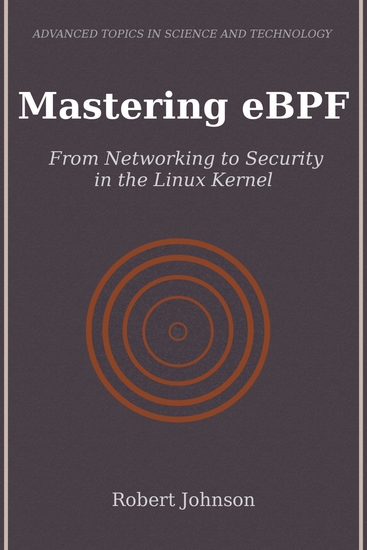
Mastering eBPF - From Networking to Security in the Linux Kernel - cover

Mastering eBPF - From Networking to Security in the Linux Kernel

Robert A. Johnson

Publisher: HiTeX Press

  • 0
  • 0
  • 0

Summary

"Mastering eBPF: From Networking to Security in the Linux Kernel" is an essential guide for IT professionals, developers, and system administrators seeking to harness the full potential of eBPF in enhancing their Linux environments. This comprehensive volume delves into the details of eBPF's architecture, programming intricacies, and its transformative applications across networking, security, and performance optimization. Readers will gain a deep understanding of how eBPF operates within the Linux kernel, enabling them to implement robust monitoring and security solutions, fine-tune system performance, and respond swiftly to dynamic computing challenges.Through precise explanations and practical examples, this book covers a broad spectrum of eBPF applications, from optimizing network operations to strengthening system security against modern threats. Each chapter builds on foundational concepts, guiding readers through complex programming constructs and offering insights into real-world applications, including cloud deployments and cutting-edge observability practices. As eBPF continues to evolve, this book also explores future trends and research directions, preparing readers to stay ahead in the rapidly advancing world of IT infrastructure and development.With "Mastering eBPF," readers are equipped with the knowledge and tools needed to maximize eBPF's capabilities in their environments, driving innovation and efficiency. This book serves as a definitive resource for mastering one of the most powerful technologies within the Linux kernel, ensuring that its users are well-prepared to tackle current and future challenges in the IT landscape.
Available since: 01/07/2025.
Print length: 236 pages.


Other books that might interest you

  • From Outer Space to Inner Space - An Apollo Astronaut's Journey Through the Material and Mystical Worlds - cover

    From Outer Space to Inner Space...

    Dr. Edgar Mitchell

    • 0
    • 0
    • 0
    The sixth man who walked on the moon shares his journey to the stars, into the mind, and beyond. 
    In February 1971, as Apollo 14 astronaut Edgar Mitchell hurtled Earthward through space, he was engulfed by a profound sense of universal connectedness. He intuitively sensed that his presence and that of the planet in the window were all part of a deliberate, universal process, and that the glittering cosmos itself was, in some way, conscious. The experience was so overwhelming, Mitchell knew his life would never be the same.  
    For the next thirty-five years, he embarked on another journey, an inward exploration of the ineffable mystery of human consciousness and being. Mitchell left NASA to form the Institute of Noetic Sciences (IONS). There he initiated research in areas of study previously neglected by mainstream science and constructed a theory that could explain not only the mysteries of consciousness, but also the psychic event—what spiritualists call a “miracle” and scientists dismiss altogether.  
    Mitchell also created a new dyadic model of reality, revealing a self-aware universe not predetermined by the laws of physics, preordained by deities, or infinitely malleable. While human actions are generally subject to the laws of physics, these laws are also influenced by the mind.  
    From Outer Space to Inner Space traces two remarkable journeys—one through space and one through the mind. Together they fundamentally alter the way we understand the miracle and mystery of being, and ultimately reveal humankind’s role in its own destiny.  
    Previously published as The Way of the Explorer, this edition includes a new foreword by Avi Loeb, an afterword by Dean Radin, and a postscript chapter by the author.
    Show book
  • You Teach the Machines - AI On Your Terms - cover

    You Teach the Machines - AI On...

    Jeff Pennington

    • 0
    • 0
    • 0
    AI on your terms. Not theirs. You Teach the Machines helps people of all backgrounds understand, live with, and use artificial intelligence. Told through real examples drawn from finance, cooking, technology, marketing, health, music, driving, and more, You Teach the Machines will help you maximize benefit and minimize harm from the AI-driven change already happening in your life. Find out what AI has to do with data privacy, the movie Trading Places, painter Bob Ross's Happy Little Clouds, the growth of the nuclear power industry, and your child or grandchild's classroom. Did you know that AI learns much like a baby? Understand the AI training cycle and how you participate in it-whether you realize it or not, you literally teach the machines. Did you know that AI can scale the expertise of specialized doctors? Discover how AI can enhance your health and provide rural residents with new access to medical care. Does this all feel new? Learn how we've been here before: From the invention of the written and printed word to ChatGPT, You Teach the Machines shows how writing and books have transformed the use of human knowledge, just as AI is doing now. Historical anecdotes help to demystify and put powerful new artificial intelligence technology in a historical context relevant to your life and work today. Completely new to AI? Helpful hands-on exercises walk you through what AI is good at—and where it is still a work-in-progress. Gain actionable insight into the pitfalls and side effects of a new industrial revolution in human knowledge work. Most importantly, You Teach the Machines lays out a path to improve your work and life with artificial intelligence. On your terms.
    Show book
  • Mastering Data-Intensive Applications - Building for Scale Speed and Resilience - cover

    Mastering Data-Intensive...

    Chuck Sherman

    • 0
    • 0
    • 0
    In an era dominated by data, the ability to harness its power is a game-changer for businesses and industries. "Mastering Data-Intensive Applications" is your definitive guide to navigating the complex landscape of building and managing applications that can handle the massive volumes of data that define the modern world. 
    This book delves into the core principles, strategies, and best practices required to architect, develop, and maintain data-intensive applications that excel in scale, speed, and resilience. Whether you're a seasoned software engineer, a system architect, or a technical leader, this book will empower you to conquer the challenges of working with data at an unprecedented scale. 
    "Mastering Data-Intensive Applications" is more than just a technical manual—it's a comprehensive journey through the intricacies of modern application development. Authored by experts in the field, this book combines theoretical knowledge with practical wisdom, enabling you to create applications that are not only responsive and robust but also capable of extracting valuable insights from the vast sea of data. 
    Equip yourself with the skills to architect data-intensive applications that excel in scale, speed, and resilience. Whether you're building the next social media sensation, revolutionizing e-commerce, or driving advancements in healthcare analytics, this book will be your steadfast companion in the world of data-intensive application mastery. 
     
    Show book
  • The Jupiter Sun - The Greatest Achievement in Human History - cover

    The Jupiter Sun - The Greatest...

    Michael Mathiesen

    • 0
    • 0
    • 0
    This idea came to me from an earlier work of Science Fiction of mine - The Book To End All Books - by Michael Mathiesen.  In the story, the main character lands her first job out of college in helping in the Jupiter Project - which consists of igniting Jupiter into our second sun.  In doing the research for my story, to make it more realistic, I found that scientists had already used red lasers to create fusion reactions in the lab.  These were obviously small enough so that they didn't burn down the whole state of Nebraska.  They used just a few atoms of Hydrogen to test their theory.  And, it worked producing fusion energy for the first time, but now replicated many hundreds of times around the world. So, this means that by upscaling our nuclear fusion reaction and creating huge amounts of energy, all we have to do is put this same kind of laser cannons on the four largest moons of Jupiter and fire into the center of the mass of Jupiter because it's completely Hydrogen gas, Hydrogen plasma and even Hydrogen so dense it's called 'Metallic'.  This mimics the conditions of our sun over 6 billion years ago when it was also a huge gas ball and only needed a spark to ignite its main ingredient into the gigantic fusion reaction that gives all the energy that all life on planet Earth needs.  A 2nd Sun would solve all our energy problems I reasoned and the impacts would be all positive.In this book, we go over the details of how NASA and hopefully Spacex and Blue Origins can get together and create a mission to create a 2nd sun in the sky.  Imagine how other civilizations all around the universe who are able to look up into the sky around their planets with telescopes and instruments as powerful as ours and they notice a completely new star blazing into the night sky.  They might even be able to conclude that this star had to have been created by an intelligent life form, a life form that may have achieved something no other life form had ever done before.
    Show book
  • A Letter God Might Have Written - Being a Poet Being an Archbishop Being Human - cover

    A Letter God Might Have Written...

    Dr. Rowan Williams

    • 0
    • 0
    • 0
    “Delightful, unique” This sought-after book by a previous Archbishop of Canterbury is pervaded by the deep insights, poetry and personal experiences of a great poet, thinker, and, above all, human being. Profound and moving while at the same time wholly unstuffy, it is the perfect present for those of all faiths.
    Show book
  • The Book of Field and Roadside - Open-Country Weeds Trees and Wildflowers of Eastern North America - cover

    The Book of Field and Roadside -...

    John Eastman

    • 0
    • 0
    • 0
    The acclaimed nature writer continues his series exploring the fact and folklore of American plant life with this beautifully illustrated volume. In The Book of Field and Roadside, John Eastman explores the botanical life of open dryland habitats. Picking up where typical field guides leave off, this handy reference takes an ecological approach, providing complete descriptions of eighty-five plants (from Ailanthus to Yucca) found in fields, open meadows, and along roadsides, as well as wildlife communities associated with them.  Written in an engaging manner, this book helps readers identify dryland plants, discusses what other organisms, plant and animal, might be found in the same area, and explains why. The informative text is enhanced by beautifully detailed illustrations by nature artist Amelia Hansen.
    Show book