¡Acompáñanos a viajar por el mundo de los libros!
Añadir este libro a la estantería
Grey
Escribe un nuevo comentario Default profile 50px
Grey
Suscríbete para leer el libro completo o lee las primeras páginas gratis.
All characters reduced
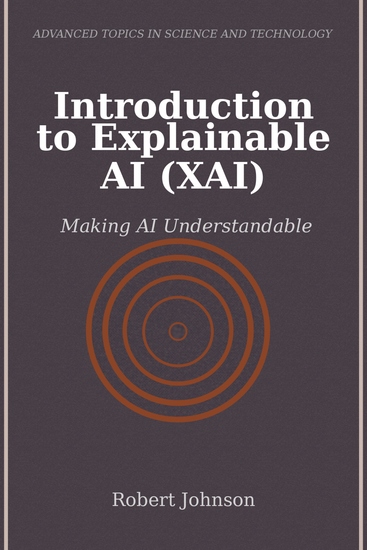
Introduction to Explainable AI (XAI) - Making AI Understandable - cover

Introduction to Explainable AI (XAI) - Making AI Understandable

Robert A. Johnson

Editorial: HiTeX Press

  • 0
  • 0
  • 0

Sinopsis

"Introduction to Explainable AI (XAI): Making AI Understandable" is an essential resource for anyone seeking to understand the burgeoning field of explainable artificial intelligence. As AI systems become integral to critical decision-making processes across industries, the ability to interpret and comprehend their outputs becomes increasingly vital. This book offers a comprehensive exploration of XAI, delving into its foundational concepts, diverse techniques, and pivotal applications. It strives to demystify complex AI behaviors, ensuring that stakeholders across sectors can engage with AI technologies confidently and responsibly.Structured to cater to both beginners and those with an existing interest in AI, this book covers the spectrum of XAI topics, from model-specific approaches and interpretable machine learning to the ethical and societal implications of AI transparency. Readers will be equipped with practical insights into the tools and frameworks available for developing explainable models, alongside an understanding of the challenges and limitations inherent in the field. As we look toward the future, the book also addresses emerging trends and research directions, positioning itself as a definitive guide to navigating the evolving landscape of XAI.This book stands as an invaluable reference for students, practitioners, and policy makers alike, offering a balanced blend of theory and practical guidance. By focusing on the synergy between humans and machines through explainability, it underscores the importance of building AI systems that are not only powerful but also trustworthy and aligned with societal values.
Disponible desde: 27/10/2024.
Longitud de impresión: 255 páginas.


Otros libros que te pueden interesar

  • Mastering OpenCV with Python - Use NumPy Scikit TensorFlow and Matplotlib to learn Advanced algorithms for Machine Learning through a set of Practical Projects - cover

    Mastering OpenCV with Python -...

    Ayush Vaishya

    • 0
    • 0
    • 0
    Unlocking Visual Insights: OpenCV Made Simple and Powerful. 


    ???Book Description
    "Mastering OpenCV with Python" immerses you in the captivating realm of computer vision, with a structured approach that equips you with the knowledge and skills essential for success in this rapidly evolving field. 


    From grasping the fundamental concepts of image processing and OpenCV to mastering advanced techniques such as neural networks and object detection, you will gain a comprehensive understanding. Each chapter is enriched with hands-on exercises and real-world projects, ensuring the acquisition of practical skills that can be immediately applied in your professional journey. 


    This book not only elevates your technical proficiency but also prepares you for a rewarding career. The technological job landscape is constantly evolving, and professionals who can harness the potential of computer vision are in high demand. 


    By mastering the skills and insights contained within these pages, you will be well-prepared to explore exciting career opportunities, ranging from machine learning engineering to computer vision research. This book is your ticket to a future filled with innovation and professional advancement within the dynamic world of computer vision. 


    Table of Contents
    
    1. Introduction to Computer Vision
    2. Getting Started with Images
    3. Image Processing Fundamentals
    4. Image Operations
    5. Image Histograms
    6. Image Segmentation
    7. Edges and Contours
    8. Machine Learning with Images
    9. Advanced Computer Vision Algorithms
    10. Neural Networks
    11. Object Detection Using OpenCV
    12. Projects Using OpenCV   
    Index
    Ver libro
  • Woodcraft - cover

    Woodcraft

    Nessmuk

    • 0
    • 0
    • 0
    Not Yet Available
    Ver libro
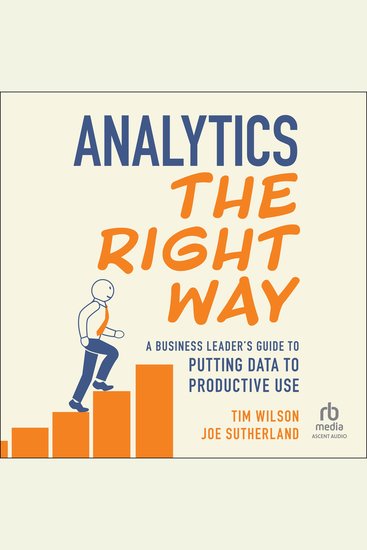
  • Analytics the Right Way - A Business Leader's Guide to Putting Data to Productive Use - cover

    Analytics the Right Way - A...

    Tim Wilson, Dr. Joe Sutherland

    • 0
    • 0
    • 0
    Organizations have more data at their fingertips than ever, and their ability to put that data to productive use should be a key source of sustainable competitive advantage. Yet, business leaders looking to tap into a steady and manageable stream of "actionable insights" often, instead, get blasted with a deluge of dashboards, chart-filled slide decks, and opaque machine learning jargon that leaves them asking, "So what?" 


    Analytics the Right Way is a guide for these leaders. It provides a clear and practical approach to putting analytics to productive use with a three-part framework that brings together the realities of the modern business environment with the deep truths underpinning statistics, computer science, machine learning, and artificial intelligence. The result: a pragmatic and actionable guide for delivering clarity, order, and business impact to an organization's use of data and analytics. 


    The book uses real-world examples from the authors' direct experiences—working inside organizations, as external consultants, and as educators—to empower the listener to put foundational analytical and statistical concepts to effective use in a business context.
    Ver libro
  • Queer Little Folks - cover

    Queer Little Folks

    Harriet Beecher Stowe

    • 0
    • 0
    • 0
    A wonderful children's classic - a collection of moral stories told by animals in the woods. The wittily written stories explore various issues in a fun way. - Summary by Claire Schreuder
    Ver libro
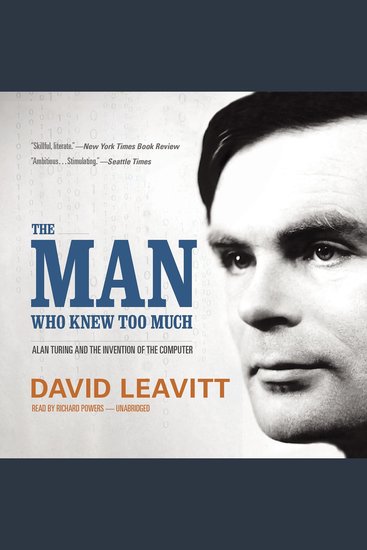
  • The Man Who Knew Too Much - Alan Turing and the Invention of the Computer - cover

    The Man Who Knew Too Much - Alan...

    David Leavitt

    • 0
    • 0
    • 0
    A "skillful, literate" (New York Times Book Review) biography of the persecuted genius who helped create the modern computer 
    To solve one of the great mathematical problems of his day, Alan Turing proposed an imaginary computer. Then, attempting to break a Nazi code during World War II, he successfully designed and built one, thus ensuring the Allied victory. Turing became a champion of artificial intelligence, but his work was cut short. As an openly gay man at a time when homosexuality was illegal in England, he was convicted and forced to undergo a humiliating "treatment" that may have led to his suicide. 
    With a novelist's sensitivity, David Leavitt portrays Turing in all his humanity—his eccentricities, his brilliance, his fatal candor—and elegantly explains his work and its implications.
    Ver libro
  • Geochemistry - cover

    Geochemistry

    Introbooks Team

    • 0
    • 0
    • 0
    Geochemistry is that branch of science which uses the fundamental principles of Chemistry to understand, analyze and explain the mechanisms behind and working principles of major geological systems including the oceans as well as Earth's crust. But the scope of Geochemistry extends much beyond our planet earth and extends upto the solar system so much so that its contribution is immense in understanding important phenomena like formation of planets, origins of granite and basalt and mantle convection. 
    The fascinating factor of Geochemistry is its position which is primarily in between exact sciences such as physics, chemistry and mathematics and that of natural sciences. The shape of the quantitative approach taken in physical chemistry, thermodynamics, analytical chemistry and mathematics to natural observation opens up uncharted territories and provides enormous advantages. These are neutralized, however, by the inevitable shortcomings that have to be faced when writing a script on geochemistry: and the most important of them is the need to summarize and apply quite often in a superficial and incomplete fashion, concepts that would require an entire volume if they were to be described with sufficient completeness and accuracy.
    Ver libro