Join us on a literary world trip!
Add this book to bookshelf
Grey
Write a new comment Default profile 50px
Grey
Subscribe to read the full book or read the first pages for free!
All characters reduced
Who Is The Biggest Boy(18) In Class? - cover

Who Is The Biggest Boy(18) In Class?

Robbie Webb

Publisher: Robbie Webb

  • 0
  • 1
  • 0

Summary

It's the last day at college and six 18-year-old boys have fun with Sir in class, fun involving a tape measure. All characters and terms including 'boy' 'lad' and 'girl' refer to people age 18 and over. This book contains explicit sexual material and is for adults only.
Available since: 09/06/2017.

Other books that might interest you

  • Self Reliance by Ralph Waldo Emerson - Full English Audiobook - Philosophy Audiobook - cover

    Self Reliance by Ralph Waldo...

    Ralph Waldo Emerson

    • 0
    • 0
    • 0
    This audiobook is narrated by an AI Voice.   
    The most important wisdom you will ever possess is already inside you. In one of the most powerful essays ever written, Ralph Waldo Emerson provides the key to unlocking it. Self-Reliance is a guide to freeing yourself from the expectations of others and building a life of authentic purpose. 
    This essential audiobook will teach you how to: 
    Trust Your Intuition: Learn why your own inner voice is the most reliable and sacred guide you will ever have. 
    Embrace Nonconformity: Find the courage to stand apart from the crowd and reject the pressures to fit in. 
    Overcome the Fear of Being Misunderstood: Discover why all great souls have been willing to challenge convention. 
    Unlock Your Inner Genius: Recognize and cultivate the unique talents and perspectives that only you possess. 
    Live with Unwavering Integrity: Build a life based on your own principles, not the fleeting opinions of society. 
    The time to reclaim your individuality is now. Download this audiobook and begin the journey back to your most powerful and authentic self.
    Show book
  • What Is to Be Done? - cover

    What Is to Be Done?

    Vladimir Lenin

    • 0
    • 0
    • 0
    "What Is to Be Done?" by Vladimir Lenin is a seminal work that outlines the revolutionary strategy and organizational principles for the Russian Social Democratic Labour Party. Written in 1902, this influential text serves as a cornerstone in the development of Leninist thought.
     Lenin addresses the challenges facing the working class movement, particularly the lack of revolutionary consciousness among the proletariat. He argues for the necessity of a vanguard party composed of professional revolutionaries who possess the political knowledge to guide the working class towards socialist revolution.
     The text delves into Lenin's critique of spontaneity and calls for a disciplined and centralized party that can provide direction and leadership. Lenin emphasizes the importance of theoretical clarity, political education, and a strong organizational structure to achieve the ultimate goal of overthrowing the capitalist system.
    "What Is to Be Done?" has been a subject of extensive debate and interpretation within Marxist circles, and its ideas have had a profound impact on the development of revolutionary movements worldwide. This work remains a key reference for those exploring Leninist theory and the role of the vanguard party in revolutionary change.
    Show book
  • All Our Trials - Prisons Policing and the Feminist Fight to End Violence - cover

    All Our Trials - Prisons...

    Emily L. Thuma

    • 0
    • 0
    • 0
    During the 1970s, grassroots women activists in and outside of prisons forged a radical politics against gender violence and incarceration. Emily L. Thuma traces the making of this anticarceral feminism at the intersections of struggles for racial and economic justice, prisoners' and psychiatric patients' rights, and gender and sexual liberation. 


    All Our Trials explores the organizing, ideas, and influence of those who placed criminalized and marginalized women at the heart of their antiviolence mobilizations. This activism confronted a "tough on crime" political agenda and clashed with the mainstream women's movement's strategy of resorting to the criminal legal system as a solution to sexual and domestic violence. Drawing on extensive archival research and first-person narratives, Thuma weaves together the stories of mass defense campaigns, prisoner uprisings, broad-based local coalitions, national gatherings, and radical print cultures that cut through prison walls. In the process, she illuminates a crucial chapter in an unfinished struggle—one that continues in today's movements against mass incarceration and in support of transformative justice.
    Show book
  • The Occupied City - How Israel Shapes Palestinian Life - cover

    The Occupied City - How Israel...

    Davis Truman

    • 0
    • 0
    • 0
    East Jerusalem is more than a city; it is a battleground of maps, walls, and blueprints. In The Occupied City: How Israel Shapes Palestinian Life, readers are taken inside one of the world’s most contested urban landscapes, where every building permit, zoning law, and planning decision becomes a tool of power. 
    Drawing on years of research and first-hand interviews with Palestinian residents, urban planners, and human rights experts, this book exposes how Israeli urban planning policies restrict Palestinian access to housing, fracture communities, and rewrite the very geography of Jerusalem. It reveals how control is exercised not only through military presence but through bureaucratic procedures, economic pressures, and cultural erasure—quiet mechanisms that determine who gets to build, who is forced to leave, and whose story is allowed to endure. 
    At once rigorous and deeply human, The Occupied City gives voice to those living under the daily weight of planning systems designed to dispossess them. It uncovers the hidden architecture of occupation while also spotlighting acts of resilience, resistance, and visions for a more just future. 
    Essential reading for anyone seeking to understand the Israeli–Palestinian conflict beyond headlines, this book demonstrates how urban planning—often regarded as technical or neutral—is, in fact, one of the most powerful weapons in the struggle over land, rights, and survival.
    Show book

  • From Ritual to Romance - cover

    From Ritual to Romance

    Jessie Weston

    • 0
    • 0
    • 0
    In the introductory Chapter the reader will find the aim and object of these studies set forth at length. In view of the importance and complexity of the problems involved it seemed better to incorporate such a statement in the book itself, rather than relegate it to a Preface which all might not trouble to read. Yet I feel that such a general statement does not adequately express my full debt of obligation. Among the many whose labour has been laid under contribution in the following pages there are certain scholars whose published work, or personal advice, has been specially illuminating, and to whom specific acknowledgment is therefore due. Like many others I owe to Sir J. G. Frazer the initial inspiration which set me, as I may truly say, on the road to the Grail Castle. Without the guidance of The Golden Bough I should probably, as the late M. Gaston Paris happily expressed it, still be wandering in the forest of Broceliande!
    Show book
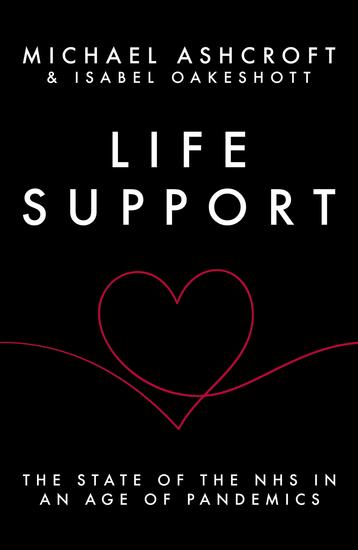
  • Life Support - The state of the NHS in an age of pandemics - cover

    Life Support - The state of the...

    Michael Ashcroft, Isabel Oakeshott

    • 0
    • 0
    • 0
    "A truly insightful tour d'horizon" – Rt Hon. Jeremy Hunt MP, Secretary of State for Health, 2012–18
    "Insightful and thought-provoking" – Rt Hon. Matt Hancock MP, Secretary of State for Health, 2018–21
    "Brilliant" – Sir Stephen Bubb, director of Charity Futures and the Oxford Institute of Charity
    "A tour de force" – Niall Dickson CBE, former chief executive of The King's Fund, the General Medical Council and the NHS Confederation
    ***
    How good is the NHS, really?
    That is the question this book seeks to answer, as the health service emerges from the gravest crisis in its history with more money – but greater challenges – than ever before.
    During the pandemic, voters made extraordinary sacrifices to save the NHS from collapse. Thanks to these efforts and the dedication and bravery of the NHS workforce, hospitals were able to treat patients with coronavirus, but millions of others lost out. Now an exhausted and depleted NHS workforce faces a huge backlog. The gap between supply and demand for publicly funded healthcare has never been so wide.
    With record numbers waiting for treatment, the politicians' answer has been to spend ever more taxpayers' money. The question is whether throwing cash at the problem will work.
    Every day, millions of patients receive care that is fair, good or outstanding. In keeping with Nye Bevan's founding principles, the same treatment is available to rich and poor, free at the point of need. Public support for the concept remains overwhelming. Yet for every positive NHS experience there are negatives: care that is substandard, disjointed and arrives too late. A cult of secrecy surrounds errors and failings. Politicians on all sides dissemble and lie.
    This book seeks to strip away the spin and uncover the true state of the NHS: the good, the bad and the ugly. It explores an increasingly urgent question: in an era of pandemics, can the NHS provide the quality of service patients deserve?
    Show book