Join us on a literary world trip!
Add this book to bookshelf
Grey
Write a new comment Default profile 50px
Grey
Subscribe to read the full book or read the first pages for free!
All characters reduced
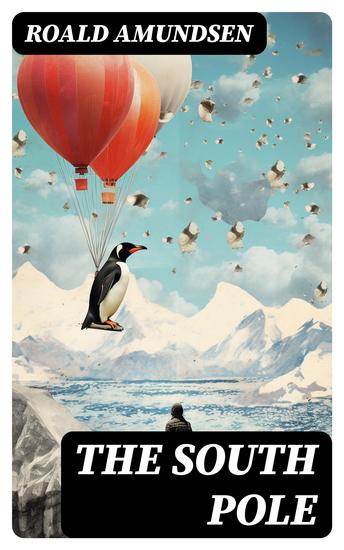
The South Pole - Account of the Norwegian Antarctic Expedition in the "Fram" 1910–1912 - cover

The South Pole - Account of the Norwegian Antarctic Expedition in the "Fram" 1910–1912

Roald Amundsen

Translator A. G. Chater

Publisher: DigiCat

  • 0
  • 0
  • 0

Summary

In "The South Pole," Roald Amundsen offers a gripping firsthand account of his historic expedition to the Antarctic, where he became the first individual to reach the South Pole in December 1911. The narrative is rich with vivid descriptions, meticulously chronicled navigation techniques, and a deep appreciation for the harsh, yet breathtaking, environment. Amundsen's literary style interweaves personal anecdotes with scientific observations, providing a profound context of early 20th-century exploration, a time marked by fierce competition among explorers. Amundsen's use of straightforward yet poignant language invites readers into the icy realms of his journey, making the overwhelming challenges he faced not only palpable but also deeply engaging. Roald Amundsen, a Norwegian explorer, was deeply influenced by his earlier Arctic expeditions, which instilled in him a profound respect for the Polar regions and the indigenous cultures associated with them. His methodical approach to exploration, reliance on local knowledge, and innovative use of technology reflect a thorough understanding of the demands of polar expeditions. Amundsen's experiences navigating perilous terrains and severe weather conditions shaped his determination to succeed in one of history's greatest exploration endeavors. This remarkable work is highly recommended for readers interested in adventure, exploration, and the relentless spirit of human exploration. "The South Pole" provides not only an exhilarating narrative but also important insights into the motivations and realities faced by early explorers. It remains an essential read for anyone seeking to understand the extraordinary challenges of polar navigation and the world of early-20th-century exploration.
Available since: 12/16/2023.
Print length: 476 pages.

Other books that might interest you

  • Bitcoin and Cryptocurrency Investing - Learn the Most Profitable Strategies to Invest in Bitcoin Cryptocurrency Decentralized Finance and NFTs - cover

    Bitcoin and Cryptocurrency...

    John Patterson

    • 0
    • 0
    • 0
    If You Want to Learn the Most Profitable Strategies to Invest in Bitcoin, Cryptocurrency, Decentralized Finance, and NFTs, Keep Reading!The entire world of cryptocurrency is now under the radar once again. Why? Because Bitcoin had taken the world by storm when it crossed $60,000 per BTC in October of 2021. For most experienced traders, it was the signal that the real bull run was starting. Immediately, as happened in 2017, many people began to improvise themselves as market wizards, even if they had never placed a trade before.While some of them have made decent returns in the past few months, there is no doubt they will give them back to the market once prices stop going up. After all, there is no need to be a genius to make money when everything that claims to be a cryptocurrency goes parabolic. Most people do not know what they are doing, and they will buy high and sell low. That is the unforgiving nature of the cryptocurrency market.Profitable traders can milk the market when things are good and cash out before prices begin going South. This is why you need to learn the right trading strategies if you want to truly build long-term wealth, not just make a few lousy dollars here and there.The beauty of cryptocurrency trading is that it does not require a lot of money to get started. Why? Because volatility is so high that even a few hundred dollars can be a good starting point. Do not worry. You will not have to spend hours and hours in front of your computer. Every trading strategy presented in this audiobook has one goal in mind: making you as much money as possible while freeing up your time!It is time to milk the market like a cash cow!Get this audiobook today!
    Show book
  • Peter Singer - Ethics in the Modern World - cover

    Peter Singer - Ethics in the...

    Hector Davidson

    • 0
    • 0
    • 0
    Peter Singer is one of the most influential philosophers in contemporary ethics, known for his contributions to utilitarianism, animal rights, global poverty, bioethics, and environmental ethics. His ethical philosophy is grounded in the principle of utilitarianism, which holds that the right course of action is the one that produces the greatest overall happiness or well-being. Singer’s work is characterized by a practical, results-oriented approach, focusing on how ethical principles can be applied to real-world issues to alleviate suffering and promote well-being. His influential works, such as Animal Liberation and The Life You Can Save, challenge readers to consider the moral implications of their actions in a variety of contexts, from how they treat animals to how they engage with global poverty. 
    At the core of Singer’s ethical framework is the idea that all sentient beings, regardless of their species, deserve equal consideration. This principle of equal consideration of interests leads to his advocacy for the rights of animals, arguing that their capacity to suffer should give them moral consideration equal to that of humans. Singer’s call for animal liberation challenges the traditional view of animals as resources for human consumption and urges society to rethink its treatment of non-human creatures. 
    In addition to his work in animal ethics, Singer has profoundly impacted discussions on global poverty and humanitarian aid. Through his concept of effective altruism, he argues that individuals in affluent societies have a moral obligation to help those in extreme poverty. Using the famous “drowning child” analogy, Singer demonstrates that if we are morally obligated to save a child from drowning in a shallow pond, we should equally be compelled to help those suffering from poverty and preventable diseases, no matter the physical distance.
    Show book
  • Human-Centered Security - How to Design Systems That Are Both Safe and Usable - cover

    Human-Centered Security - How to...

    Heidi Trost, Adam Shostack

    • 0
    • 0
    • 0
    In our interconnected world, we face a complex cybersecurity ecosystem where digital vulnerabilities can have far-reaching consequences. Threats to digital infrastructure often impact critical physical systems, potentially causing real-world harm. With AI agents set to handle extensive personal information, data security and privacy are more crucial than ever. 
     
    Human-Centered Security targets professionals designing digital products that handle sensitive data: UX designers, engineers, and product managers. It's also for those responsible for securing organizational data and systems: security engineers, CISOs, CIOs, and teams focused on risk management, legal, privacy, and compliance. 
     
    These professionals influence security-related behaviors and possess deep knowledge of threats to their products or organizations. This places a significant responsibility on them to design resilient systems that encourage safer outcomes. 
     
    This book will help you focus on areas of the user experience where security impacts users the most; understand the dynamics of the security ecosystem; find your security UX allies; ask better questions when talking to your cross-disciplinary team; and more.
    Show book
  • Dividing Lines - How Transportation Infrastructure Reinforces Racial Inequality - cover

    Dividing Lines - How...

    Deborah N. Archer

    • 0
    • 0
    • 0
    Our nation's transportation system is crumbling. But as acclaimed scholar and ACLU president Deborah Archer warns in Dividing Lines, before we can think about rebuilding and repairing, we must consider the role race has played in transportation infrastructure, from the early twentieth century and into the present day. 


    As Archer demonstrates, the success of the Civil Rights movement and the fall of Jim Crow in the 1960s did not mean the end of segregation. With state-sanctioned racism no longer legal, officials across the country turned to transportation infrastructure to keep Americans divided. A wealthy white neighborhood could no longer be "protected" by racial covenants and segregated shops, but a multilane road, with no pedestrian crossings, could be built along its border to make it difficult for people from a lower-income community to visit. Highways could not be routed through Black neighborhoods based on the race of their residents, but those neighborhoods' lower property values—a legacy of racial exclusion—could justify their destruction. 


    Drawing on a wealth of sources, including interviews with people who now live in the shadow of highways and other major infrastructure projects, Archer presents a sweeping, national account—from Atlanta and Houston to Indianapolis and New York City—of our persistent divisions.
    Show book
  • The Titanium Economy - How Industrial Technology Can Create a Better Faster Stronger America - cover

    The Titanium Economy - How...

    Asutosh Padhi, Gaurav Batra,...

    • 0
    • 0
    • 0
    The future of the American economy is hiding in an unlikely place: the manufacturing sector While Silicon Valley titans dominate headlines, many of the fastest-growing, most profitable companies in the United States are firms you’ve likely never heard of, such as HEICO, Trex, and Casella. These booming companies belong to a burgeoning sector—industrial tech—that offers surprising hope to workers, consumers, and investors alike.  Their role: to make a range of products—aerospace parts, for example, or recycled plastic lumber—that quietly form the backbone of America’s biggest industries. In an age of instability, industrial tech is a cornerstone of our economic future. In this book, McKinsey veterans Asutosh Padhi, Gaurav Batra, and Nick Santhanam reveal the “titanium economy,” a modern, reinvented industrial sector complete with high-paying, domestic jobs;, soaring stock prices;, and critical infrastructure. They dispel the myth that the best of American manufacturing is behind us and illuminate an opportunity for a brighter future—if we can seize it.
    Show book
  • Bees Make the Best Pets - All the Buzz about Being Resilient Collaborative Industrious Generous and Sweet—Straight from the Hive - cover

    Bees Make the Best Pets - All...

    Jack Mingo

    • 0
    • 0
    • 0
    All the Buzz for Beekeeping Beginners#1 New Release in Entomology and Insects & SpidersWhat happens when a writer sets up a backyard beehive? You get a beekeeping book full of fun and fascinating facts about honey bees and our other favorite pollinators.A nature guide book for beekeeping beginners. Full of trivia, tips, legends, and lore —this quirky bee book swarms with interesting information, so you can have fun, learn stuff, grow your farm, or just relax. Writer and beekeeper Jack Mingo lives with half a million bees, and has picked up a thing or two at his bee farm. In this collection of humorous and often unusual observations, Mingo shows us a glimpse of the mystical and matriarchal world of bees.The save the bees sign you’ve been looking for. How many legs do bees have? Enough not to crowd your bed at night. They don't track mud or bugs into your house, and they won’t bark and whine. They even greet you with raw honey and beeswax. And these are just some of the reasons bees make the best pets of all. Whether you’re a beekeeping beginner, looking to save the bees, or interested in fun nature facts about bugs and insects, there’s something here for every nature lover.Step into Mingo’s hive for tidbits like:Fun and interesting tips and tricks for beekeeping beginnersKnowledge about the color, quality, and benefits of local honeyThe history and legendary stories of bees, like the role they played in the Civil War and the Legend of the Caroling BeesIf you liked Beekeeping for Dummies, The Beekeeper’s Handbook, or Beekeeping for Beginners, you’ll love Bees Make the Best Pets.
    Show book