Join us on a literary world trip!
Add this book to bookshelf
Grey
Write a new comment Default profile 50px
Grey
Subscribe to read the full book or read the first pages for free!
All characters reduced
Middle Eastern Flavors - cover

Middle Eastern Flavors

River Stone

Translator A AI

Publisher: Publifye

  • 0
  • 0
  • 0

Summary

Middle Eastern Flavors explores the historical and cultural significance of Middle Eastern cuisine, focusing on spices, bread, and slow-cooked dishes. It reveals how these core elements reflect the region's hospitality, communal traditions, and ancestral narratives. Middle Eastern cuisine is more than just a collection of recipes; it's a vibrant cultural practice deeply rooted in history. 

 
The book argues that culinary traditions serve as a tangible link to the past, transmitting cultural memory across generations. For example, the persistent use of particular spices like cumin, the centrality of bread, and the art of slow cooking all signify a deep connection to ancestral traditions and the land.

 
The book progresses methodically, beginning with the origins and historical trade routes of key spices, then moves into the world of diverse breads, from simple pita to festive loaves, exploring their preparation and cultural importance. Finally, it delves into slow-cooked dishes like tagines and stews, illuminating the historical reasons behind these methods.

 
Drawing on historical cookbooks, travelogues, and archaeological findings, the book presents a comprehensive look at Middle Eastern culinary traditions, appealing to home cooks, food historians, and anyone interested in the cultural significance of food.
Available since: 02/18/2025.
Print length: 68 pages.

Other books that might interest you

  • Graduate Debt Free - Escaping the Student Loan Matrix - cover

    Graduate Debt Free - Escaping...

    JD David F. Shutler

    • 0
    • 0
    • 0
    Escape the matrix of student loan debtIn his new book, Dave Shutler analyzes twelve faulty assumptions about obtaining a higher education and shows how they can lead to debilitating college debt. Analogizing to the two realities in the Matrix movies, he reveals underlying facts about the assumptions to high schoolers and their parents.These assumptions range from deciding whether to attend college in the first place, to the importance of selecting a major, to how to minimize college living costs. This book is a systematic guide to the many misconceptions that students hold in the college application process. Shutler analyzes each misconception, showing how it can lead to debt, and then provides strategies to escape that debt.Dave Shutler sheds light on scholarships and other significant funding sources that are available for the enterprising student and explores the federal laws that govern student debt. He identifies underlying policy decisions that have contributed to the $1.7 trillion federal debt burden and offers several strategies to help individuals navigate student debt without succumbing to it.Through planning, students can take charge of their education and escape the matrix of ever-increasing college costs.
    Show book
  • Picts - Scourge of Rome Rulers of the North - cover

    Picts - Scourge of Rome Rulers...

    Nicholas Evans, Gordon Noble

    • 0
    • 0
    • 0
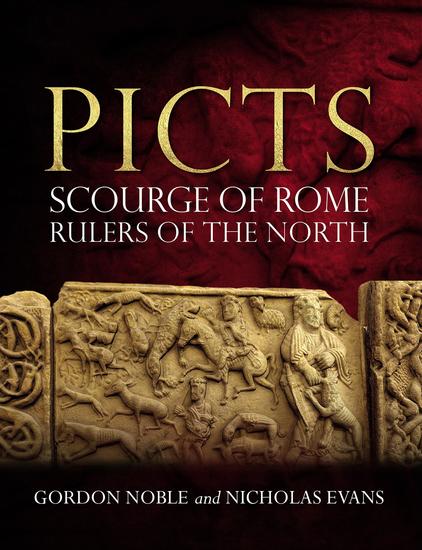
    Shortlisted for the EAA Book Prize and the Current Archaeology Book of the Year Award
    The Picts have fascinated for centuries. They emerged c. ad 300 to defy the might of the Roman empire only to disappear at the end of the first millennium ad, yet they left major legacies. They laid the foundations for the medieval Scottish kingdom and their captivating carved stones are some of the most eye-catching yet enigmatic monuments in Europe. Until recently the Picts have been difficult to trace due to limited archaeological investigation and documentary sources, but innovative new research has produced critical new insights into the culture of a highly sophisticated society which defied the might of the Roman Empire and forged a powerful realm dominating much of northern Britain.
    This is the first dedicated book on the Picts that covers in detail both their archaeology and their history. It examines their kingdoms, culture, beliefs and everyday lives from their origins to their end, not only incorporating current thinking on the subject, but also offering innovative perspectives that transform our understanding of the early history of Scotland.
    Show book
  • Life in Every Word: The TLS Guide to Great Writing - cover

    Life in Every Word: The TLS...

    Camille Ralphs

    • 0
    • 0
    • 0
    A guide to great writing, by great writers – from Alan Hollinghurst to Mary Beard. 
    What makes great writing? 
    This masterclass in craft from the writers and editors at the Times Literary Supplement, one of Britain’s oldest literary magazines, offers an abundance of answers. An indispensable guide for readers and authors everywhere, this witty, wise and practical collection of new and classic essays includes:Alan Hollinghurst on the writer’s voiceMary Beard on style in non-fictionMartin Amis on biographyBlake Morrison on the writer's lifeAnd many more. 
    In cheerful defiance of the AI machines that seek to homogenize our style, these pages celebrate writing that’s idiosyncratic, human: alive. With great writing, there’s life in every word.
    Show book
  • Louvre Heist Explained - The Audacious Art Theft That Shocked the World - cover

    Louvre Heist Explained - The...

    Nick Jones

    • 0
    • 0
    • 0
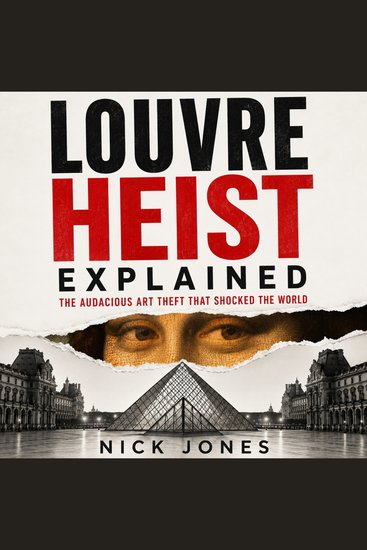
    On a quiet Monday morning in 1911, a small man in a worker's smock walked into the Louvre and walked out with the most famous painting in the world. The theft of the Mona Lisa was a crime so audacious in its simplicity that it succeeded precisely because no one in authority believed it could happen. This book is the definitive account of that heist, exploring the perfect storm of incompetence, opportunity, and misplaced confidence that shocked the world and transformed a respected portrait into a global icon. 
    
     
    The story of the Louvre heist is not just a crime story. It is a tale of the strange alchemy by which vulnerability creates value. You will meet the unlikely thief, an Italian handyman named Vincenzo Peruggia, and follow his two-year journey hiding the painting in his Paris apartment. You will explore the investigation, the global media frenzy, the arrest of a famous poet and a young Picasso, and the spectacular recovery. This book also examines the heist's lasting legacy, from modern museum security to the creation of the "Mona Lisa" we know today. 
    
     
    Inside, you'll discover:• The true story of the theft and the surprising simplicity of the crime• The identity and motives of the man who stole the Mona Lisa• Why the painting's disappearance made it a global obsession• The role of Pablo Picasso and Guillaume Apollinaire in the investigation• The theory that the theft was part of a larger forgery scheme• How the heist transformed museum security forever• The painting's journey from obscurity to the most recognized image in history 
    
     
    The empty hook on the wall is a reminder that the things we treasure most are always vulnerable. This book explores that vulnerability and the legacy of a crime that changed art history.
    Show book
  • Coming Home - Uncovering the Foundations of Psychological Well-being - cover

    Coming Home - Uncovering the...

    Dr. Dicken Bettinger, Natasha...

    • 0
    • 0
    • 0
    You already have within you all that you need for psychological well-being. In Coming Home you will be gently guided toward your own realizations of the fundamental principles that underlie all human experience. These insights will raise your overall level of psychological well-being. They will help you realize your spiritual and psychological nature and allow you to live in harmony with life more fully. This book is a heartfelt tribute to Sydney Banks, who uncovered the foundational Three Principles that create and shape all of our psychological experiences. This understanding that is known as the Three Principles is now being shared worldwide in the fields of education, business, community renewal, policing and criminal justice, addictions, prevention, psychology and psychiatry. Coming home is realizing the truth of what it is that is creating all of your experiencing, and then being at ease with all the different experiences that life brings you. It is waking up to this always-existing inner world, and as you do, you will experience a shift in your level of well-being so that your feelings are uplifted and your thinking is helpful and inspired.
    Show book
  • History of Brazil The - Colonial Rule Indigenous Peoples Slavery and Independence - Natural Riches Cultural Diversity and Economic Power - cover

    History of Brazil The - Colonial...

    Bert Alexander Petzold

    • 0
    • 0
    • 0
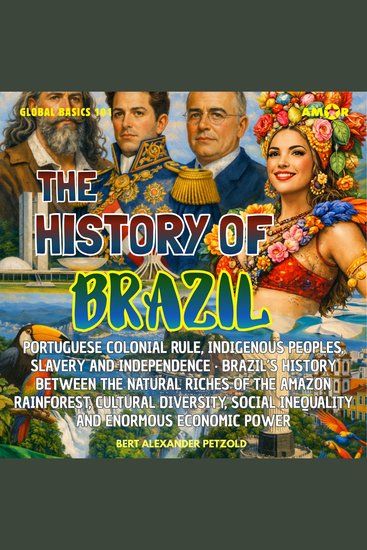
    How did a Portuguese colony become a country of continental scale, one that commands the world's attention through its indigenous diversity, slavery, the Amazon rainforest and its rise as an economic power in South America? Anyone wishing to understand Brazil will discover in this audiobook far more than carnival, football and familiar clichés. "History of Brazil" opens up a fact-rich journey through time and shows, in a clear and well-structured way, how colonial rule, monarchy, republic, dictatorship and democracy gave rise to a state of international importance and global appeal.
    
    The very beginning of this history is captivating. Long before the arrival of Europeans, indigenous cultures lived in the territory of present-day Brazil, shaping the region through their ways of life. With Pedro Álvares Cabral in 1500, Portuguese colonialism began, bringing sugar-cane cultivation, exploitation and the deportation of enslaved Africans. In the seventeenth and eighteenth centuries, gold and precious stones from Minas Gerais followed, while at the same time the cultural diversity that still distinguishes Brazil today began to take shape.
    
    With the transfer of the Portuguese court to Rio de Janeiro in 1808, Brazil gained new significance. With independence on 7 September 1822 and the coronation of Dom Pedro I, the imperial period began. Under Dom Pedro II, Brazil experienced expansion and modernisation, but also internal tensions. The abolition of slavery by the law known as "Lei Áurea" in 1888 became a turning point. Shortly afterwards, in 1889, the monarchy came to an end and the republic was proclaimed.
    
    The audiobook also gives a gripping account of the crises of the early republic. Oligarchic elites long determined the fate of the country, especially through the notorious "coffee with milk" politics. With Getúlio Vargas, a ruler came to power in 1930 who modernised Brazil while governing in an authoritarian manner. After the Second World War came industrialisation and political tensions, until the military coup of 1964 ushered in a dictatorship that lasted twenty-one years. It was not until 1985 that Brazil returned to democracy.
    
    The present, too, is vividly placed in context. Luiz Inácio Lula da Silva stood for growth and social progress, Dilma Rousseff for political upheaval, Jair Bolsonaro for controversial measures and deep polarisation, before Lula became president again in 2023. At the same time, the Amazon rainforest moves to the centre as one of the most valuable ecosystems on Earth. Deforestation, illegal land use and environmental destruction show how closely Brazil's future is linked to the protection of its natural world.
    
    The audiobook is particularly strong where it considers politics, society and culture together. Brazil appears as a five-time football world champion, as home to modern universities and as the country of major figures such as Jorge Amado, Paulo Coelho and Walter Salles. At the same time, social tensions in the favelas, the consequences of the COVID-19 pandemic, inflation, unemployment and great inequality remain defining issues. Bert Alexander Petzold combines historical precision with clear language, making "History of Brazil" a well-founded introduction to a country of immense historical, cultural and ecological significance. The audiobook is ideally suited to preparation for examinations leading to a university entrance qualification and for study at university.
    
    Anyone wishing to grasp Brazil in its historical depth will find in "History of Brazil" a knowledgeable audiobook that brings colonialism, independence, republic, dictatorship, the Amazon ecosystem and the present into a coherent context. Secure this audiobook now and discover a country whose past, full of conflict, wealth, creativity and contradictions, still explains today why Brazil is one of the most fascinating states on Earth.
    Show book