Join us on a literary world trip!
Add this book to bookshelf
Grey
Write a new comment Default profile 50px
Grey
Subscribe to read the full book or read the first pages for free!
All characters reduced
Cognitive Decline - cover

Cognitive Decline

River Mindfulness

Translator A AI

Publisher: Publifye

  • 0
  • 0
  • 0

Summary

Cognitive Decline offers a comprehensive guide to maintaining brain health and reducing dementia risk, emphasizing that cognitive decline isn't an inevitable part of aging. The book explores the critical influence of lifestyle factors such as diet, exercise, sleep, and social engagement, noting that proactive measures can significantly impact cognitive trajectories. It delves into the neuroscience behind cognitive aging, from early misconceptions to current understandings, while also addressing the social determinants of health, such as access to healthcare and education, which impact cognitive well-being. 

 
The book is structured to provide actionable strategies grounded in scientific research. It addresses biological mechanisms like inflammation and oxidative stress, and details practical interventions including cognitive training and mindfulness. By presenting evidence-based approaches, Cognitive Decline empowers readers to take control of their cognitive future, offering a holistic view of cognitive health that incorporates insights from neuroscience, psychology, and public health. 

 
The aim is to translate complex findings into practical recommendations for daily life, promoting cognitive resilience and long-term cognitive health management.
Available since: 03/12/2025.
Print length: 95 pages.

Other books that might interest you

  • Population: 485 - cover

    Population: 485

    Anonymous

    • 0
    • 0
    • 0
    Mike Perry’s extraordinary and thoughtful account of meeting the people of his small hometown by joining the fire and rescue team was a breakout hit that “swells with unadorned heroism” (USA Today) 
    Welcome to New Auburn, Wisconsin (population: 485) where the local vigilante is a farmer’s wife armed with a pistol and a Bible, the most senior member of the volunteer fire department is a cross-eyed butcher with one kidney and two ex-wives (both of whom work at the only gas station in town), and the back roads are haunted by the ghosts of children and farmers. Michael Perry loves this place. He grew up here, and now-after a decade away-he has returned. 
    Unable to polka or repair his own pickup, his farm-boy hands gone soft after years of writing, Mike figures the best way to regain his credibility is to join the volunteer fire department. Against a backdrop of fires and tangled wrecks, bar fights and smelt feeds, he tells a frequently comic tale leavened with moments of heartbreaking delicacy and searing tragedy.  
    Tracing his calls on a map in the little firehouse, he sees “a dense, benevolent web, spun one frantic zigzag at a time” from which the story of a tiny town emerges.
    Show book
  • Maladies of Empire - How Colonialism Slavery and War Transformed Medicine - cover

    Maladies of Empire - How...

    Jim Downs

    • 0
    • 0
    • 0
    Most stories of medical progress come with ready-made heroes. John Snow traced the origins of London's 1854 cholera outbreak to a water pump, leading to the birth of epidemiology. Florence Nightingale's contributions to the care of soldiers in the Crimean War transformed hospitals from crucibles of infection to sanctuaries of recuperation. Yet histories of individual innovators ignore many key sources of medical knowledge. 


    Reexamining the foundations of modern medicine, Jim Downs shows that the study of infectious disease depended crucially on the unrecognized contributions of nonconsenting subjects—conscripted soldiers, enslaved people, and subjects of empire. Plantations, slave ships, and battlefields were the laboratories in which physicians came to understand the spread of disease. Military doctors learned about the importance of air quality by monitoring Africans confined to the bottom of slave ships. Statisticians charted cholera outbreaks by surveilling Muslims in British-dominated territories returning from their annual pilgrimage. 


    The scientific knowledge derived from discarding and exploiting human life is now the basis of our ability to protect humanity from epidemics. Boldly argued and eye-opening, Maladies of Empire gives a full account of the true price of medical progress.
    Show book
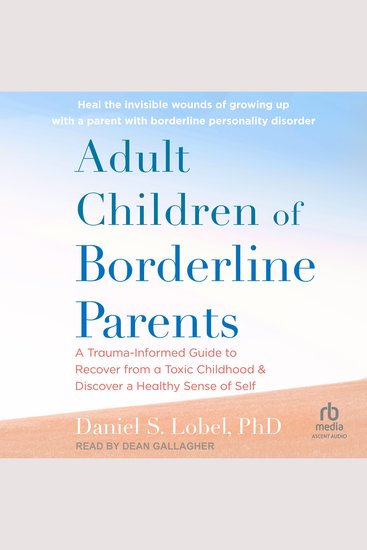
  • Adult Children of Borderline Parents - A Trauma-Informed Guide to Recover from a Toxic Childhood and Discover a Healthy Sense of Self - cover

    Adult Children of Borderline...

    PhD Daniel S. Lobel

    • 0
    • 0
    • 0
    Did you grow up with a parent who has borderline personality disorder (BPD), or you suspect they did? Was your parent's behavior unpredictable or scary? Did it seem like they were angry one minute and happy the next? Were your basic needs ignored? If so, it wasn't your fault. Children raised by a parent with BPD are subjected to a number of unhealthy and damaging behaviors—from uncontrolled anger and abuse, to gaslighting, blame-shifting, lying, and more. As a result of these experiences, you may have developed feelings of guilt, insecurity, and depression that have lingered throughout your adult life. 


    This compassionate guide offers a trauma-informed approach to help you recover from your toxic childhood and discover the person you were truly meant to be. You'll learn how to identify emotional and developmental wounds, and discover why interactions with your parents were so harmful to your sense of self. Then, you'll learn to create strong interpersonal boundaries and overcome feelings of guilt, anger, and low self-worth. Finally, through the act of emotional reprocessing, you'll reclaim those aspects of yourself that were lost or distorted by your trauma, so you can restart healthy growth processes and become the person you were meant to be. If you're carrying the hidden wounds of a toxic childhood, you're not alone—and you can heal.
    Show book
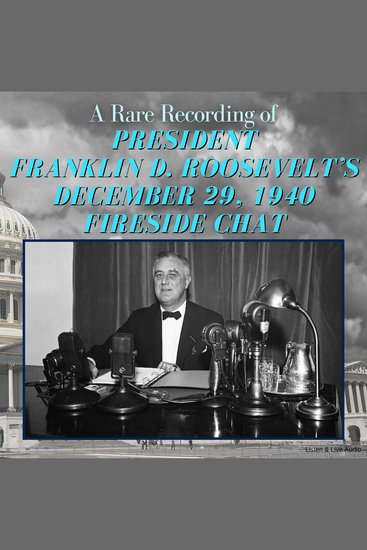
  • A Rare Recording of President Franklin D Roosevelt’s December 29 1940 Fireside Chat - cover

    A Rare Recording of President...

    President Franklin D. Roosevelt

    • 0
    • 0
    • 0
    Franklin Delano Roosevelt (January 30, 1882 to April 12, 1945), also known as FDR, was the 32nd president of the United States, serving from 1933 until his death in 1945. The longest-serving U.S. president, he is the only president to have served more than two terms. His initial two terms were centered on combating the Great Depression, while his third and fourth saw him shift his focus to America's involvement in World War II. The following recording is of a December 29, 1940 fireside chat FDR gave discussing national security.
    Show book
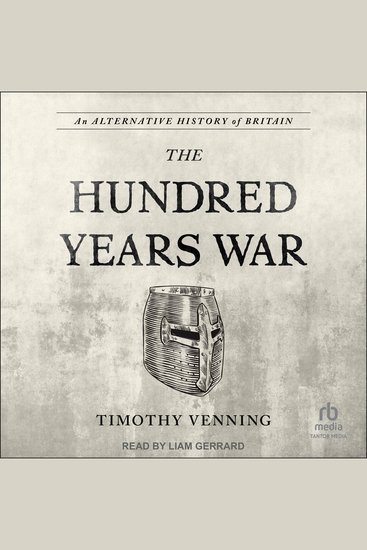
  • Alternative History of Britain An - The Hundred Years War - cover

    Alternative History of Britain...

    Timothy Venning

    • 0
    • 0
    • 0
    Continuing his exploration of the alternative paths that British history might so easily have taken, Timothy Venning turns his attention to the Hundred Years War between England and France. Could the English have won in the long term, or, conversely, have been decisively defeated sooner? 


    Among the many scenarios discussed are what would have happened if the Black Prince had not died prematurely of the Black Death, leaving the ten-year-old Richard to inherit Edward IIIs crown. What would have been the consequences if France's Scottish allies had been victorious at Neville's Cross in 1346, while most English forces were occupied in France? What if Henry V had recovered from the dysentery that killed him at 35, giving time for his son Henry VI to inherit the combined crowns of France and England as a mature (and half-French) man rather than an infant controlled by others? And what if Joan of Arc had not emerged to galvanize French resistance at Orleans? 


    While necessarily speculative, all the scenarios are discussed within the framework of a deep understanding of the major driving forces, tensions, and trends that shaped British history and help to shed light upon them.
    Show book
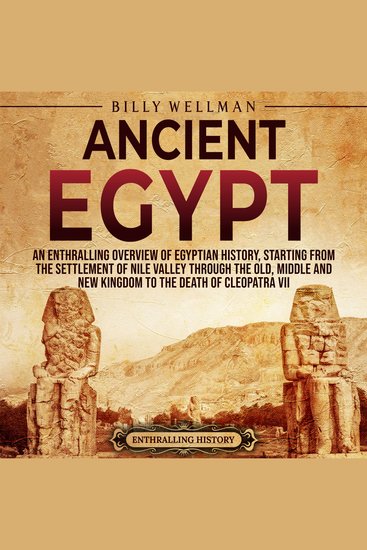
  • Ancient Egypt: An Enthralling Overview of Egyptian History Starting from the Settlement of the Nile Valley through the Old Middle and New Kingdoms to the Death of Cleopatra VII - cover

    Ancient Egypt: An Enthralling...

    Billy Wellman

    • 0
    • 0
    • 0
    Did you know that cats were extremely sacred in ancient Egypt and those who killed one could be punished by death? 
    According to many Egyptologists, the ancient Egyptians never considered animals to be gods. Instead, they were considered the personification of their powerful deities, which explained why the Egyptians often depicted their ancient gods with animal heads. The same could also be said about cats; they were most certainly not worshiped but were held in high regard. Before becoming symbols of divinity and protection, cats were often adopted by the Egyptians since they were useful predators. Cats were used to protect households from pests and dangerous animals, such as rats and snakes.  
    The Persians took advantage of the Egyptians’ love of cats. In an effort to turn the tide in a certain battle, the Persians marched to the battlefield with a great number of cats, resulting in the surrender of the Egyptian troops. Of course, whether or not this was true remains disputed, especially when many of the ancient records were either exaggerated or biased—one of the reasons why curious readers might find it slightly difficult to explore the rise and fall of ancient Egypt. 
    Here’s just a small fraction of what you’ll discover:The mysterious identities of Narmer and Menes, the first pharaoh of EgyptHow the Great Pyramid of Giza was constructed with human handsThe dangerous journey into the realm of the deadA detailed process of mummificationHow Egypt was forced to bow down to its first foreign pharaoh The biggest chariot war in history between the Egyptians and the HittitesHow Egypt’s religious beliefs played a role in its governmentThe fall of Egypt after the death of Cleopatra VII 
    Scroll up and click the “add to cart” button to learn more about ancient Egypt!
    Show book