Join us on a literary world trip!
Add this book to bookshelf
Grey
Write a new comment Default profile 50px
Grey
Subscribe to read the full book or read the first pages for free!
All characters reduced
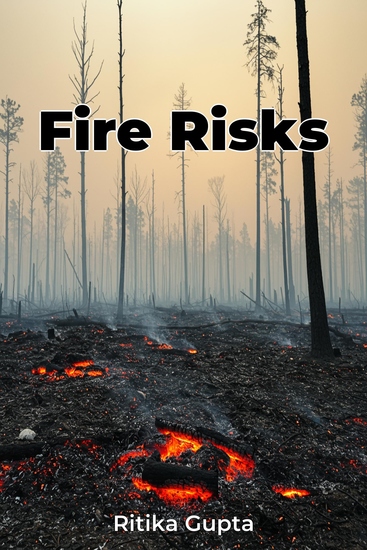
Fire Risks - cover

Fire Risks

Ritika Gupta

Translator A AI

Publisher: Publifye

  • 0
  • 0
  • 0

Summary

Fire Risks is an essential guide to understanding and mitigating fire dangers, both inside and outside the home. Did you know a house fire can become deadly in just two minutes? This book equips readers with crucial knowledge of fire safety practices, escape planning, and emergency response strategies. It emphasizes understanding the science of combustion, common ignition sources, and the factors that contribute to rapid fire spread, while also stressing practical strategies for minimizing fire hazards.

 
The book progresses from foundational knowledge of fire dynamics, explaining the fire triangle, to identifying common fire hazards like faulty wiring and unattended cooking. It details creating and practicing effective home escape plans, addressing outdoor fire safety including campfire practices, and also focuses on emergency response, such as using fire extinguishers.

 
A unique aspect is its emphasis on personalized risk assessment, guiding readers to evaluate specific fire risks in their homes and communities, tailoring their safety plans accordingly.
Available since: 03/19/2025.
Print length: 98 pages.

Other books that might interest you

  • The Lagoon - Encounters with the Whales of San Ignacio - cover

    The Lagoon - Encounters with the...

    James Michael Dorsey

    • 0
    • 0
    • 0
    Once a killing ground for whalers hunting a leviathan they called the "devilfish," the San Ignacio Lagoon in Baja, Mexico, is now an environmental and spiritual sanctuary—the only place in the world where animals in their natural aquatic environment routinely seek out human contact. A nursery for the gray whale since before recorded history, the lagoon and its stories, told here by James Michael Dorsey, illuminate the magic of human connection to animals, and what those bonds teach us about ourselves and our purpose on this shared planet. 


    Weaving two decades of San Ignacio adventures with the history of the lagoon, Dorsey vividly captures the lively people of Baja, like the mystical godfather of whale-watching, Pachico Mayoral, as well as the whales he's bonded with over the years, like Slackjaw, Patch, and Dervish. Looming over his journeys are the many dangers to the area, from the Mitsubishi Corporation's attempts to build salt works to plans for resort development on the Baja coast, to pollution and climate change, and even to the orcas who hunt the gray whales. 


    A tale of wondrous bonds between the intelligent, spirited gray whales and the people from around the world who come to this place to touch, kiss, and play with them—The Lagoon is a testament to the importance of preserving these animals and their natural habitats.
    Show book
  • Phycology - Algae and Aquatic Plants: Life in Water's Depths - cover

    Phycology - Algae and Aquatic...

    Mike Crawford

    • 0
    • 0
    • 0
    Phycology, also known as algology, is the scientific study of algae, a diverse and essential group of photosynthetic organisms found in aquatic environments. Algae range from microscopic single-celled phytoplankton to large, multicellular seaweeds like kelp. These organisms play a critical role in global ecosystems, serving as primary producers in both freshwater and marine habitats. They contribute significantly to oxygen production and are a fundamental part of the food web, supporting a vast array of aquatic life. 
    The study of algae is crucial due to their ecological, economic, and environmental importance. Algae are responsible for nearly half of the world’s oxygen production through photosynthesis, making them vital to maintaining atmospheric balance. Additionally, they act as a key food source for marine organisms, from zooplankton to large fish and mammals. Their ability to rapidly absorb carbon dioxide makes them important players in global carbon cycling, influencing climate regulation.
    Show book
  • International Space Station The: The History and Legacy of the Multinational Space Research Lab - cover

    International Space Station The:...

    Editors Charles River

    • 0
    • 0
    • 0
    Much has been written about the Space Race, which is still taught across America today, but the story of human space exploration is mostly one of cooperation. Even in the summer of 1969, the Soviets had given the United States the flight plan for its Luna 15 mission, allowing Apollo 11 to avoid it.  
    	That was the first of many examples of cooperation in space between the United States and the Soviet Union during the Cold War, and ultimately, their research and cooperation helped lead to the construction of the International Space Station (ISS), a large space station assembled in Earth’s orbit that represents the most ambitious international space project in history.  
    	Thanks to the various components that have been put together, the International Space Station is bigger and brighter than all other artificial satellites. With relatively low power magnification, people can see the solar panels radiating outward from the numerous international modules which make up the ISS. The reality of that platform, at the edge of the ocean of space, is pretty astounding when looked at from the perspective of history. Only 120 years ago, mankind did not know if it was possible to fly in a heavier-than-air vehicle. Constructed with over 30 different modules and pieces that were carried into orbit by dozens of different launches, the ISS is already over 150 feet long, 300 feet wide and 60 feet tall. Astronauts from 10 nations have spent time on the space station as long-term crew. 
    	In addition, the International Space Station can truly be held as a sign that the Space Age is maturing quite nicely, at least on a social and personal level. A total of 34 women have visited the space station, eight tourists have paid for the privilege of taking the trip to the station, and there have been many who have made multiple trips to the ISS.
    Show book
  • Ultimate Flutter Handbook - Learn Cross-Platform App Development with Visually Stunning UIs and Real-World Projects - cover

    Ultimate Flutter Handbook -...

    Lahiru Mahagamage

    • 0
    • 0
    • 0
    Harness Flutter as a cross-platform framework to create applications for iOS and Android from a single, unified codebase
    
    DESCRIPTION
    Flutter Handbook is the key to becoming a proficient Flutter app developer, catering to all levels, from beginners to experts. This comprehensive guide takes you by the hand, providing step-by-step instructions on every aspect of Flutter app development.
    Starting from the basics, you'll learn how to install and run Flutter, as well as core concepts such as widgets, state management, and navigation. As you progress, the book delves deep into advanced topics, such as implementing CRUD (Create, Read, Update, Delete) functions using Firebase Firestore.
    Flutter Handbook is more than just a tutorial book. It also provides invaluable tips, tricks, and small tasks at the end of each chapter to reinforce your understanding and equip you with real-world skills. By the end of this journey, you'll have the expertise to release your Flutter app to the Play Store or App Store with confidence.
    
    TABLE OF CONTENTS 
    1. Introduction to Flutter
    2. Getting Started
    3. Widgets Widgets Widgets!
    4. Stateful and Stateless Widgets
    5. Navigation and Routing
    6. Firebase Firestore with Flutter
    7. Futures, Awaits, and Async
    8. Persistence and Data Modeling
    9. Deploying
    Show book
  • Machine See Machine Do - How Technology Mirrors Bias in Our Criminal Justice System - cover

    Machine See Machine Do - How...

    Patrick K. Lin

    • 0
    • 0
    • 0
    “When today’s technology relies on yesterday’s data, it will simply mirror our past mistakes and biases.” 
    AI and other high-tech tools embed and reinforce America’s history of prejudice and exclusion — even when they are used with the best intentions. Patrick K. Lin’s Machine See, Machine Do: How Technology Mirrors Bias in Our Criminal Justice System takes a deep and thorough look into the use of technology in the criminal justice system, and investigates the instances of coded bias present at every level. 
    In this book, you’ll learn how algorithms and high-tech tools are used in unexpected ways: suggesting which neighborhoods to police, predicting whether someone is more or less likely to commit a crime, and determining how long someone’s prison sentence should be. 
    Machine See, Machine Do takes you on an eye-opening journey of discovery, encouraging you to think twice about our current system of justice and the technology that supposedly makes it more “objective” and “fair.” If you are someone who cares deeply about criminal justice reform, is curious about the role of technology in our day-to-day lives, and ultimately believes we should aspire to make both of these spaces more ethical and safe, this book is for you.
    Show book
  • NLP - Unleashing the Power of Human Communication through Machine Intelligence - cover

    NLP - Unleashing the Power of...

    Brian Murray

    • 0
    • 0
    • 0
    "Natural language processing (NLP): Unleashing the Power of Human Communication through Machine Intelligence" is a comprehensive guide to understanding and building intelligent systems using artificial intelligence (AI). The book provides a thorough introduction to AI, including its historical context, evolution, and ethical considerations. 
    The fundamentals of AI are explored, including machine learning, deep learning, natural language processing, and computer vision. The book then delves into building intelligent systems, covering topics such as data collection, preprocessing, and feature engineering, as well as model selection, training, and evaluation. 
    Numerous applications of AI are discussed, including image and speech recognition, autonomous vehicles, healthcare and biotechnology, and finance and economics. Advanced topics in AI such as quantum computing, neural architecture search, and explainable AI are also explored. 
    The book concludes by examining the future of AI, including the current state of research and development, predictions for the future, and ethical considerations and potential risks. Throughout the book, readers are encouraged to think critically and responsibly about AI and its impact on society. 
     
    Show book