Join us on a literary world trip!
Add this book to bookshelf
Grey
Write a new comment Default profile 50px
Grey
Subscribe to read the full book or read the first pages for free!
All characters reduced
The Lie Circumspect - cover

The Lie Circumspect

Rita

Publisher: DigiCat

  • 0
  • 0
  • 0

Summary

In "The Lie Circumspect," Rita delves into the intricate web of deception that permeates human relationships and societal interactions. Written in a lyrical and introspective style, the novel navigates the existential struggles of its protagonists as they grapple with the moral ambiguities of truth and deception. Set against a contemporary backdrop, Rita employs rich, metaphorical language that invites readers to question their own beliefs and perceptions, creating a multi-layered narrative that resonates with echoes of classic existential literature. Rita, an accomplished author known for her keen psychological insights and evocative storytelling, draws on her background in philosophy and sociology to craft this thought-provoking exploration. Her extensive research on the nature of truth in human psychology informs the narrative, as personal experiences with deceit in her own life prompted her to examine the implications of lies both big and small on our understanding of self and society. Rita's ability to weave complex themes into accessible prose reflects her deep comprehension of the human condition and its ethical ramifications. This book is a must-read for those intrigued by the complexities of truth and morality. "The Lie Circumspect" not only engages the mind but also tugs at the heart, offering a profound commentary on the human experience. Readers seeking a nuanced exploration of deception will find in Rita's work a compelling blend of intellectual rigor and emotional depth.
Available since: 09/15/2022.
Print length: 206 pages.

Other books that might interest you

  • Sawdust and Berries - cover

    Sawdust and Berries

    Mel Bossa

    • 0
    • 0
    • 0
    To others, Liam Stokes is a confirmed bachelor, content with his job as a foreman and satisfied with his quiet life. Liam's friends and family don't suspect that under his calm surface a storm is gathering.
    Liam has had it with living a lie, but can't summon the courage to come out as gay until faith takes charge of that. One morning, his back gives out and Liam is forced into getting a massage.
    Inked and pierced, Kieran is a young massage therapist with a healing touch and audacious smile. From the moment he sets his hands on Liam, Liam knows this will be unstoppable. But as their relationship evolves, both men are surprised at how much they have in common despite their age difference.
    Could this be more than a physical connection? And if so, how far can they take this love before someone else tries to end it?
    Show book
  • The Darning-needle - cover

    The Darning-needle

    Hans Christian Andersen

    • 0
    • 0
    • 0
    "The Darning Needle"  is a short fantasy story for children by the Danish author Hans Christian Andersen. It was first published in 1845.
    The needle who is the story's title character and protagonist is a snob. She accuses most of those around her of being self-centered while being unaware of how conceited she is herself. She is convinced that her social status is much higher than it is in reality. As part of this delusion, she fancies that she is much more delicate than she really is.
    Show book
  • Jonah of the Jove-Run - cover

    Jonah of the Jove-Run

    Ray Bradbury

    • 0
    • 0
    • 0
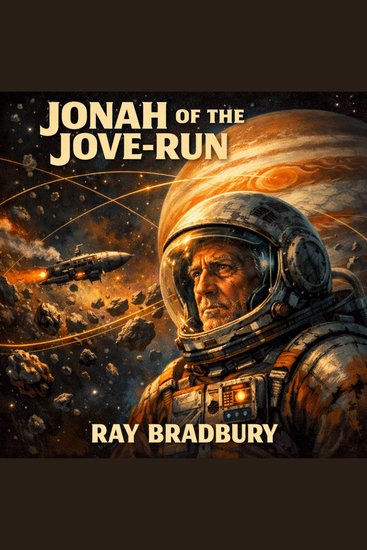
    Jonah of the Jove-Run by Ray Bradbury is a poignant, thought-provoking science fiction novella that explores the fragile boundary between human intuition and machine precision in the age of space exploration. Set in a future where humanity has colonized Mars and pushes onward toward Jupiter, the story centers on Nibley—an aging, underestimated navigator whose instinctive grasp of cosmic movement defies the cold logic of computers. 
    As younger astronauts place their faith entirely in technology, Nibley struggles against obsolescence, self-doubt, and resentment. When catastrophe strikes and a critical machine fails, the crew is forced to rely on the one man they dismissed. Through perilous calculations, moral failure, and ultimate redemption, Bradbury delivers a deeply human tale about pride, sacrifice, and the irreplaceable value of lived experience. 
    Rich with emotional depth and classic mid-century sci-fi atmosphere, Jonah of the Jove-Run stands as a powerful meditation on aging, purpose, and the cost of progress—perfect for readers who value character-driven science fiction with philosophical weight.
    Show book
  • Candide - cover

    Candide

    Voltaire

    • 0
    • 0
    • 0
    Candide, ou l'Optimisme is a French satire first published in 1759 by Voltaire, a philosopher of the Age of Enlightenment. The novella has been widely translated, with English versions titled Candide: or, All for the Best (1759); Candide: or, The Optimist (1762); and Candide: Optimism (1947). It begins with a young man, Candide, who is living a sheltered life in an Edenic paradise and being indoctrinated with Leibnizian optimism by his mentor, Professor Pangloss. The work describes the abrupt cessation of this lifestyle, followed by Candide's slow and painful disillusionment as he witnesses and experiences great hardships in the world. Voltaire concludes Candide with, if not rejecting Leibnizian optimism outright, advocating a deeply practical precept, "we must cultivate our garden", in lieu of the Leibnizian mantra of Pangloss, "all is for the best" in the "best of all possible worlds".
    Candide is characterized by its tone as well as by its erratic, fantastical, and fast-moving plot. A picaresque novel with a story similar to that of a more serious coming-of-age narrative (Bildungsroman), it parodies many adventure and romance clichés, the struggles of which are caricatured in a tone that is bitter and matter-of-fact. Still, the events discussed are often based on historical happenings, such as the Seven Years' War and the 1755 Lisbon earthquake. As philosophers of Voltaire's day contended with the problem of evil, so does Candide in this short theological novel, albeit more directly and humorously. Voltaire ridicules religion, theologians, governments, armies, philosophies, and philosophers. Through Candide, he assaults Leibniz and his optimism.
    Candide has enjoyed both great success and great scandal. Immediately after its secretive publication, the book was widely banned to the public because it contained religious blasphemy, political sedition, and intellectual hostility hidden under a thin veil of naïveté. However, with its sharp wit and insightful portrayal of the human condition, the novel has since inspired many later authors and artists to mimic and adapt it. Today, Candide is considered as Voltaire's magnum opus and is often listed as part of the Western canon. It is among the most frequently taught works of French literature. The British poet and literary critic Martin Seymour-Smith listed Candide as one of the 100 most influential books ever written.
    Show book
  • The Submissive Gets a Spanking - Lesbian Spanking Erotica - cover

    The Submissive Gets a Spanking -...

    Jeniker Lovey

    • 0
    • 0
    • 0
    When 19-year-old Lisa sees her new neighbor spanking the bottom of a girl leaving the house, she gets excited rather than shocked. Unfortunately for her, the older woman spots that she’s watching. Embarrassed to be caught staring, she quickly goes inside although she can’t stop thinking about what she saw because it’s a fantasy she enjoys, but has never experienced for real.  
    When her neighbor comes to the door not long after on the pretext of borrowing a pot, Lisa suspects that might be about to change. She finds she’s right when the dominant, older woman takes control to spank her.  
    Show book
  • Mystery of the Yellow Room - cover

    Mystery of the Yellow Room

    Gaston Leroux

    • 0
    • 0
    • 0
    This crime novel was possibly the first to involve a 'locked room mystery', in which an attempted murder takes place, but with no obvious way for the perpetrator to have escaped. The author, Gaston Leroux, is better known as the author of The Phantom of the Opera: prepare to feel the hairs standing up on the back of your neck...  
    (Summary by Stuart Bell)
    Show book