Join us on a literary world trip!
Add this book to bookshelf
Grey
Write a new comment Default profile 50px
Grey
Subscribe to read the full book or read the first pages for free!
All characters reduced
The Importance of Acknowledging Childhood Trauma in the Clinical Field - cover

The Importance of Acknowledging Childhood Trauma in the Clinical Field

Rita Ballantyne

Publisher: Grosvenor House Publishing

  • 0
  • 0
  • 0

Summary

There is a distinct lack of discussion pertaining to the lasting damage narcissistic parents inflict on their children, a shortfall so intense that some of the victims themselves don't recognise the harm done to them either, or accept the abuse as being their fault.
One of the saddest things is that most children or grown-up survivors never get help or relate their lifelong relationship troubles back to their real origins. They are often categorised by society as having only suffered emotional abuse at best. It is disappointing how lots of professionals and, in particular, physicians and counsellors, minimise the pain those who have lived through lasting emotional trauma are feeling and the impact it has on the patients' physical and psychological well-being. Don't judge and condemn what you don't understand.
By taking the reader through my own personal journey dealing with this kind of abuse, I aim to present how detrimental emotional abuse can be and try to bridge that above mentioned gap in general knowledge.
Available since: 05/23/2024.
Print length: 377 pages.

Other books that might interest you

  • AI for Educators - Ethical Practical Fun and Timesaving Strategies to Personalize Learning Foster Critical Thinking and Prepare Your Students for a Rapidly Changing Future - cover

    AI for Educators - Ethical...

    Pascal Claeys

    • 0
    • 0
    • 0
    You're not just a teacher – you're a guide, a mentor, and a beacon of hope in a rapidly changing world. 
    "AI for Educators" will empower you to: 
    1) Navigate the ethical maze of AI with confidence and grace 
    2) Prepare your students for jobs that don't even exist yet 
    3) Become the cool teacher who "gets it" in the eyes of your tech-savvy students
    Show book
  • Windfall - Viola MacMillan and Her Notorious Mining Scandal - cover

    Windfall - Viola MacMillan and...

    Tim Falconer

    • 0
    • 0
    • 0
    The fascinating, scandalous, and true story of Viola MacMillan and the Windfall mining scandal
    		 
    Viola MacMillan had it all: success, money, and respect. Influence, even. But in 1964, after three decades in the mining industry, one of the most fascinating women in Canadian business history was the central character in one of the country’s most famous stock scandals.
    		 
    MacMillan, who started out as a prospector in the ’30s, had developed lucrative mines and put together big deals. But she still wanted “a major discovery.” Early in July 1964, shares in Windfall Oil and Mines, a company she and her husband controlled, traded for around 56 cents. Then one day, the stock took off. In the absence of any information from the company about what it had found near Timmins on its claims, rumors and greed pushed the share price to a high of $5.70. MacMillan stayed quiet. Finally, after three weeks, Windfall admitted it had nothing.
    		 
    So many small investors lost money when the stock crashed that the Ontario government appointed a royal commission to examine what had happened, which led to changes at the Ontario Securities Commission and the Toronto Stock Exchange. Although MacMillan spent a few weeks in prison, she later received a pardon and the Order of Canada.
    Show book
  • American Epic - Reading the US Constitution - cover

    American Epic - Reading the US...

    Garrett Epps

    • 0
    • 0
    • 0
    In 1987, E. L. Doctorow celebrated the Constitution's bicentennial by reading it. "It is five thousand words long but reads like fifty thousand," he said. Distinguished legal scholar Garrett Epps disagrees. It's about 7,500 words. And Doctorow "missed a good deal of high rhetoric, many literary tropes, and even a trace of, if not wit, at least irony," he writes. 


    In American Epic, Epps takes us through a complete reading of the Constitution to achieve an appreciation of its power and a holistic understanding of what it says. In this book he seeks not to provide a definitive interpretation, but to listen to the language and ponder its meaning. He draws on four modes of reading: scriptural, legal, lyric, and epic. The Constitution's first three words, for example, sound spiritual—but Epps finds them to be more aspirational than prayer-like. He turns the Second Amendment into a poem to illuminate its ambiguity. He notices oddities and omissions. The Constitution lays out rules for presidential appointment of officers, for example, but not removal. Should the Senate approve each firing? Can it withdraw its "advice and consent" and force a resignation? And he challenges himself, as seen in his surprising discussion of the Defense of Marriage Act (DOMA) in light of Article 4, which orders states to give "full faith and credit" to the acts of other states.
    Show book
  • Anne of Green Gables: A Christian Readers' Guide - cover

    Anne of Green Gables: A...

    Carrie Brownell

    • 0
    • 0
    • 0
    The delightful tale of Anne of Green Gables, which has defined so many childhoods and coming of age experiences, has been lovingly analyzed from a Christian worldview by artist Carrie Brownell. A wonderful tool for homeschoolers, book clubs, teachers, parents, and more, this Christian Readers’ Guide dives into the complex relationships, lessons of love and forgiveness, and the universal craving for belonging and a true home. Brownell carefully and eloquently expounds on the Biblical and real-life applications of the timeless adventures, trials, and triumphs of darling Anne.
    Show book
  • The Reading Life - The Joy of Seeing New Worlds Through Others' Eyes - cover

    The Reading Life - The Joy of...

    Anonymous

    • 0
    • 0
    • 0
    The revered teacher and bestselling author reflects on the power, importance, and joy of a life dedicated to reading books in this delightful collection drawn from his wide body of writings. 
    More than fifty years after his death, revered intellectual and teacher C. S. Lewis continues to speak to readers, thanks not only to his intellectual insights on Christianity but also his wondrous creative works and deep reflections on the literature that influenced his life. Beloved for his instructive novels including The Screwtape Letters, The Great Divorce, and The Chronicles of Narnia as well as his philosophical books that explored theology and Christian life, Lewis was a life-long writer and book lover. 
    Cultivated from his many essays, articles, and letters, as well as his classic works, The Reading Life provides guidance and reflections on the love and enjoyment of books. Engaging and enlightening, this well-rounded collection includes Lewis’ reflections on science fiction, why children’s literature is for readers of all ages, and why we should read two old books for every new one. 
    A window into the thoughts of one of the greatest public intellectuals of our time, this collection reveals not only why Lewis loved the written word, but what it means to learn through literature from one of our wisest and most enduring teachers.
    Show book
  • China Nexus - Thirty Years In and Around the Chinese Communist Party’s Tyranny - cover

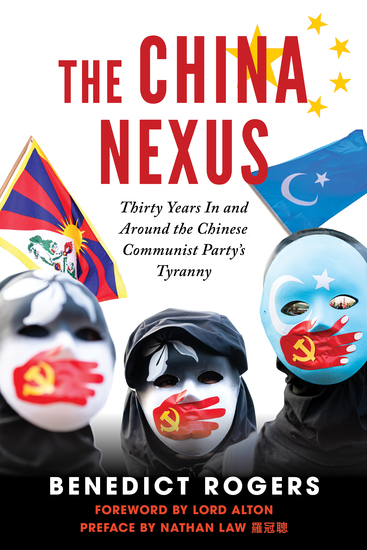
    China Nexus - Thirty Years In...

    Benedict Rogers

    • 0
    • 0
    • 0
    Benedict Rogers, born in London, England, first went to China at age eighteen to teach English for six months in Qingdao, three years after the Tiananmen Square massacre. That opened the door to a thirty-year adventure with China, from teaching English in schools and hospitals to working as a journalist in Hong Kong for the first five years after the handover to travelling to China’s borders with Myanmar/Burma and North Korea to document the plight of refugees escaping from Beijing-backed satellite dictatorships and then campaigning for human rights in China, especially for Uyghurs, Christians and Falun Gong practitioners, human rights defenders, journalists and dissidents, and the people of Hong Kong.
    		 
    This book tells the story of his fight for freedom for the peoples of China and neighbouring countries Myanmar and North Korea and sets out how a global movement for human rights in China is emerging and what the free world should do next. It describes the importance of the “China Nexus” in the author’s journey and geopolitics and its challenges. Pioneering international inquiries into forced organ harvesting from prisoners of conscience, the genocide of the Uyghurs and global action for Hong Kong, as well as highlighting the Vatican’s silence, the author has been at the heart of advocacy for human rights in China in recent years.
    		 
    In 2017, on the orders of Beijing, he was denied entry to Hong Kong, 20 years after he had moved to the city and began his working life as a journalist and activist. Benedict Rogers co-founded Hong Kong Watch and worked with a variety of other international groups at the forefront of the fight for freedom, including the Inter-Parliamentary Alliance for China (IPAC), the Stop Uyghur Genocide Campaign, the China Democracy Foundation, the Conservative Party Human Rights Commission which he co-founded, and the international human rights organization CSW with which he has worked for over 25 years.
    		 
    This book hits the Chinese Communist Party hard on their lack of Human Rights efficacy, genocide, and despicable and barbaric organ harvesting programs (an estimated $1 billion US a year business).
    		 
    Rogers takes the readers on a journey through some of the leaders and participants in the Human rights activities that China has suppressed since its inception in 1949. He goes on to dispute and lays to rest all of the specious claims by the tyrants in Beijing that all Chinese citizens are equal and are afforded human and civil rights. Currently, the regime is engaged in re-education, cultural assimilation, and multiple genocides, leading to better citizens for China and the world if one believes Chinese officials.
    		 
    China’s ambassador to Canada says reports of genocide and forced labour of Uyghur Muslims in Xinjiang province are the “lie of the century,” despite international bodies like the United Nations deeming the reports of such activities “numerous and credible.” The author will completely dispel that notion.
    Show book