
Join us on a literary world trip!
Add this book to bookshelf
Grey
Write a new comment Default profile 50px
Grey
Subscribe to read the full book or read the first pages for free!
All characters reduced
Moral and Character-Based Educational Policy for Nigeria - cover

Moral and Character-Based Educational Policy for Nigeria

Right Aloaye

Publisher: John Davis

  • 0
  • 0
  • 0

Summary

Unlocking the Future: Educating for Integrity, Prosperity, and Peace
Imagine a Nigeria where every child grows into a responsible, ethical, and community-oriented adult, ready to contribute positively to society. The foundation for such a future lies in a robust Moral and Character-Based Educational Policy.
By drawing inspiration from the successful models of the Republic of Korea and the UAE—nations renowned for their low crime rates and prosperous economies—we can transform Nigeria into an egalitarian society rooted in integrity, hard work, and mutual respect.
Why Moral and Character Education?
Foundation of Strong Societies:
The Republic of Korea and the UAE are exemplary in demonstrating how moral and character education can underpin a thriving, low-crime society. Their success stories show the immense benefits of prioritizing ethical education.
Fostering National Values:
Honesty, hard work, community orientation, and hospitality are core Nigerian values. Our educational policy will reinforce these values, ensuring they are deeply ingrained in the next generation.
Economic Prosperity and Social Stability:
A well-implemented moral education policy directly correlates with reduced crime rates and a more prosperous economy. By focusing on character development, we create a workforce that is not only skilled but also ethically grounded.
Key Features of Our Educational Policy
Integrated Curriculum:
Moral education is seamlessly woven into all subjects, ensuring that ethical considerations are a part of everyday learning.
Holistic Development:
Emphasis on self-respect, empathy, and responsibility helps students develop into well-rounded individuals.
Community Engagement:
Students participate in community service projects, fostering a sense of civic duty and social responsibility from a young age.
Global Perspectives:
Lessons in cultural awareness and global citizenship prepare students to thrive in an interconnected world while valuing their Nigerian heritage.
Ethical Decision Making:
Students are trained to navigate complex moral dilemmas, enhancing their critical thinking and ethical reasoning skills.
Implementation Strategies
Teacher Training and Development:
Equipping educators with the skills to teach moral and character education effectively.
Parental and Community Involvement:
Engaging parents and communities to reinforce moral values at home and in society.
Continuous Monitoring and Improvement:
Regular assessment of the program’s impact, with feedback mechanisms to ensure continuous improvement and adaptation.
Vision for the Future
Our Moral and Character-Based Educational Policy is not just a curriculum change; it is a societal transformation. By investing in the moral and ethical development of our youth, we lay the groundwork for a peaceful, prosperous, and egalitarian Nigeria.
Join us in this transformative journey to build a Nigeria where integrity, respect, and community spirit are the cornerstones of our national identity. Together, we can create a future where every Nigerian can thrive in a just and equitable society.
Invest in Moral Education. Build a Stronger Nigeria.
Available since: 08/04/2024.
Other books that might interest you

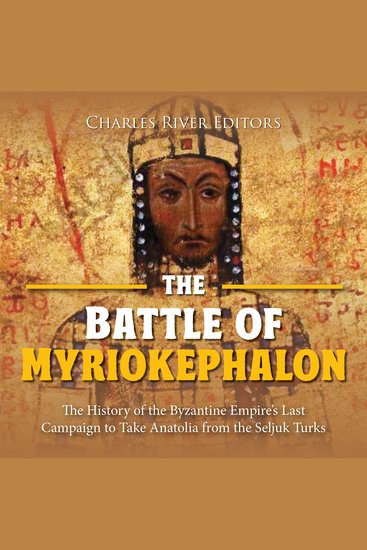
  • Battle of Myriokephalon The: The History of the Byzantine Empire’s Last Campaign to Take Anatolia from the Seljuk Turks - cover

    Battle of Myriokephalon The: The...

    Editors Charles River

    • 0
    • 0
    • 0
    The Byzantine Empire existed for over a thousand years, with a history spanning from the division of the Roman Empire in 395 until the Ottoman conquest of Constantinople in 1453. It was formed from the previous Eastern Roman Empire, and during its long existence, the Byzantine inhabitants were very proud to call themselves Romans.  
    	However, many things changed during the long lifespan of the Byzantine Empire, starting with its Hellenization in the 6th century. The use of the Latin language diminished and Greek took its place, while the typical Roman culture gave way to a more Hellenistic one. The Hellenization of Byzantium was detrimental to the relationship with the Holy Roman Empire, and the Christian world from that point would be split in two. The subsequent strengthening of the Orthodox Church caused many civil wars and conflicts to arise during the centuries, which shattered and reshaped the territory time after time. By the end of the Byzantine Empire’s existence, the old age had weakened both the state and church, making it an easy target for invading forces.  
    	The most notable invaders were the the Turkish-speaking Seljuks, led through a series of battles by Kutalmishouglu Suleiman, who supported different usurpers against the Byzantine emperor. The expansion of the Seljuks was so successful that when Suleiman died, he had put all of Bithynia under his control as well as several important harbor towns along the shores on the Asian side of Bosphorus. With that accomplishment, he had managed to separate the Byzantines living in Anatolia from their emperor in Constantinople. This immediately weakened the unity of the Byzantine Empire. 
    Show book
  • Mastering Focus: Unlock Your Full Potential - Why You Can't FOCUS - And How To Fix That - cover

    Mastering Focus: Unlock Your...

    Gayatri kumari

    • 0
    • 0
    • 0
    Certainly! Here's a description for your ebook: 
    --- 
    **Why You Can't Focus - And How To Fix That** 
    Are you constantly battling distractions and struggling to maintain focus? Do you find it challenging to concentrate on tasks that matter? You're not alone. In today's fast-paced, technology-driven world, staying focused has become increasingly difficult. 
    In "Why You Can't Focus - And How To Fix That," we delve into the root causes of your concentration problems and provide practical, science-backed solutions to help you regain control. This comprehensive guide covers: 
    - **Understanding Distractions**: Discover the common internal and external factors that disrupt your focus. 
    - **The Psychology of Attention**: Learn how your brain processes information and why it sometimes fails to concentrate. 
    - **Effective Techniques**: Implement proven strategies to enhance your focus and productivity. 
    - **Lifestyle Adjustments**: Explore how diet, exercise, and sleep influence your ability to concentrate. 
    - **Mindfulness and Meditation**: Incorporate mindfulness practices to sharpen your attention and reduce stress. 
    - **Digital Detox**: Manage your screen time and create a distraction-free environment. 
    Whether you're a student, professional, or simply someone looking to improve their concentration, this ebook offers actionable advice and insights to help you stay on track and achieve your goals. Say goodbye to scattered thoughts and hello to a more focused, productive you. 
    --- 
    Feel free to adjust any part of this description to better fit your ebook's content and tone!
    Show book
  • Urban Sociology - The Study of Cities and Communities - cover

    Urban Sociology - The Study of...

    Lyric Vale

    • 0
    • 0
    • 0
    Urban sociology is a dynamic field of study that explores the social, economic, and political aspects of urban spaces and how they shape individuals and communities. It draws from various theoretical foundations to understand the complexities of city life and the ways in which urban environments influence human behavior. Several foundational theories have played a pivotal role in shaping the field, each offering a distinct perspective on urban society. 
    One of the earliest and most influential theories is the Chicago School of Sociology, which emerged in the early 20th century. Scholars such as Robert Park and Ernest Burgess focused on the spatial distribution of social groups within cities, emphasizing the concept of the “ecology” of cities. They argued that cities, like natural ecosystems, are composed of different areas where social groups interact, often resulting in patterns of segregation and social conflict. This approach highlighted the dynamic relationship between individuals and their urban environment, with a particular focus on issues like migration, social disorganization, and the impact of urban growth. 
    Another key theoretical foundation is Karl Marx's analysis of urbanization. Marxism focuses on the role of capitalism in shaping urban spaces, viewing cities as sites of economic exploitation and class struggle. According to Marxist theory, the growth of cities is intrinsically linked to the development of capitalism, which creates divisions between the working class and the capitalist elite. This perspective emphasizes the role of urban spaces in perpetuating social inequalities, as the wealthy class controls resources and the working class is often marginalized or displaced.
    Show book
  • Soldiers and Silver - Mobilizing Resources in the Age of Roman Conquest - cover

    Soldiers and Silver - Mobilizing...

    Michael J. Taylor

    • 0
    • 0
    • 0
    By the middle of the second century BCE, after nearly one hundred years of warfare, Rome had exerted its control over the entire Mediterranean world, forcing the other great powers of the region—Carthage, Macedonia, Egypt, and the Seleucid empire—to submit militarily and financially. But how, despite its relative poverty and its frequent numerical disadvantage in decisive battles, did Rome prevail? Michael J. Taylor explains this surprising outcome by examining the role that manpower and finances played, providing a comparative study that quantifies the military mobilizations and tax revenues for all five powers. Though Rome was the poorest state, it enjoyed the largest military mobilization, drawing from a pool of citizens, colonists, and allies, while its wealthiest adversaries failed to translate revenues into large or successful armies. Taylor concludes that state-level extraction strategies were decisive in the warfare of the period, as states with high conscription and low taxation raised larger, more successful armies than those that primarily sought to maximize taxation. Comprehensive and detailed, Soldiers and Silver offers a new and sophisticated perspective on the political dynamics and economies of these ancient Mediterranean empires.
    Show book
  • Black Women Affirmations and Emotional Self-Care - cover

    Black Women Affirmations and...

    EasyTube Zen Studio

    • 0
    • 0
    • 0
    2 books in 1999 Powerful Affirmations for Black WomenDear black woman,You are beautiful, powerful, effervescent. Yet the weight of the world seeks to dim your glow, gnaw at your strengths, and dull your spark.Whenever you feel alone, remember that there have been many others in your shoes once. Now, look at how they shine — brimming with self-love, optimism, confidence, motivation, vigor, power, and success.You see, there is an upside to the gloom and doom: it serves as the canvas for your light.So, stoke the frozen embers and give way to a brighter, happier, more confident YOU with the help of “999 Powerful Affirmations for Black Women”.Here is where you will find powerful daily affirmations to hack your mind to positivity, confidence, health, money, success, and motivation.In this compelling book, you will find 999 affirmations that will help you to:Put yourself firstLove yourself again after a terrible experienceBuild your strength in the midst of anxiety and stressImprove your sleep quality and rejuvenate your entire beingMake you feel beautiful againSeek joy in everything you doStep out of your comfort zone with confidence and easeStay true to your authentic selfAnd so much more!Emotional Self-Care for Black WomenAre you a black woman who's struggling to find motivation and meaning in your life?Have you felt like your efforts are futile because nothing you do feels like it's making an impact?Do you wish you could just become the confident, self-assured woman you've always dreamed yourself to be?You're not alone in this struggle.Many black women like us are struggling with the same feelings of helplessness when it comes to our personal and professional lives.This lack of motivation often causes us to struggle with anxiety, depression, low self-esteem, self-doubt, and other mental and emotional issues.
    Show book
  • The Pacific Theater - Island Hopping and the Fight Against Japan - cover

    The Pacific Theater - Island...

    Sage Winters

    • 0
    • 0
    • 0
    The Pacific Theater of World War II was the culmination of decades of tension, territorial disputes, and ideological differences between Japan and the Allied Powers, particularly the United States. The roots of the conflict can be traced back to Japan’s rise as an imperial power in the late 19th and early 20th centuries. Seeking to expand its influence across East Asia and the Pacific, Japan embarked on a campaign of military conquest and economic domination, often at the expense of its neighbors.  
      
    By the 1930s, Japan’s aggressive expansionist policies became more pronounced, beginning with the invasion of Manchuria in 1931 and escalating with the full-scale war against China in 1937. These actions alarmed Western powers, who viewed Japan’s ambitions as a direct challenge to their interests in the region. The United States, in particular, responded by imposing economic sanctions and cutting off vital supplies, including oil, to curtail Japan’s militarism. However, these measures only further inflamed tensions, as Japan viewed them as an existential threat to its survival and growth as a global power.  
      
    The turning point came on December 7, 1941, with Japan’s surprise attack on Pearl Harbor. This audacious assault on the U.S. Pacific Fleet in Hawaii aimed to neutralize American naval power and secure Japan’s dominance in the Pacific. Although the attack achieved significant tactical success, crippling much of the U.S. fleet, it also galvanized American public opinion and led to the United States’ entry into World War II. The attack on Pearl Harbor marked the beginning of a brutal and protracted conflict that would span nearly four years and claim millions of lives. 
    Show book