Join us on a literary world trip!
Add this book to bookshelf
Grey
Write a new comment Default profile 50px
Grey
Subscribe to read the full book or read the first pages for free!
All characters reduced
Developing Embedded Systems with Zephyr OS - Definitive Reference for Developers and Engineers - cover

Developing Embedded Systems with Zephyr OS - Definitive Reference for Developers and Engineers

Richard Johnson

Publisher: HiTeX Press

  • 0
  • 0
  • 0

Summary

"Developing Embedded Systems with Zephyr OS""Developing Embedded Systems with Zephyr OS" is a comprehensive guide crafted for engineers, developers, and technical architects aiming to harness the power of the Zephyr real-time operating system in modern embedded applications. This book meticulously explores Zephyr’s modular architecture, detailing its microkernel design, kernel scheduler, and the powerful hardware abstraction enabled by Kconfig and Devicetree. Starting from a solid grounding in system design, memory management, and architectural portability, readers gain a deep understanding of the foundational elements needed to construct robust, portable, and scalable IoT solutions across diverse MCU platforms.A hands-on approach takes readers through the set-up and optimization of the Zephyr development environment, including toolchain integration, board porting, and build automation using CMake and west. Special attention is devoted to critical RTOS concepts such as threading, synchronization, and inter-process communication, as well as best practices for developing reliable device drivers and leveraging Zephyr’s advanced networking stack for wireless and wired connectivity. In-depth coverage of filesystems, storage management, and secure over-the-air firmware updates ensures your embedded devices remain resilient, maintainable, and future-proof in demanding deployments.Security, power optimization, and advanced development workflows form the cornerstone of the book’s later chapters, with practical guidance on secure coding, cryptographic integration, and leveraging hardware isolation features such as TrustZone. Detailed discussions on energy profiling, low-power patterns, and energy harvesting techniques empower developers to create devices that balance rich functionality with extended battery life. The final chapters encapsulate best practices, diagnostic tools, open-source collaboration, and a forward-looking perspective on evolving trends within the Zephyr ecosystem, making this book an essential companion for professionals building the next generation of connected embedded systems.
Available since: 06/06/2025.
Print length: 250 pages.

Other books that might interest you

  • William Stanek's The Living Grand Teton Biography - Fault Ice and the Making of a Mountain Wall - cover

    William Stanek's The Living...

    The Editors of Our American...

    • 0
    • 0
    • 0
    Grand Teton rises with such sudden force that the mountains seem almost newly made.
    
    In geological terms, they are still moving. Faulting lifted the range while the valley dropped. Ice reshaped the mountains. Rivers and lakes gathered below them. Wildlife continued moving through a valley long used and known by people.
    
    William Stanek's The Living Grand Teton Biography follows fault, glacier, migration, Indigenous homeland, settlement, ranching, tourism, conservation, philanthropy, local resistance, and the creation of one of America's most recognizable park landscapes.
    
    Behind the mountain wall is a complicated human story about who valued the valley, who controlled it, and what protection meant.
    
    The Tetons do not merely frame that history. They made it possible.
    Show book
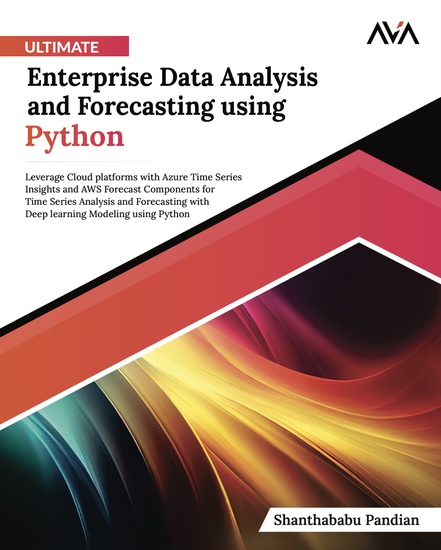
  • Ultimate Enterprise Data Analysis and Forecasting using Python - Leverage Cloud platforms with Azure Time Series Insights and AWS Forecast Components for Deep learning Modeling using Python - cover

    Ultimate Enterprise Data...

    Shanthababu Pandian

    • 0
    • 0
    • 0
    Practical Approaches to Time Series Analysis and Forecasting using Python for Informed Decision-Making
     
    Book Description
    Embark on a transformative journey through the intricacies of time series analysis and forecasting with this comprehensive handbook. Beginning with the essential packages for data science and machine learning projects you will delve into Python's prowess for efficient time series data analysis, exploring the core components and real-world applications across various industries through compelling use-case studies. From understanding classical models like AR, MA, ARMA, and ARIMA to exploring advanced techniques such as exponential smoothing and ETS methods, this guide ensures a deep understanding of the subject.
     
    It will help you navigate the complexities of vector autoregression (VAR, VMA, VARMA) and elevate your skills with a deep dive into deep learning techniques for time series analysis. By the end of this book, you will be able to harness the capabilities of Azure Time Series Insights and explore the cutting-edge AWS Forecast components, unlocking the cloud's power for advanced and scalable time series forecasting.
     
    Table of Contents
    1. Introduction to Python and its key packages for DS and ML Projects
    2. Python for Time Series Data Analysis
    3. Time Series Analysis and its Components
    4. Time Series Analysis and Forecasting Opportunities in Various Industries
    5. Exploring various aspects of Time Series Analysis and Forecasting
    6. Exploring Time Series Models - AR, MA, ARMA, and ARIMA
    7. Understanding Exponential Smoothing and ETS Methods in TSA
    8. Exploring Vector Autoregression and its Subsets (VAR, VMA, and VARMA)
    9. Deep Learning for Time Series Analysis and Forecasting
    10. Azure Time Series Insights
    11. AWSForecast     
    Index
    Show book
  • Basics of Hacking - cover

    Basics of Hacking

    Jim D Johnston

    • 0
    • 0
    • 0
    Ever found yourself being fascinated by the idea of being able to hack into any system? While modern culture has pushed hacking to a screen-based villainous role that can do miracles, there is much more to hacking that remains untold. Hardly anyone feels it necessary to mention how hacking can be an illustrious career option. Similarly, the ease with which cyberattacks can be diverted often remains untold. Luckily for you, we're here to tell you all about it in a quick and simple guide that should let you enter the mind of a hacker. Never let yourself be at risk again! In this book, we will explore: 
    -The different types of hackers and their purposes 
    -How hacking works 
    -The various steps in a hacking attack 
    -Why networking and scripting so important in hacking 
    -The different tools that are used in hacking 
    -The different techniques hackers use to get to your data 
    -How to keep yourself safe from cyber-attacks 
    -The ins and outs of cybersecurity and how it aims to keep you safe 
    -How your data is protected from hackers 
    -How to ensure that your cybersecurity is adequate 
    And much much more! So pull up your socks (or gloves if you prefer leaving no fingerprints behind) and get ready to explore the wondrous world of these cyber-geniuses through easy-to-read text and compelling descriptions that will immerse you within the world of scripts and codes. Learning about hacking has never been easier!
    Show book
  • Digital Capitalism and Distributive Forces - cover

    Digital Capitalism and...

    Sabine Pfeiffer

    • 0
    • 6
    • 0
    Are robots taking away our jobs? Those who ask this question have misunderstood digitalisation - it is not an industrial revolution by other means. Sabine Pfeiffer searches for the actual novelties brought about by digitalisation and digital capitalism. In her analysis, she juxtaposes Marx's concept of productive force with the idea of distributive force. From the platform economy to artificial intelligence, Pfeiffer shows that digital capitalism is less about the efficient production of value, but rather about its fast, risk-free, and permanently secured realisation on the markets. The examination of this dynamic and its consequences also leads to the question of how destructive the distributive forces of digital capitalism might be.
    Show book
  • The Mind's Mirror - Risk and Reward in the Age of AI - cover

    The Mind's Mirror - Risk and...

    Daniela Rus, Gregory Mone

    • 0
    • 0
    • 0
    An exciting introduction to the true potential of AI from the director of MIT’s Computer Science and Artificial Intelligence Laboratory. 
     
    Imagine a technology capable of discovering new drugs in days instead of years, helping scientists map distant galaxies and decode the language of whales, and aiding the rest of us in mundane daily tasks, from drafting email responses to preparing dinner. Now consider that this same technology poses risks to our jobs and society as a whole. Artificial Intelligence is no longer science fiction; it is upending our world today.  
     
    As advances in AI spark fear and confusion, The Mind’s Mirror reminds us that in spite of the very real and pressing challenges, AI is a force with enormous potential to improve human life. Computer scientist and AI researcher Daniela Rus, along with science writer Gregory Mone, offers an expert perspective as a leader in the field who has witnessed many technological hype cycles. Rus and Mone illustrate the ways in which AI can help us become more productive, knowledgeable, creative, insightful, and even empathetic, as well as the many risks associated with misuse.  
     
    The Mind’s Mirror shows readers how AI works and explores what we, as individuals and as a society, must do to mitigate dangerous outcomes and ensure a positive impact for as many people as possible. The result is an accessible and lively exploration of the underlying technology and its limitations and possibilities—a book that illuminates our possible futures in the hopes of forging the best path forward.
    Show book
  • 100 Mind-Blowing AI Facts - 100 Shocking Ways Artificial Intelligence is Changing the World - cover

    100 Mind-Blowing AI Facts - 100...

    Felix Grayson

    • 0
    • 0
    • 0
    Discover more books and audiobooks by Felix Grayson at FelixGrayson.com 
     
    100 Shocking Ways Artificial Intelligence is Changing the World 
     
    Artificial intelligence isn’t just reshaping the future—it’s transforming the world right now. From mind-reading machines to robots that perform surgery, this audiobook explores the wildest, weirdest, and most groundbreaking stories from the frontlines of AI. 
     
    Whether you’re a tech fan, a trivia lover, or just curious about the sci-fi-like breakthroughs happening every day, 100 Mind-Blowing AI Facts delivers a high-energy, eye-opening listening experience that will change the way you think about technology. 
     
    In this audiobook, you’ll hear about: 
    
    An AI that recreated a lost Beatles song decades after Lennon’s death 
    A robot that taught itself to walk without human input 
    How AI discovered a powerful new antibiotic in days 
    A machine that reads your brainwaves—and turns them into full sentences 
    The moment AI predicted a supernova before it exploded 
    How artificial intelligence restored ancient scrolls buried by volcanic ash 
    And much more... 
    
     
    Each fact is short, punchy, and packed with wonder—perfect for quick listens, road trips, or sparking conversation with friends. 
     
    Ideal for: 
    
    Tech lovers and futurists hungry for real-world sci-fi 
    Listeners who enjoy shocking facts and game-changing discoveries 
    Anyone curious about how AI is reshaping everyday life in ways we rarely notice 
    
     
    Whether you’re new to AI or you’ve been following its rise for years, this audiobook will blow your mind and make you say, “Wait… what?!” 
     
    Press play and discover 100 jaw-dropping ways AI is changing the world—right now.
    Show book