Join us on a literary world trip!
Add this book to bookshelf
Grey
Write a new comment Default profile 50px
Grey
Subscribe to read the full book or read the first pages for free!
All characters reduced
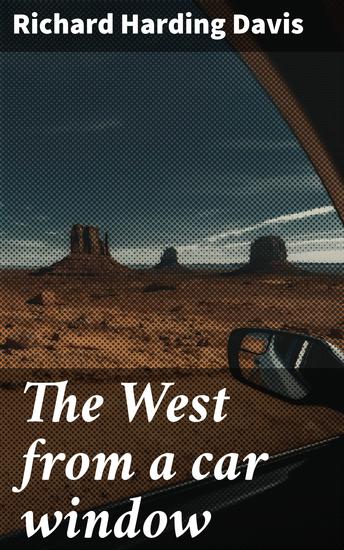
The West from a car window - Journey Through the American West: A Literary Exploration - cover

The West from a car window - Journey Through the American West: A Literary Exploration

Richard Harding Davis

Publisher: Good Press

  • 0
  • 0
  • 0

Summary

In "The West from a Car Window," Richard Harding Davis encapsulates the vibrant tapestry of the American West through the eyes of a passenger on a cross-country journey. This travel narrative weaves together keen observations with an engaging prose style that is both descriptive and incisive, reflecting the spirit of exploration prevalent in the late 19th and early 20th centuries. Davis's work is marked by its ability to illuminate the social and geographical landscapes, while also addressing the burgeoning changes brought on by industrialization and modernization during this transformative era. Richard Harding Davis, an esteemed journalist and fiction writer of his time, was known for his ability to portray the American zeitgeist with clarity and vigor. His own adventurous spirit and deep fascination with the West undoubtedly influenced this literary endeavor. Having traveled extensively, Davis drew on his personal experiences and observations, blending them with insightful commentary that speaks to the complexities of American identity and culture during an era of great change. For readers seeking an engaging and informative exploration of the American West, "The West from a Car Window" offers a unique lens through which to view the dynamic interplay between landscape and human experience. Davis's eloquent prose invites readers to not only witness but also feel the exhilaration of travel and discovery, making this work a compelling addition to the canon of American literature.
Available since: 07/10/2023.
Print length: 134 pages.
Other books that might interest you

  • Egyptian Symbolism - The Meaning and Use of Symbols in Ancient Culture - cover

    Egyptian Symbolism - The Meaning...

    Omar Khalil

    • 0
    • 0
    • 0
    Egyptian symbolism is one of the most captivating aspects of ancient Egyptian culture, reflecting their deeply spiritual worldview and providing insight into their daily lives, religious practices, and understanding of the universe. From the majestic pyramids to the intricate hieroglyphs on temple walls, symbolism played a crucial role in conveying meanings that went beyond the literal. It was a tool to communicate with the gods, mark divine power, and ensure continuity in both life and the afterlife. 
    At the heart of Egyptian symbolism was the belief that the world was filled with hidden meanings and spiritual forces, each symbol carrying its own power. This belief was manifested in art, architecture, rituals, and even the everyday objects used by the ancient Egyptians. Symbols were not just representations; they were believed to hold an active force that could influence the material world and the spiritual realm. For example, the Ankh, a symbol resembling a cross with a loop at the top, represented life and was often used in funerary texts to ensure immortality for the deceased. 
    In Egyptian society, symbols were central to religious practices. The gods and goddesses, each represented by specific symbols and animal forms, embodied different aspects of life, death, and the cosmos. The sun god Ra, for instance, was depicted as a falcon, symbolizing both the sun’s power and the bird's dominance in the sky. The scarab beetle, a symbol of rebirth and protection, was commonly used in amulets and artifacts, signifying the cyclical nature of life and the hope for resurrection.
    Show book
  • Sir Where's 'Toilet? - cover

    Sir Where's 'Toilet?

    John Meadows

    • 0
    • 0
    • 0
    A further collection of entertaining short stories to complete the author’s trilogy of world-wide adventures. His intriguing tales are spiced with lively encounters and astute observations, full of humor and wit. His fascinating historical facts are particularly enlightening, and will have you saying, "Really? I didn’t know that." Each story will leave you wanting more: Teachers' ghostly prank with a bizarre twist. Sampling local whiskey at a village distillery on the fabled Mekong river in Laos. Two cultures collide when Russian rugby league players invade Wigan, and to complete his experiences, he was proclaimed Emperor of China.
    Show book
  • The Myths of the Maya - Cosmic Legends and Sacred Rituals - cover

    The Myths of the Maya - Cosmic...

    Julia Blacksmith

    • 0
    • 0
    • 0
    The Maya civilization, one of the most sophisticated and enduring cultures of Mesoamerica, flourished for thousands of years, leaving behind a rich legacy of myth, ritual, and cosmic understanding. Their world was deeply interconnected with the supernatural, where gods, spirits, and celestial forces played vital roles in everyday life. Through sacred texts, oral traditions, and intricate ceremonial practices, the Maya passed down their myths—stories that explained the origins of the universe, the struggles of gods and heroes, and the sacred cycles of time. These legends were not merely tales; they formed the foundation of their spiritual and societal structures, influencing everything from kingship to agriculture.  
    At the heart of Maya society was a profound connection between myth and ritual. Unlike many cultures that viewed myths as separate from daily life, the Maya saw them as living forces that required constant renewal through ceremonies, sacrifices, and offerings. Bloodletting, a sacred act performed by rulers and priests, was believed to nourish the gods and maintain cosmic balance. Grand pyramids and temple complexes, aligned with celestial events, served as sacred theaters where rituals reenacted the struggles of deities, ensuring harmony between the human and divine realms. The famous Popol Vuh, often regarded as the Maya "Book of Creation," recounts the epic journey of the Hero Twins as they navigate the treacherous underworld, triumphing over the forces of chaos and death. This myth, like many others, reflected the Maya’s deep understanding of duality, rebirth, and the cosmic order.  
    Deciphering Maya mythology has been a long and complex journey, shaped by archaeological discoveries, linguistic breakthroughs, and the resilience of indigenous communities.
    Show book
  • Mountain Madness - Found and Lost in the Peaks of America and Japan - cover

    Mountain Madness - Found and...

    Clinton Crockett Peters

    • 0
    • 0
    • 0
    With Mountain Madness, Clinton Crockett Peters chronicles his travels and personal transformation from a West Texas evangelical to mountain guide-addict to humbled humanist after a near-fatal injury in Japan's Chichibu Mountains. From 2007 to 2010, Peters lived in Kosuge Village (population nine hundred), nestled in central Japan's peaks, where he was the only foreigner in the rugged town. Using these three years as a frame, this essay collection profiles who he was before Japan, why he became obsessed with mountains, and his fallout from mountain obsession, including an essay on Craig Arnold, the poet who disappeared on a Japanese volcano. Ultimately, the collection asks, how can landscape create and end identities?
    Show book
  • Pilgrimage - Lessons Learned From Solo Walking Three Ancient Ways - cover

    Pilgrimage - Lessons Learned...

    J.F. Penn

    • 0
    • 0
    • 0
    Do you enjoy travel memoirs with a combination of personal reflection and practical tips? Are you interested in solo walking, or are you considering walking the Camino de Santiago or other multi-day walks? 
    In this book, I share my lessons learned and insights from walking three ancient ways — the Pilgrims' Way and the St Cuthberts Way in England, and the Camino de Santiago Portuguese Coastal route.  
    It also includes historical, religious, and cultural aspects, and plenty of tips and questions for you to consider around your own journey.Part 1 goes into practical and spiritual preparation before pilgrimage, including how to make decisions about the route and whether to walk solo, as well as what to take with you, and how to face the fears that might hold you back.Part 2 covers the journey itself with the practicalities of the pilgrim’s day, as well as how walking the path of history and facing the challenge of the way can give you much-needed perspective on life — and perhaps even a glimpse of the divine.Part 3 addresses the arrival at your destination, and how to leave room for the gifts of pilgrimage to emerge after your return home, as well as how my three walks impacted my experience of mid-life.Plus, appendices with practical tips, a gear list and bibliography
    Show book
  • Valle de Benasque - Parque Nacional Posets-Maladeta - cover

    Valle de Benasque - Parque...

    Rafel Vidaller

    • 0
    • 0
    • 0
    El Valle de Benasque - la Vall de Benás - reúne las más altas montañas del Pirineo, los macizos de la Maladeta, Llardana o Perdiguero que han subyugado a los viajeros a lo largo de los tiempos. Impresionantes vertientes que reflejan los numerosos lagos que descansan bajo cada circo glaciar, creando paisajes de una belleza que corta el aliento. A sus pies, prados de montaña, bosques, ríos, aguas que bajan en cascadas que multiplican las vistas en rincones sorprendentes.
    En este libro proponemos una serie de excursiones que recorren la cascada de Aiguallut bajo el Aneto, la Maladeta en las aguas de Gorgutes, los saltos de agua entre los árboles del Botánico, el idílico valle de Estós, la sorprendente montaña caliza de Cotiella, el potente circo que rodea el ibón de Llosás, las cascadas de Sarllé, Gorgues Galantes, Alba, Espigantosa, las maravillas de Batisielles y Escarpinosa....
    Y los pueblos, pequeños todos, donde admirar la parte habitada de los valles, degustar la gastronomía pirenaica y apreciar los detalles de una arquitectura que habla de clima, de recursos limitados sabiamente aprovechados, de iglesias modestas pero que traen ecos del medievo y de una historia apasionante.
    Show book