Join us on a literary world trip!
Add this book to bookshelf
Grey
Write a new comment Default profile 50px
Grey
Subscribe to read the full book or read the first pages for free!
All characters reduced
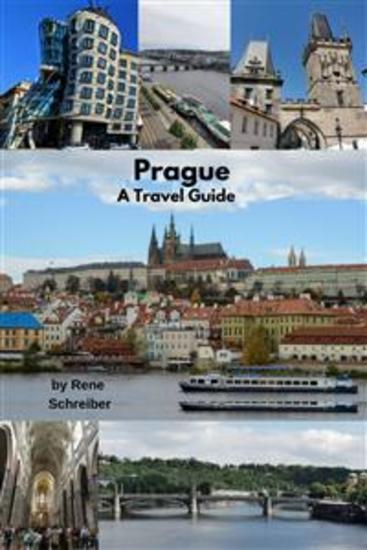
Prague A Travel Guide - cover

Prague A Travel Guide

René Schreiber

Publisher: BookRix

  • 0
  • 0
  • 0

Summary

Prague, Vienna, Bratislava and Budapest are cities with a long common history. Prague offers a great insight into the history of the Czech Republic from the Přemyslids, the Habsburgs, the Nazi dictatorship and the communist dictatorship to the present day.
Available since: 12/21/2023.
Print length: 77 pages.

Other books that might interest you

  • The Temples of Egypt - Sacred Spaces and Religious Practices - cover

    The Temples of Egypt - Sacred...

    Omar Khalil

    • 0
    • 0
    • 0
    Temples in ancient Egypt were far more than mere places of worship. They stood at the very heart of Egyptian civilization, functioning as both spiritual centers and instruments of political and social order. Each temple was seen as a dwelling place for a god or goddess, and the rituals performed within their walls were believed to maintain the cosmic balance known as ma’at. The presence of a temple in a city or region signaled divine favor and legitimacy, reinforcing the bond between the gods and the ruling pharaoh. 
    Pharaohs were considered divine intermediaries between the gods and the people, and their authority was deeply rooted in religious belief. Temples were a direct reflection of this divine connection. Often constructed by pharaohs to honor specific deities, temples helped assert royal power and ensure harmony across the land. Through grand architecture and lavish offerings, rulers demonstrated their piety and reaffirmed their right to govern. This link between kingship and temple worship made temples central to the ideological framework of the state. 
    Beyond their religious significance, temples also played a pivotal role in the social life of ancient Egyptians. They were the sites of numerous festivals and ceremonial events that brought entire communities together. These occasions were marked by processions, music, dancing, and the display of sacred statues, all of which reinforced communal identity and devotion. The most prominent of these was the Opet Festival in Thebes, during which statues of Amun, Mut, and Khonsu were transported from Karnak to Luxor Temple in a public procession along the Nile. Such festivals reminded people of the gods’ presence and the pharaoh’s divine role in upholding order.
    Show book
  • Conversational German Dialogues - Over 100 Conversations and Short Stories to Learn the German Language Grow Your Vocabulary Whilst Having Fun with Daily Used Phrases and Language Learning Lessons! - cover

    Conversational German Dialogues...

    Language Mastery

    • 0
    • 0
    • 0
    LOOK, NOBODY'S GOING TO SUGARCOAT IT - GERMAN HAS A REPUTATION 
    Four grammar cases. Crazy long words. Those guttural sounds that make your throat hurt. 
    Everyone's heard the jokes. Your friends probably laughed when you said you were learning German. "Good luck with that," they said. 
    But here's what nobody tells you: German gets a bad rap it doesn't deserve. 
    The truth? If you speak English, you're already halfway there. German and English are linguistic cousins - thousands of words are nearly identical. "Water" is "Wasser." "Book" is "Buch." You already know more German than you think. 
    The real problem isn't German itself. It's how most people try to learn it - drowning in grammar tables before they can even say "Guten Tag." 
    "Conversational German Dialogues" by Language Mastery flips that approach completely. 
    HERE'S WHAT ACTUALLY WORKS: 
    ✓ 100+ real conversations by native German speakers - the German people actually use in Berlin, Munich, and Vienna 
    ✓ Two-speed audio: Start slow to nail pronunciation, then speed up as your brain catches on 
    ✓ Story-driven learning that's actually interesting - vocabulary just sticks while you're entertained 
    ✓ Grammar you absorb naturally - no memorizing tables, just learning like kids do 
    ✓ Quick comprehension checks so you know you're progressing 
    ✓ Practical vocabulary for real situations 
    IN 30 DAYS YOU'LL: 
    ✓ Stop being intimidated and start enjoying German 
    ✓ Understand native speakers without panicking 
    ✓ Speak with confidence (even if your grammar isn't perfect yet) 
    ✓ Open doors to career opportunities in Europe's largest economy 
    No grammar drills. No boring textbooks. No feeling stupid. 
    Just real German that makes sense. The kind that gets you talking. 
    READY TO PROVE EVERYONE WRONG ABOUT GERMAN BEING "TOO HARD"? START NOW.
    Show book
  • The Poetry of Strangers - What I Learned Traveling America with a Typewriter - cover

    The Poetry of Strangers - What I...

    Anonymous

    • 0
    • 0
    • 0
    It might surprise you who’s a fan of poetry — when it meets them where they are. 
    Before he became an award-winning writer and poet, Brian Sonia-Wallace set up a typewriter on the street with a sign that said “Poetry Store” and discovered something surprising: all over America, people want poems. An amateur busker at first, Brian asked countless strangers, “What do you need a poem about?” To his surprise, passersby opened up to share their deepest yearnings, loves, and heartbreaks. Hundreds of them. Then thousands. Around the nation, Brian’s poetry crusade drew countless converts from all walks of life. 
    In The Poetry of Strangers, Brian tells the story of his cross-country journey in a series of heartfelt and insightful essays. From Minnesota to Tennessee, California to North Dakota, Brian discovered that people aren’t so afraid of poetry when it’s telling their stories. In “dying” towns flourish vibrant artistic spirits and fascinating American characters who often pass under the radar, from the Mall of America’s mall walkers to retirees on Amtrak to self-proclaimed witches in Salem. 
    In a time of unprecedented loneliness and isolation, Brian’s journey shows how art can be a vital bridge to community in surprising places. Conventional wisdom says Americans don’t want to talk to each other, but according to this poet-for-hire, everyone is just dying to be heard. 
    Thought-provoking, moving, and eye-opening, The Poetry of Strangers is an unforgettable portrait of America told through the hidden longings of one person at a time, by one of our most important voices today. The fault lines and conflicts which divide us fall away when we remember to look, in every stranger, for poetry. 
    Show book
  • Egyptian Burial Practices - From Tombs to Pyramids - cover

    Egyptian Burial Practices - From...

    Omar Khalil

    • 0
    • 0
    • 0
    The burial practices of ancient Egypt evolved significantly over millennia, reflecting changes in religious beliefs, social structures, and technological advancements. These practices were rooted in the belief in an afterlife, where the preservation of the body and the provision of necessary items were vital. From simple pit burials to grand pyramid constructions, the evolution of Egyptian burial customs offers valuable insights into the cultural and spiritual life of the civilization. 
    In the Predynastic period, burial customs were relatively simple, consisting of shallow pits in the desert sand. The dry, arid environment naturally mummified the bodies, preserving them for millennia. These early graves often contained personal belongings, such as pottery, jewelry, and tools, indicating a belief in a life beyond death. The positioning of the bodies, typically in a fetal position, also suggests a symbolic return to the womb, possibly signifying rebirth. 
    As Egypt unified and entered the Early Dynastic period, burial practices became more elaborate. The development of mastabas marked a significant shift in tomb architecture. These rectangular structures, made of mudbrick or stone, featured underground burial chambers and an above-ground offering chapel. Mastabas were primarily used by the elite, symbolizing their status and wealth. The inclusion of false doors and serdab chambers, which housed statues of the deceased, reflected the belief that the soul could interact with the living through offerings and rituals.
    Show book
  • Why You Should Go to Cairo - cover

    Why You Should Go to Cairo

    Mark Ferdinand

    • 0
    • 0
    • 0
    Cairo is a city where ancient wonders and modern life blend seamlessly along the banks of the Nile. Towering pyramids and mysterious sphinxes stand as reminders of Egypt’s legendary past, while bustling bazaars, lively cafés, and a vibrant cultural scene showcase its thriving present. 
    Mark Ferdinand takes you through the marvels of Egypt’s capital: gazing at the Great Pyramid of Giza, exploring treasures in the Egyptian Museum, wandering the historic lanes of Islamic Cairo, and experiencing the colorful chaos of Khan el-Khalili market. Whether you’re chasing history, adventure, or the simple joy of watching the sun set over the Nile, Cairo is a city that will ignite your imagination and stay with you forever.
    Show book
  • Thai Massage - Ancient Healing Practices for Modern Wellness - cover

    Thai Massage - Ancient Healing...

    Fiona Henderson

    • 0
    • 0
    • 0
    Thai massage, also known as Nuad Thai or Nuat Thai, has a rich history rooted in ancient traditions. It is believed to have been developed over 2,500 years ago in India by Jivaka Kumar Bhaccha, a contemporary of the Buddha and a revered physician in Buddhist tradition. He is often referred to as the "father of medicine" in Thailand. As Buddhism spread to Thailand, so did the practices and principles of Thai massage. 
    The technique evolved over centuries, integrating influences from traditional Chinese medicine, Ayurvedic practices, and indigenous Thai healing methods. Thai massage is distinct from other forms of massage due to its unique combination of acupressure, Indian Ayurvedic principles, and assisted yoga postures. It is performed on a mat on the floor, and the recipient remains fully clothed during the session. The therapist uses their hands, knees, legs, and feet to move the client into a series of yoga-like stretches, while also applying deep muscle compression, joint mobilization, and acupressure. 
    The Wat Pho temple in Bangkok, a significant center for traditional Thai massage education, houses inscriptions and statues that document these ancient practices. The temple is considered the birthplace of Thai massage as it is known today. In modern times, Thai massage has become popular worldwide, recognized for its holistic approach to healing, which promotes relaxation, reduces stress, and enhances physical and emotional well-being.
    Show book