Junte-se a nós em uma viagem ao mundo dos livros!
Adicionar este livro à prateleira
Grey
Deixe um novo comentário Default profile 50px
Grey
Assine para ler o livro completo ou leia as primeiras páginas de graça!
All characters reduced
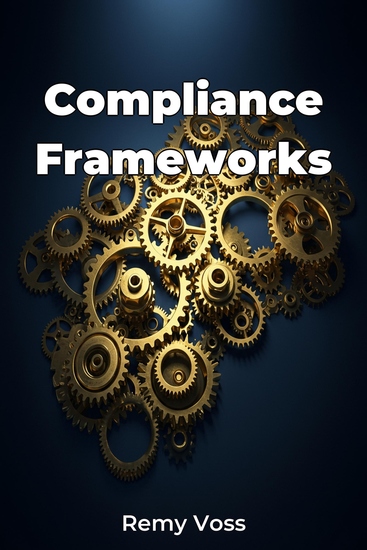
Compliance Frameworks - cover
LER

Compliance Frameworks

Remy Voss

Tradutor A AI

Editora: Publifye

  • 0
  • 0
  • 0

Sinopse

"Compliance Frameworks" demystifies the complex world of regulatory mandates and risk management, offering a practical guide to building robust compliance programs. It emphasizes that effective compliance isn't just about avoiding penalties; it's a strategic advantage that fosters organizational sustainability.

 
The book highlights the evolution of compliance, tracing its journey from basic regulatory adherence to today's sophisticated, integrated systems, noting that non-compliance can lead to significant financial and reputational damage.

 
The book provides a step-by-step approach, beginning with foundational principles and key compliance frameworks related to data privacy, financial regulations, and environmental standards. It then delves into practical risk management strategies, offering guidance on identifying, assessing, and mitigating compliance risks.

 
The final section focuses on cultivating a sustainable compliance culture through leadership, training, and effective monitoring, using real-world case studies to illustrate successful implementation in diverse industries.
Disponível desde: 03/04/2025.
Comprimento de impressão: 124 páginas.

Outros livros que poderiam interessá-lo

  • Self Reliance - cover

    Self Reliance

    Ralph Waldo Emerson

    • 0
    • 0
    • 0
    "To be yourself in a world that is constantly trying to make you something else is the greatest accomplishment."
    
    Ralph Waldo Emerson's essay Self-Reliance, first published in 1841, is a cornerstone essay advocating for individuality and arguing that true strength comes not from following the crowd, but from cultivating an unwavering belief in one's own ideas and instincts.
    
    Emerson advocates for the rejection of conformity and societal expectations, encouraging his audience to rely on their own intuition and inner convictions and promotes the idea that true wisdom arises from individual experience and authenticity.
    Ralph Waldo Emerson (1803—1882) was a prominent American essayist, lecturer, and transcendentalist philosopher, best known for his contributions to the American transcendentalism movement and for his influential works on individualism and self-reliance. His writings emphasise his belief in the potential of each person to discover their own truth and destiny, and his ideas challenged societal norms and encouraged spiritual and intellectual independence. These ideas continue to resonate, inspiring movements centred on personal freedom, self-expression, and the pursuit of authenticity.
    Ver livro
  • The Art of Optimism - Your Competitive Edge - cover

    The Art of Optimism - Your...

    Jim Stovall

    • 0
    • 0
    • 0
    Optimism is your secret weapon in business and in life. It is custom designed specifically for you, and it is capable of bringing you everything you want. Optimism can overcome financial problems, physical disabilities, and personal challenges. 
    In Jim Stovall's latest audiobook The Art of Optimism, he uses stories, studies, and personal experience to illustrate how adopting an attitude of optimism can change your life. 
    Listen and learn:  
       How to fuel optimism 
       How to find opportunity through optimism 
       How to overcome negative circumstances 
       How to maintain optimism in business and in life 
       How optimism is your most important asset 
       And much more!  
    "A pessimist sees the difficulty in every opportunity; an optimist sees the opportunity in every difficulty." - Winston Churchill
    Ver livro
  • Calculated Risk - Leadership Lessons and Stories - cover

    Calculated Risk - Leadership...

    Yaw L. Obeng

    • 0
    • 0
    • 0
    This book is not designed to be a how-to exercise. It is designed to bring out your leadership and decision-making based on your own realities. Each chapter has a personal story along my career/life journey that exemplifies calculated decisions that have had an impact in my life. Hopefully the stories will provide a backdrop for individuals to examine their own journey in decision making. 
    The book Calculated Risk is constructed to provide elements of decision-making while posing questions to assist one’s reflection on how you have made decisions in life, career and leadership. The reflective questions will prompt a metacognitive analysis of how you view situations; your environment, and experiences thus allowing for better decision-making in high-stakes contexts going forward. 
    The frame that will assist in your analysis I call “CRISP” Decisions. A CRISP decision is not a process, but rather the elements that make up a calculated decision. A CRISP decision can happen quickly and instinctively or thoughtfully and strategically. I have found characteristics that enhance a CRISP decision. Each chapter highlights a characteristic to support the attitude needed in goal-oriented decisions. Your key takeaways from this book will be: 
    Personalized Leadership InsightsBy sharing intimate stories from the author's life and career, this book invites you to reflect deeply on your unique path.Metacognitive Approach to Decision-Making 
    Calculated Risk introduces a metacognitive framework that pushes you to analyze and understand your thought processes, environments, and experiences. 
    Unlike rigid processes, CRISP Decisions adapt to the situation, whether they need to be made quickly and instinctively or thoughtfully and strategically.
    Ver livro
  • Strategic Risk Management - New Tools for Competitive Advantage in an Uncertain Age - cover

    Strategic Risk Management - New...

    Emanuel Lauria, Paul C. Godfrey,...

    • 0
    • 0
    • 0
    This book presents a new approach to risk management that enables executives to think systematically and strategically about future risks and deal proactively with threats to their competitive advantages in an ever more volatile, uncertain, complex, and ambiguous world. 
     
     
    Organizations typically manage risks through traditional tools such as insurance and risk mitigation; some employ enterprise risk management, which looks at risk holistically throughout the organization. But these tools tend to focus organizational attention on past actions and compliance. Executives need to tackle risk head-on as an integral part of their strategic planning process, not by looking in the rearview mirror. 
     
    Strategic Risk Management (SRM) is a forward-looking approach that helps teams anticipate events or exposures that fundamentally threaten or enhance a firm's position. The authors, experts in both business strategy and risk management, define strategic risks and show how they differ from operational risks. They offer a road map that describes architectural elements of SRM (knowledge, principles, structures, and tools) to show how leaders can integrate them to effectively design and implement a future-facing SRM program. SRM gives organizations a competitive advantage over those stuck in outdated risk management practices. For the first time, it enables them to look squarely out the front windshield.
    Ver livro
  • Email Etiquette: 7 Easy Steps to Master Email Writing Business Etiquette Email Productivity Hacks & Remote Teams - cover

    Email Etiquette: 7 Easy Steps to...

    Lawrence Finnegan

    • 0
    • 0
    • 0
    Have you ever struggled with making emails deliver a powerful punch? If you already create punchy emails, you can make them deliver an even mightier blow. From novice to master, this guide has lessons and tips you can begin applying to your life right away. Don’t waste another second feeling your messages are when there’s a potent tool of electronic communication right in your hands. You will become an unstoppable dynamo of multimedia communication once you are through with these 7 EASY STEPS. 
      
    YOU’LL LEARN: 
    ·     What carries over from the days of pen and paper, what is different; how to use the best of both worlds. 
    ·     Controlling your emotions and when to put them into a message; the importance of cooling off and when to stay heated. 
    ·     How to use use friendly, casual emails to practice your skills; closer relationships with your loved ones is one heck of a fringe benefit. 
    ·     Formal, business and professional emails require a little bit extra and a little less; how to communicate like a boss. 
    ·     Tips, tricks, and other time-saving habits of professionals the world over; email is decades old, and time has always been precious. 
    ·     Far from being isolated, remote workers can collaborate like never before; use the tools of the modern age to bridge the gap between distant workers. 
    ·     Beyond office emails, conference calls, and video chats are the whole wide world of digital media. 
    ·     And so much more! 
      
    No other guide is going to break down the whys behind the hows, and the content is designed to be a toolbox, offering solutions to problems and applications of software you may never have thought of. 
    Let’s get started!
    Ver livro
  • Another Way - Building Companies That Last…and Last…and Last - cover

    Another Way - Building Companies...

    Dave Whorton, Bo Burlingham

    • 0
    • 0
    • 0
    Dave Whorton was John Doerr's associate partner at high-flying Kleiner Perkins Caufield & Byers during Silicon Valley's big shift. After Netscape's IPO, he witnessed the VC industry pivot from a proven forty-year playbook of managing risk to something much more aggressive: Get big fast. Don't worry about profitability. Cash out and find another venture. 


    And for a while, Whorton took part in this whirlwind as he pursued his dream of becoming the next Hewlett or Packard. It wasn't long, though, before it all got to be too much. Whorton recognized that if "get big fast" was the formula for building a great technology company in the twenty-first century, he was happy to let someone else do it. It just wasn't for him. 


    Whorton went on a journey to find a better way to build companies: a way focused on long-term stability and steady growth, funded through profitability; a way in which leaders were committed to a Purpose greater than personal wealth generation, to being People First, and making their companies endure. He calls these companies "Evergreen." 


    Whorton's story, combined with his Evergreen 7Ps® framework, offers practical steps to create and lead enduring businesses.
    Ver livro