Join us on a literary world trip!
Add this book to bookshelf
Grey
Write a new comment Default profile 50px
Grey
Subscribe to read the full book or read the first pages for free!
All characters reduced
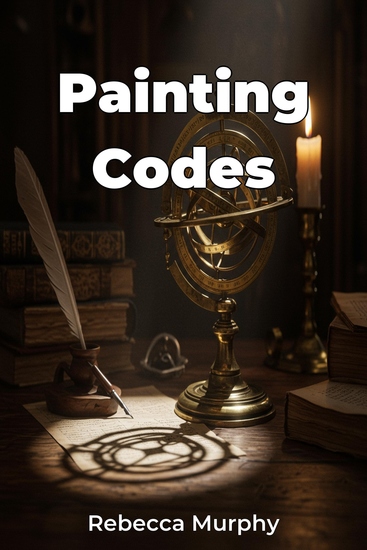
Painting Codes - cover

Painting Codes

Rebecca Murphy

Translator A AI

Publisher: Publifye

  • 0
  • 0
  • 0

Summary

"Painting Codes" unveils the captivating realm of art history, decoding hidden meanings and symbolism within famous paintings. It explores how artists used coded imagery to express ideas, often under societal constraints. For example, mundane objects in Northern Renaissance paintings, like a seemingly simple mirror, could symbolize vanity or hidden knowledge. Understanding these painting codes enriches our appreciation of art, providing insights into historical periods and the visual language of the time.

 
The book examines the historical context and symbolic systems influencing artists, revealing how political, religious, and social pressures shaped artistic expression. It deciphers common symbolic languages like alchemy and mythology, frequently incorporated into paintings to imbue them with deeper meaning. The Renaissance art movement, for instance, saw artists embedding coded religious and philosophical ideas into their works.

 
"Painting Codes" begins by introducing coded communication in art, then focuses on case studies, exploring Renaissance and Northern Renaissance paintings, and concludes with the legacy of coded symbolism in later art movements.
Available since: 02/25/2025.
Print length: 63 pages.

Other books that might interest you

  • Living Disability - Building Accessible Futures for Everybody - cover

    Living Disability - Building...

    Emily Macrae

    • 0
    • 0
    • 0
    How can we build more accessible cities? Living Disability brings together vibrant perspectives on disability justice and urban systems.
    		 
    A musician and snow removal expert, a queer curator, a public pool aficionado, and a journalist turned city councillor — these are just some of the disabled writers exploring disability justice, analyzing urban systems, and proposing more equitable approaches to city building in this anthology. Essays and interviews push the conversation about accessibility beyond policy papers and compliance checklists to show how disabled people are already creating more inclusive spaces in cities of all sizes.
    		 
    Living Disability is universal in scope but intimate and local in focus, grounded in personal struggles and celebrations. Decisions about public transit, affordable housing, and park design all disproportionately impact disabled communities; by sharing stories and strategies, contributors consider the ways disabled thinkers and doers are embracing overlooked aspects of urban design and tackling the toughest problems facing cities. Each chapter provides context to welcome both disabled and non-disabled readers into conversations about the future of inclusion so that all readers can develop their own understanding of what accessible cities look and feel like. This book appeals to city builders of all stripes committed to learning from and working with underrepresented communities. It equips architects, designers, community leaders, innovators, and citizens with the key concepts they need to collaborate with rather than care for disabled neighbors.
    		 
    “Living Disability is at once hopeful and infuriating, solemn and joyous. The stories shared within these pages point to both the past and future simultaneously — illuminating the struggles and joys and history of disabled life, while putting access barriers on blast in a way that is more necessary than ever. The deep, rich work of this collection lies in its embrace of complexity, community, grief, and also its belief in the capacity of our world (read: us) to change. May these stories touch your heart, kindle the flame of your anger, and move you forward into fighting for the better world we all deserve.” — Amanda Leduc, author of Disfigured: On Fairy Tales, Disability, and Making Space
    Show book
  • Cheka The: The History of the Soviet Agency that Eventually Became the KGB - cover

    Cheka The: The History of the...

    Editors Charles River

    • 0
    • 0
    • 0
    The KGB is one of the most famous abbreviations of the 20th century, and it has become synonymous with the shadowy and often violent actions of the Soviet Union’s secret police and internal security agencies. In fact, it is often used to refer to the Soviet state security agencies throughout its history, from the inception of the inception of the Cheka (Extraordinary Commission) in 1917 to the official elimination of the KGB in 1992. Whether it’s associated with the Russian Civil War’s excesses, Stalin’s purges, and even Vladimir Putin, the KGB has long been viewed as the West’s biggest bogeyman during the second half of the 20th century. 
    	However, the KGB did not appear out of thin air. Naturally, the earliest Soviet leaders utilized intelligence agencies that collected information both abroad and within the Soviet Union, targeting foreign opponents and domestic opponents alike. Lenin did not imagine the scale of the opposition he would have to face after the revolution, and he quickly came to the conclusion that "a special system of organized violence" must be created to implement the dictatorship of the proletariat. 
    	Thus, from nearly the beginning of the Bolshevik takeover of Russia, Lenin and his successors established and relied on a particularly ruthless agency: the All-Russian Extraordinary Commission for Combating Counter-Revolution and Sabotage, later abbreviated to the Extraordinary Commission. Known colloquially as the Cheka (Extraordinary Commission), it soon became as feared by non-socialists as the Tsar’s secret police had ever been. The main means approved by the Council of People's Commissars on December 20, 1917, which the Cheka had to use to fight the counter-revolution, were "seizure of property, resettlement, deprivation of cards, publication of lists of enemies of the people, etc."
    Show book
  • Denmark Vesey's Bible - The Thwarted Revolt That Put Slavery and Scripture on Trial - cover

    Denmark Vesey's Bible - The...

    Jeremy Schipper

    • 0
    • 0
    • 0
    On July 2, 1822, Denmark Vesey, a formerly enslaved man, was hanged in Charleston, South Carolina. He was convicted of plotting what might have been the largest insurrection against slaveholders in US history. Witnesses claimed that Vesey appealed to numerous biblical texts to promote and justify the revolt. While sentencing Vesey to death, Lionel Henry Kennedy, a magistrate at the trial, accused Vesey not only of treason but also of "attempting to pervert the sacred words of God into a sanction for crimes of the blackest hue." Denmark Vesey's Bible tells the story of this momentous trial, examining the role of scriptural interpretation in the deadly struggle against American white supremacy and its brutal enforcement. 


    Jeremy Schipper brings the trial and its aftermath vividly to life, drawing on court documents, personal letters, sermons, speeches, and editorials. He shows how Vesey compared people of African descent with enslaved Israelites in the Bible, while his accusers portrayed plantation owners as benevolent biblical patriarchs responsible for providing religious instruction to the enslaved. What emerges is an explosive portrait of an antebellum city in the grips of racial terror, violence, and contending visions of biblical truth.
    Show book
  • Code White - Sounding the Alarm on Violence against Health Care Workers - cover

    Code White - Sounding the Alarm...

    Margaret M. Keith, James T. Brophy

    • 0
    • 0
    • 0
    When health care workers call a Code White, it’s an emergency response for a violent incident: a call for help. But it’s one that goes unanswered in hospitals, clinics, and long-term care homes across the country. Code White exposes a shocking epidemic of violence that’s hidden in plain sight, one in which workers are bruised, battered, assaulted, and demeaned, but carry on in silence, with little recourse or support.
    		 
    Researchers Margaret M. Keith and James T. Brophy lay bare the stories of over one hundred nurses and personal support workers, aides and porters, clerical workers and cleaners. The nightmarish experiences they relate are not one-off incidents, but symptoms of deep systemic flaws that have transformed health care into one of the most dangerous occupational sectors in Canada.
    		 
    The same questions echo in the wake of each and every brutal encounter: Is violence and trauma really just “part of the job”? Why is this going underreported and unchecked? What needs to be done, and how?
    Show book
  • Postwar Europe - A Very Short Introduction - cover

    Postwar Europe - A Very Short...

    Richard Bessel

    • 0
    • 0
    • 0
    The Second World War was the most destructive conflict in history. It left Europe in ruins, its economies severely damaged and millions of its people facing malnutrition, its political systems shaken if not destroyed. Yet three decades later its economies had recovered; it largely appeared politically stable; its inhabitants generally were well housed and well fed. Then at the end of the 1980s, the postwar settlement disintegrated, and a new chapter in Europe's postwar history had begun.In this Very Short Introduction, Richard Bessel presents a clear, concise, informative account of Europe's history between the end of the Second World War and roughly the end of the twentieth century. He explores the conditions in Europe at the end of the war, how political life took shape and societies were rebuilt, the impressive economic recovery, the Cold War division, the end of empire, and European cultural life. Bessel discusses how we might understand the beginnings and endings of the postwar era, and emphasizes the importance of the experiences and actions of specific generations of Europeans.
    Show book
  • 100 Facts About Critical Thinking - English to Spanish - cover

    100 Facts About Critical...

    Science-Based Language Learning Lab

    • 0
    • 0
    • 0
    Introduction to the 100 Somethings Language Learning Series 
     
    Welcome to a revolutionary approach to language learning! This series helps you master Spanish by intertwining it with compelling topics like Critical Thinking. Each book centers on a theme (art, science, history) and presents 100 carefully chosen facts in both English and Spanish. 
     
    How It Works: 
     
    - Each fact is first introduced in Spanish, encouraging you to interpret it. 
     
    - The following page provides the fact in English and then repeats it in Spanish, aiding comprehension and memorization. 
     
    - The second half flips this order—English first, then Spanish, and English again—helping you practice translation in both directions for better mastery. 
     
    Benefits: 
     
    - Concise Learning: Focuses on one-sentence facts to ensure every word learned is impactful and directly related to your interests, making them easier to remember. 
     
    - Reinforcement: Alternating languages for each fact naturally strengthens vocabulary and grammar. 
     
    - Engagement: Learning vocabulary through topics you're passionate about keeps the process dynamic and relevant. 
     
    - Dual Knowledge: You enrich your understanding of a specific subject while learning a new language. 
     
    This series is tailored for learners who thrive on clear, targeted information, making it both educational and enjoyable. Whether you’re a beginner or expanding your linguistic skills, this series promises an effective and engaging educational journey. Embrace these 100 facts and let your passions drive your progress in mastering a new language!
    Show book