Rejoignez-nous pour un voyage dans le monde des livres!
Ajouter ce livre à l'électronique
Grey
Ecrivez un nouveau commentaire Default profile 50px
Grey
Abonnez-vous pour lire le livre complet ou lisez les premières pages gratuitement!
All characters reduced
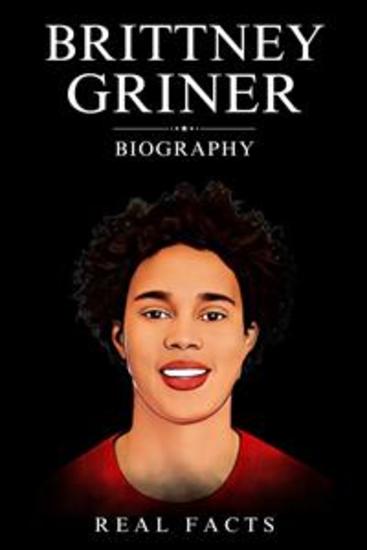
Brittney Griner Biography - cover

Brittney Griner Biography

Real Facts

Maison d'édition: Real Facts

  • 0
  • 0
  • 0

Synopsis

Real Facts returns with another captivating biography, this time exploring the extraordinary life of basketball sensation Brittney Griner. Discover the inspiring journey of the unstoppable force on and off the court.

In this riveting book, you'll:

* Uncover the untold story of Brittney's rise from humble beginnings in Houston to becoming a global basketball icon.

* Explore her groundbreaking achievements, from dominating the NCAA to shattering records in the WNBA.

* Witness her fearless advocacy for LGBTQ rights and social justice, showcasing the power of using one's platform for positive change.

* Learn about Brittney's resilience in overcoming adversity and how she continues to inspire others to pursue their dreams.

* Dive into the cultural impact of her electrifying play and unwavering commitment to authenticity.

But that's not all! Discover the personal triumphs, challenges, and the unwavering determination that define Brittney Griner's remarkable journey—and much more.
Click the Buy Now Button to Get Your Copy Now!
Disponible depuis: 12/05/2024.

D'autres livres qui pourraient vous intéresser

  • Bitch Hunt - cover

    Bitch Hunt

    Taetrece Harrison

    • 0
    • 0
    • 0
    In the United States of America, racism against Black women still reigns unjustly. From within the secluded judge’s chambers to the courthouse parking lot, I’ve gathered five different incidents where powerful Black women are forced to come face to face with being on the other side of the law. 
    We follow the stories of Desirée Mary Charbonnet, Gay Polk-Payton, Angela Stokes, Rhonda Crawford, and myself—we happen to be some of the most prestigious Black judges and attorneys in the legal system. Readers follow our experiences in the Louisiana, Mississippi, Ohio, and Illinois judicial systems as we explore the fascinating and intricate dynamic of women in positions of power. Desirée, Gay, Angela, Rhonda and I are connected by one simple, yet complex dynamic: Black womanhood. What will our endgame be as women who are committed to upholding and enforcing what is right? Will we succumb to the pressures of America’s hand, or will we push forward in the face of adversity?
    Voir livre
  • Gentle Breathing - From their pens to your ears genius in every story - cover

    Gentle Breathing - From their...

    Ivan Bunin

    • 0
    • 0
    • 0
    Ivan Alekseyevich Bunin was born on 22nd October 1870 in Voronezh province, in the South-West of the Russian Empire. 
    His early life was plagued by his Father’s gambling habits which caused his education to be erratic and the family to lose most of their wealth. 
    Bunin published his first poem in 1887 in St Petersburg and later in Oryol he worked for the local paper and became its editor, handily allowing him to publish his own poems and short stories.  There he met and married Varvara Pashchenko.  Ivan Bunin's debut book of poetry ‘Poems (1887–1891)’ was published in 1891. 
    This poetry and his translation of Longfellow garnered him his first Pushkin Prize.  Now he switched to writing prose and his novella ‘Antonov Apples’ is regarded as his first masterpiece.  Many more would follow. 
    The October Revolution of 1905 found Bunin in the Crimea.  Scenes of ‘class struggle’ he saw more as the oppressed people's craving for anarchy and destruction. 
    In November 1906 he began a passionate affair with Vera Muromtseva, within a few months they were touring through Egypt and Palestine.  ‘The Bird's Shadow’ collection was the result.   
    His second Pushkin Prize came in 1909 for Poems (1903–1906) and further translations.  He was now elected to the prestigious Russian Academy. 
    More widespread fame came in 1910 with ‘The Village’, a controversial and bleak portrayal of Russian country life.  Travel too beckoned them back to the Middle East, Ceylon (now Sri Lanka) and for winters in Capri with their friend Maxim Gorky.  
    That friendship suddenly ended in April 1917 as the revolution began to ferment in war-ravaged Russia.  After the Bolsheviks took power and the upheavals continued, he decided to leave Russia, finally achieving that in early 1920.  
    It would take some time to heal the wounds and stress he had been under and for his writing to begin again.  Settled in France, Bunin published many of his previous works and collections of novellas.  He also made regular contributions to the Russian emigre press.  
    Although reluctant to become involved in politics, Bunin was now feted as both a writer and the figurehead of non-Bolshevik Russian values and traditions.  In 1933 he became the first Russian to be awarded the Nobel Prize for Literature ‘for following through and developing with chastity and artfulness the traditions of Russian classic prose.’  
    In 1938 Bunin began working on the celebrated cycle of nostalgic, and erotically themed stories known Dark Avenues (or Dark Alleys).  
    As World War II broke out he chose to remain in Grasse spending the war at his remote Villa Jeanette, high in the mountains.  
    Ivan Bunin was a staunch anti-Nazi, and often, under difficult conditions, sheltered fugitives after Vichy was occupied by the Germans.  He wrote but did not publish during these years until on August 23rd the Nazi’s fled Grasse without a fight.  The next day the Americans came.  
    In May 1945 he returned to Paris and, apart from convalescing at times in Juan-les-Pins, he stayed for the rest of his life. 
    After 1948, with his health deteriorating, Bunin concentrated upon writing his memoirs and a book on Chekhov.  His last years were overshadowed by bitterness and despair at the situation in Russia and the treatment of its peoples.  He was suffering now from asthma, bronchitis and chronic pneumonia. 
    Ivan Alekseyevich Bunin died in a Paris attic flat on 8th November 1953.  Heart failure, cardiac asthma and pulmonary sclerosis were given as the causes of death.  He was 83.
    Voir livre
  • Heroes and Giants - Second Edition - cover

    Heroes and Giants - Second Edition

    Douglas B. Ashby

    • 0
    • 0
    • 0
    During a career in the emergency services, you will see every imaginable type of tragedy. In this sometimes humorous, sometimes heartrending memoir, Ashby rises from a lowly recruit in Pasadena, California to battalion chief with the Los Angeles County Fire Department. He shares, with authentic detail, the horrific incidents that firefighters encounter. At the same time, Ashby provides a look into his personal life and how you can’t just “leave your work at work” when you serve in this capacity. 
    “We do all we can, and it has to be enough.”  
     
    Voir livre
  • Jean-Jacques Rousseau - The Social Contract and Natural Man - cover

    Jean-Jacques Rousseau - The...

    Hector Davidson

    • 0
    • 0
    • 0
    Jean-Jacques Rousseau, one of the most influential philosophers of the 18th century, reshaped the landscape of political and social theory. His ideas, particularly those outlined in The Social Contract and Discourse on the Origin and Basis of Inequality Among Men, have had a profound impact on modern thought, influencing the French Revolution, the development of democratic ideals, and the evolution of social theory. Rousseau's philosophy is a reflection of his deep concern with the relationship between individuals and society, the nature of human freedom, and the consequences of civilization. 
    At the heart of Rousseau’s thought is his concept of the "state of nature," a condition in which humans existed before the corrupting influence of society. In this natural state, Rousseau argued, humans were free, equal, and solitary. Their basic needs were limited, and they acted primarily on instinct, guided by compassion and self-preservation. However, with the rise of private property, inequality began to emerge, leading to the social contract—a mechanism through which individuals could unite to form a collective body politic, agreeing to follow the “general will” for the common good. This social contract was Rousseau's answer to the problem of how to create a just society that respects both individual liberty and collective harmony. 
    Rousseau rejected the view that human beings are inherently selfish, as suggested by other philosophers like Hobbes. Instead, he believed that while civilization introduced inequality and competition, it also created the potential for true human freedom, which could only be realized in a political community that was based on the collective will of its people. Rousseau’s idea of the general will is central to his political theory. The general will is not simply the sum of individual desires but represents the collective interests that transcend personal ambitions, aiming for the common good.
    Voir livre
  • The Magnificent Mitscher - cover

    The Magnificent Mitscher

    Theodore Taylor

    • 0
    • 0
    • 0
    “First-class . . . more than the biography of a great aviator and military leader. It also is a detailed and lively history of naval aviation.” —The New York Times Air Adm. Marc Mitscher is a legend in military circles for developing an entirely new concept of war at sea. His skills as both a carrier tactician and genius for leading men rank him with the best World War II combat commanders. However, because Mitscher shunned publicity and destroyed his private papers shortly before his death in 1947, his accomplishments are not widely known. In this outstanding biography, Theodore Taylor traces the aviator’s brilliant career from its beginnings and makes clear the major role played by the admiral in developing the Navy’s air program, providing a lively and detailed history of the progress of naval aviation. “The likable personality and day by day achievements of Mitscher shine through to lift this above the run of the mill military biography.” —Kirkus Reviews
    Voir livre
  • Still No Word from You - Notes in the Margin - cover

    Still No Word from You - Notes...

    Peter Orner

    • 0
    • 0
    • 0
    A new collection of pieces on literature and life by the author of Am I Alone Here?, a finalist for the NBCC Award for Criticism 


    From the acclaimed fiction writer about whom Dwight Garner of the New York Times wrote, "You know from the second you pick him up that he's the real deal," comes Still No Word from You, a unique chain of essays and intimate stories that meld the lived life and the reading life. For Orner, there is no separation. Covering such well-known writers as Lorraine Hansberry, Primo Levi, and Marilynne Robinson, as well as other greats like Maeve Brennan and James Alan McPherson, Orner's highly personal take on literature alternates with his own true stories of loss and love, hope and despair. In his mother's copy of A Coney Island of the Mind, he's stopped short by a single word in the margin, "YES!"—which leads him to conjure his mother at twenty-three. He stops reading Penelope Fitzgerald's The Beginning of Spring three quarters of the way through because he knows that finishing the novel will leave him bereft. Orner's solution is to start again from the beginning to slow the inevitable heartache. 


    Still No Word from You is a book for anyone for whom reading is as essential as breathing.
    Voir livre