Join us on a literary world trip!
Add this book to bookshelf
Grey
Write a new comment Default profile 50px
Grey
Subscribe to read the full book or read the first pages for free!
All characters reduced
Herman Melville Mariner and Mystic - Exploring the Depths of Melville's Maritime Mystique - cover

Herman Melville Mariner and Mystic - Exploring the Depths of Melville's Maritime Mystique

Raymond M. Weaver

Publisher: Good Press

  • 0
  • 0
  • 0

Summary

In "Herman Melville, Mariner and Mystic," Raymond M. Weaver delves into the life and works of the enigmatic American author, Herman Melville. Weaver'Äôs writing is both erudite and accessible, capturing the complexities of Melville'Äôs literary output within the context of 19th-century American literature. The study intricately weaves together Melville's personal experiences at sea, his philosophical explorations, and his struggles against the prevailing literary conventions of his time, illuminating how these elements coalesce in masterpieces such as "Moby Dick" and "Bartleby, the Scrivener." This examination of Melville's mysticism and marine adventures offers readers a comprehensive view of his contributions to the literary canon, while probing the existential themes that resonate throughout his body of work. Raymond M. Weaver, a prominent Melville scholar and early biographer, provides invaluable insight, drawing on primary sources and personal letters to piece together Melville'Äôs tumultuous life journey. His deep appreciation of Melville'Äôs genius, combined with his own literary scholarship, allows Weaver to position the author amidst the cultural turmoil of his era, revealing how Melville felt both apart from and deeply connected to the literary movements of his time. For those intrigued by the depth of American literature and the inner workings of its most complex figures, Weaver's work serves not only as an academic exploration but also as a celebration of Melville'Äôs profound impact on the literary landscape. This book is an essential read for anyone seeking to deepen their understanding of Melville's artistry and philosophical insights.
Available since: 10/26/2023.
Print length: 362 pages.


Other books that might interest you

  • The Good Sport - Reflections on a Full Life in College Sports - cover

    The Good Sport - Reflections on...

    Kevin White

    • 0
    • 0
    • 0
    In The Good Sport, Kevin White takes an unflinching look at the current state of intercollegiate sports, including the tumultuous changes brought on by the Supreme Court's landmark decision on name, image, and likeness (NIL) rights. Drawing on his decades of leadership, White examines the chaos, challenges, and opportunities of this new era—and why he believes the future of college sports hangs in the balance.
    Show book
  • Summary: How to Do the Work - Recognize Your Patterns Heal from Your Past and Create Yourself By Dr Nicole LePera: Key Takeaways Summary and Analysis - cover

    Summary: How to Do the Work -...

    Brooks Bryant

    • 0
    • 0
    • 0
    DISCLAIMER: THIS IS NOT THE OFFICIAL BOOK. 
    This is a summary, and it does not accompany the official 
    In 'How to Do the Work' by Dr. Nicole LePera, the author challenges the limitations of traditional psychotherapy with her holistic approach to mental, physical, and spiritual wellness. Dr. LePera, known as 'The Holistic Psychologist,' integrates various scientific and healing modalities to help individuals recognize and heal from the adverse effects of childhood experiences and trauma. The book emphasizes the impact of these experiences on whole-body dysfunction, triggering stress responses that lead to harmful patterns like codependency, emotional immaturity, and trauma bonds. Dr. LePera provides tools and guidance for breaking free from these destructive behaviors, advocating for self-healing, and empowering readers to create more vibrant, authentic, and joyful lives. 'How to Do the Work' presents a paradigm shift in the approach to mental wellness and self-care, promoting a journey of self-discovery and transformation.
    Show book
  • Lost Fatherland - Europeans between Empire and Nation-States 1867-1939 - cover

    Lost Fatherland - Europeans...

    Iryna Vushko

    • 0
    • 0
    • 0
    How the demise of the Habsburg Empire, postwar sovereignty, and new diplomatic frontiers shaped the nature of citizenship, identity, and belonging across Europe 


    This book is a collective portrait of twenty-one key statesmen who came of age during the Habsburg Empire. They include the cofounder of Austro-Marxism and the Austrian republic's first foreign minister, the cofounder of the European Union after the Second World War, the founder of the Communist Party of Czechoslovakia, and Mussolini's ambassador to Vienna. Some survived the First World War and the resulting geographical divisions in their homelands, and some went on to serve in politics and governments throughout Europe. 


    Taken together, the stories of these men offer listeners a window on broad issues of European history in the late nineteenth and early twentieth centuries—chiefly, how an imperial heritage, a shared vision of statehood and nationalism, and a commitment to peaceful conflict resolution helped establish enduring loyalty and unity despite the geographical fault lines resulting from the war. As Iryna Vushko explains, their stories also offer an increasingly nuanced understanding of the achievements and failures of the Habsburg Empire.
    Show book
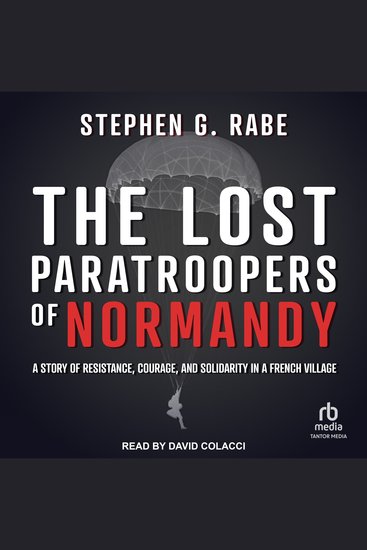
  • The Lost Paratroopers of Normandy - A Story of Resistance Courage and Solidarity in a French Village - cover

    The Lost Paratroopers of...

    Stephen G. Rabe

    • 0
    • 0
    • 0
    The fateful days and weeks surrounding June 6th, 1944, have been extensively documented in histories of the Second World War, but less attention has been paid to the tremendous impact of these events on the populations nearby. The Lost Paratroopers of Normandy tells the inspiring yet heartbreaking story of ordinary people who did extraordinary things in defense of liberty and freedom. On D-Day, when transport planes dropped paratroopers from the 82nd and 101st Airborne Divisions hopelessly off-target into marshy waters in northwestern France, the 900 villagers of Graignes welcomed them with open arms. These villagers—predominantly women—provided food, gathered intelligence, and navigated the floods to retrieve the paratroopers' equipment at great risk to themselves. When the attack by German forces on June 11th forced the overwhelmed paratroopers to withdraw, many made it to safety thanks to the help and resistance of the villagers. In this moving book, historian Stephen G. Rabe, son of one of the paratroopers, meticulously documents the forgotten lives of those who participated in this integral part of D-Day history.
    Show book
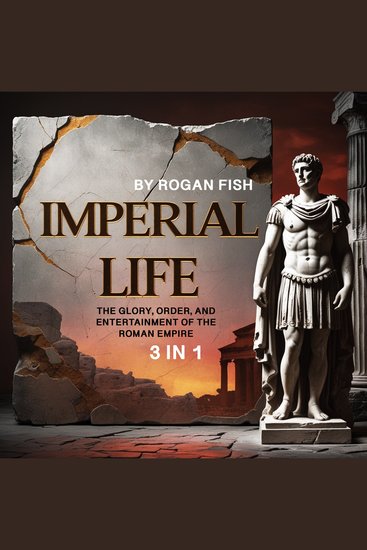
  • Imperial Life - The Glory Order and Entertainment of the Roman Empire (3 in 1) - cover

    Imperial Life - The Glory Order...

    Rogan Fish

    • 0
    • 0
    • 0
    This bundle invites readers to walk the marble-paved streets of Rome at its height. The first section, Imperial Rome, explores the structured yet lavish lives of Roman elites, administrators, and common citizens. It reveals how the empire maintained order across vast territories using laws, infrastructure, and an intricate bureaucracy—while projecting power through majestic architecture and imperial ceremonies. From the palaces of emperors to the hum of city forums, this part paints a vivid picture of Rome's beating heart. 
    The second section, Gladiators and Games, dives into the thrilling (and often brutal) world of Roman entertainment. Learn about the engineering marvels of the Colosseum, the blood-soaked spectacles that kept the masses distracted, and the lives of gladiators who fought for fame and freedom. This part also covers chariot racing, theatrical performances, and the philosophy behind “bread and circuses”—how entertainment functioned as both cultural glue and political strategy. 
    In the final section, The Pax Romana, readers will discover the period of unprecedented peace and prosperity that allowed art, trade, and daily life to flourish. This chapter explores how stability encouraged innovation and helped Rome become a melting pot of cultures, ideas, and wealth. Imperial Life is a journey into the grandeur, governance, and gatherings that made Rome more than a military powerhouse—it was also a cultural empire that continues to fascinate the modern world.
    Show book
  • Psychology and Society - The Study of Mind and Culture (3 in 1) - cover

    Psychology and Society - The...

    Mike Crawford

    • 0
    • 0
    • 0
    This book bundle explores the intricate web of human thought, behavior, and social organization. By combining three powerful disciplines—Sociology, Ethnology, and Anthropology—this volume offers a comprehensive understanding of how individuals relate to one another, how cultures form and function, and how human societies evolve. 
    In Sociology, readers investigate the structure of societies, the influence of institutions, and the dynamics of groups and relationships. This section delves into topics like class systems, social norms, urbanization, education, and inequality, revealing how societal forces shape our everyday lives and collective decisions. 
    Ethnology, a branch of anthropology, compares and analyzes cultures across the globe. It seeks patterns in traditions, languages, rituals, and social roles, uncovering what connects humanity while celebrating what makes each culture unique. From kinship systems to religious beliefs, ethnology paints a portrait of human diversity and shared heritage. 
    Finally, Anthropology offers a broader view of human beings throughout history, studying physical traits, prehistoric origins, and cultural practices. It combines biological, archaeological, linguistic, and cultural perspectives to understand what it means to be human—both in ancient times and in modern societies. 
    Whether you're a student of social sciences or simply curious about humanity’s rich cultural landscape, this book equips you with foundational knowledge to better grasp the forces that shape human behavior, identity, and interaction.
    Show book