Junte-se a nós em uma viagem ao mundo dos livros!
Adicionar este livro à prateleira
Grey
Deixe um novo comentário Default profile 50px
Grey
Assine para ler o livro completo ou leia as primeiras páginas de graça!
All characters reduced
Cyril Ramaphosa's South Africa - cover
LER

Cyril Ramaphosa's South Africa

Raphael Martinez

Tradutor A AI

Editora: Publifye

  • 0
  • 0
  • 0

Sinopse

"Cyril Ramaphosa's South Africa" offers a compelling exploration of how South Africa's current president navigates the intricate challenges of leading a young democracy still haunted by apartheid's legacy. The book traces Ramaphosa's remarkable journey from union leader and business tycoon to national leader, examining his ambitious "New Dawn" initiative aimed at transforming the nation's political and economic landscape.Through meticulous research drawing from interviews, government documents, and testimony from the Zondo Commission, the book reveals how Ramaphosa's administration tackles three critical challenges: systemic corruption within the African National Congress (ANC), the reformation of struggling state-owned enterprises, and the delicate balance of attracting international investment while addressing domestic inequality. The analysis provides valuable insights into the complex interplay between institutional reform and economic development in a post-apartheid South Africa.The narrative progresses chronologically from Ramaphosa's pivotal role in the anti-apartheid movement through his presidency from 2018 onward, offering a balanced evaluation of his leadership approach. While acknowledging controversies such as the Marikana incident and questions about his reform agenda's effectiveness, the book maintains analytical rigor while remaining accessible to both academic and general readers interested in African politics and democratic governance. This comprehensive examination serves as a crucial resource for understanding the challenges facing emerging democracies and the role of leadership in driving meaningful change.
Disponível desde: 17/01/2025.
Comprimento de impressão: 110 páginas.
Outros livros que poderiam interessá-lo

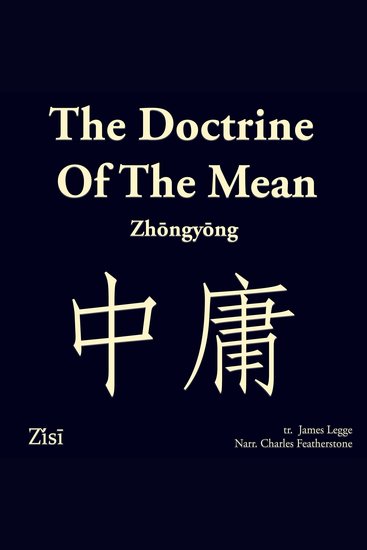
  • Doctrine Of The Mean The (zhōngyōng 中庸) - A Foundational Text of East Asian Thought Giving the Confucian Case for Balance Self-Cultivation and the Good Society - cover

    Doctrine Of The Mean The...

    Zi Zisi

    • 0
    • 0
    • 0
    Traditionally attributed to Confucius’s grandson Zǐsī (子思), Zhōngyōng (中庸) began as a single chapter in the Classic of Rites before being elevated to one of the Four Books (Sìshū, 四书) of classical Chinese philosophy by the Neo-Confucian scholar Zhū Xī (朱熹). It was a central text of Confucianism and, for over a milenium, anyone seeking a government position in China was expected to have mastered this short work, as well as influencing scholarship in Korea, Japan, and Vietnam.  
     
    The title combines zhōng (中, meaning central, impartial, or balanced) and yōng (庸, constant or unwavering). It suggests both a balanced stance between extremes and a stable, reliable way of living.  
    The series of 33 short meditations explores how self-cultivation and social order are fundamentally the same. It covers ideas about moderation, rectitude, sincerity, equilibrium, harmony, and lack of prejudice.  
    The ideal person (jūnzǐ, 君子) navigates every situation without falling into excess or deficiency, holding to a golden and self-improving mean. A friend should be neither too close nor too remote; neither grief nor joy should be excessive, since unregulated happiness can be as harmful as uncontrolled sorrow.  
     
     
    In the twentieth century, Confucianism was blamed for China’s stagnation. The May Fourth Movement attacked the Four Books as relics of a feudal past, and the Cultural Revolution sought to erase them. For decades, zhōngyōng disappeared from view.  
    In recent years mainland China has re-engaged with its classical heritage, and the Four Books have been reintroduced into schools, public life, and popular publishing, and a new generation of readers is discovering how these ancient texts speak to timeless questions about personal ethics, social order, and the search for meaning.  
    Short enough to read in an afternoon, difficult enough to spend a lifetime thinking about, The Doctrine of the Mean remains one of the most concise and quietly demanding works in the Confucian canon.
    Ver livro
  • Henry Harrison Brown: Dollars want me - The new road to opulence: The ultimate treatise on financial success - cover

    Henry Harrison Brown: Dollars...

    Henry Harrison Brown, Jürgen...

    • 0
    • 0
    • 0
    As a member of the "New Thought" movement, Henry Harrison Brown (1840 - 1918) founded the periodical "NOW". In this magazine, he first published his most famous essay "Dollars want me!" Brown presented positive affirmations which  inevitably attract money and financial independence. Easy, concise, to the point: Brown states that without man, money is nothing. Therefore, money seeks man to fulfill its duty. All man needs to do is to prepare mentally - and financial freedom will be the result. Extremely interesting and highly entertaining!
    Ver livro
  • Don’t Go - Stories of Segregation and How to Disrupt It - cover

    Don’t Go - Stories of...

    Tonika Lewis Johnson, Maria Krysan

    • 0
    • 0
    • 0
    Multiple times a day, in cities across the US and beyond, a simple yet powerful message is repeated by the well-meaning, the ignorant, and the bigoted: “don’t go”—avoid at all costs those Black and Brown disinvested neighborhoods that have become bywords for social disorder and urban decay. 
     
    This book is a collection of intimate stories that uncover the hidden influence of both subtle and overt “don’t go” messages and the segregation they perpetuate in Chicago. Told by everyday people to Tonika Lewis Johnson and Maria Krysan—a Black artist and a White academic who met through their shared passion for anti-segregation work—the stories paint a rich picture of life in a segregated city. 
     
    One by one, the storytellers upend pessimism with candid, deeply personal, humorous, and heartbreaking tales, and with novel ideas for simple actions that can serve as antidotes to both racism and “place-ism.” 
     
    By inviting readers into the lives of regular people who have ignored the warning to stay away from “don’t go” neighborhoods or who live in those very same neighborhoods, the stories in Don’t Go illuminate the devastating consequences of racial segregation and disinvestment as well as the inevitable rewards of coming together. 
     
    “Don’t Go is a remarkable piece of work that can change how we all live. The human voices and engaging, innovative approach do more than a mountain of data ever could to bridge racial barriers. This is a powerful and compelling book.”—Lawrence D. Bobo, Harvard University 
     
    This audiobook is narrated by Robb Moreira, Jonathan Todd Ross, Kevin R. Free, Nan McNamara, Marisol Ramirez, Cindy Kay, Jasmin Walker, Lynnette R. Freeman, Tonika Lewis Johnson, and Maria Krysan.
    Ver livro
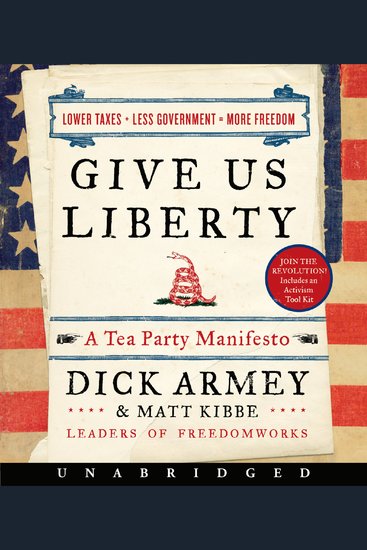
  • Give Us Liberty - A Tea Party Manifesto - cover

    Give Us Liberty - A Tea Party...

    Dick Armey, Matt Kibbe

    • 0
    • 0
    • 0
    Former Majority Leader of the U.S. House of Representatives and leading organizer of the Tea Party movement, Dick Armey offers a Tea Party Manifesto: Give Us Liberty. Written with Matt Kibbee, President and CEO of FreedomWorks, Give Us Liberty defines the issues and agenda of the wildfire grassroots movement that is electrifying the nation, as it calls on fiscal conservatives to take back America.
    Ver livro
  • Eleven Lives in September: The Munich Massacre and the Olympics That Changed Forever - cover

    Eleven Lives in September: The...

    Quentin Drummond Anderson

    • 0
    • 0
    • 0
    Eleven Lives in September: The Munich Massacre and the Olympics That Changed Forever 
    When terror struck the heart of Olympic idealism, the world changed forever. 
    On September the fifth, nineteen seventy-two, eight Palestinian terrorists climbed a fence into Munich’s Olympic Village. What should have been a celebration of peace became a twenty-two-hour crisis that ended with the murder of eleven Israeli athletes and coaches — and the end of Olympic innocence. 
    In this meticulously researched account, historian Quentin Drummond Anderson reconstructs every moment of the Munich massacre. Drawing on declassified government archives, police records, intelligence files, and survivor testimony, he shows how security failures and fatal miscommunication turned a hostage crisis into a global tragedy, broadcast live to the world. 
    Viewers were told the hostages had been rescued — only to learn hours later that all were dead. Germany’s rescue attempt at Fürstenfeldbruck airbase collapsed into chaos. Inexperience, hesitation, and political pressure proved lethal. 
    But this is not just a story of failure. It is a story of people. 
    David Berger, an American weightlifter who had made Israel his home. Mark Slavin, just eighteen years old, killed before he could compete. Moshe Weinberg, the coach who fought to protect his athletes and paid with his life. 
    The consequences still shape our world. Airport security, armed guards at public events, and modern counterterrorism all trace their origins to Munich. 
    The parallels to today are unmistakable. Terrorism targets joy, exploits media attention, and fuels cycles of retaliation. Munich was not an anomaly. It was a blueprint. 
    This is not just history. 
    It is a warning.
    Ver livro
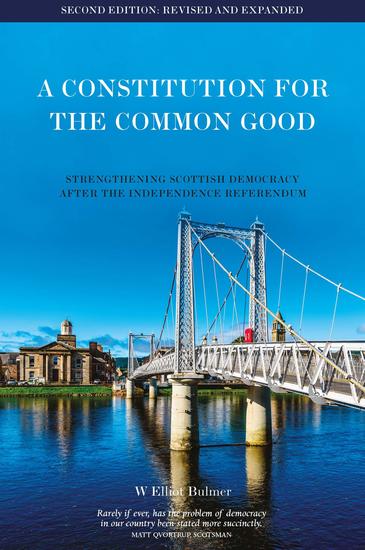
  • A Constitution for the Common Good - Strengthening Scottish Democracy After 2014 - cover

    A Constitution for the Common...

    W Elliot Bulmer

    • 0
    • 0
    • 0
    If Scotland has voted YES on 18 September, how can a written Constitution be good for the people of Scotland?
    
    If Scotland has voted NO, how could a new Constitution protect and enhance Scottish democracy within a restructured UK?
    
    Whether YES or NO, a reconstituted Scotland is possible and good for all its citizens.
    
    
    Nearly every democracy in the world is built upon a written constitution, and constitutions have been at the core of citizens' demands for better governance in places as disparate as Kenya, Tunisia and Ukraine. With the Scottish National Party promising a written constitution in the event of a YES vote and other parties suggesting other possible options for constitutional change in the event of a NO vote, constitutional change looks certain to remain central to the political agenda in Scotland for some time to come.


    But what is a constitution for? Is it a defensive charter to protect the basic structures of democratic government, or is it a transformative covenant for a better society? How can the Constitution sustain democracy and promote ethical politics while at the same time recognising and accommodating differences in society? What difference would a good Constitution make to the poor? How can the Constitution help ensure that the common good of the citizenry prevails over private vested interests?


    In addressing these questions, this book sets out a vision for how Scotland could reconstitute itself. It emphasises the connection between the constitution, democracy and the common good, arguing that democratic self-government is the true prize, regardless of the relationship of Scotland to the rest of the UK.


    This book not only makes a vital contribution to Scotland's current and on-going constitutional debate, whatever the outcome in September 2014, but also engages with fundamental questions of constitutionalism and democracy that are of enduring relevance to both citizens and scholars around the world.
    Ver livro