Join us on a literary world trip!
Add this book to bookshelf
Grey
Write a new comment Default profile 50px
Grey
Subscribe to read the full book or read the first pages for free!
All characters reduced
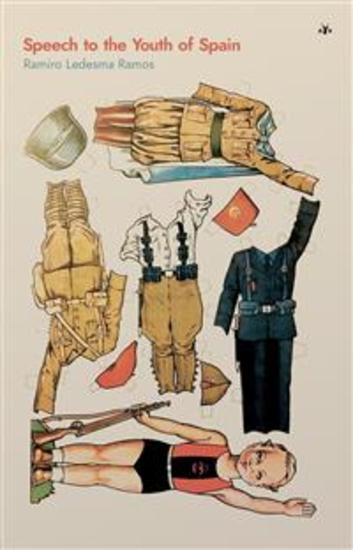
Speech to the Youth of Spain - cover

Speech to the Youth of Spain

Ramiro Ledesma Ramos

Publisher: Antelope Hill Publishing LLC

  • 0
  • 0
  • 0

Summary

Fascism in its various iterations swept through continental Europe like a tidal wave in the 1920s and 30s. While Hitler’s Germany and Mussolini’s Italy tend to steal the show in historical examinations of the topic, Spain was also one of its most fruitful strongholds. Ramiro Ledesma Ramos, born in Spain at the beginning of the 20th century, made a name for himself as one of the most fervent pioneers of Fascism in his country, combining what he saw as the best elements of Mussolini’s and Hitler’s philosophies in order to create the ideal synthesis for Spain.
 
Instrumental in the formation of the Falange, the leading Spanish Fascist political organization, Ledesma personally designed the yoke and arrows symbol that would remain in use after the organization's assimilation by the Francoist government. It is often said that the war of ideas finds its seeds in the young, and Speech to the Youth of Spain implored the next generation to raise Spain up to be a great European power once more. In this appeal to the young men and women of Spain, the author draws upon the lessons learned from his country’s ideologically aligned neighbors, as well as from its own rich history.
 
Caught in enemy territory at the outbreak of the Spanish Civil War, Ramiro Ledesma Ramos was arrested and ultimately executed by the Republicans, but his ideas would go on to shape the subsequent decades of Spanish history. Antelope Hill is privileged to publish the work of this preeminent political philosopher, translated into English for the first time.
Available since: 04/22/2024.
Other books that might interest you

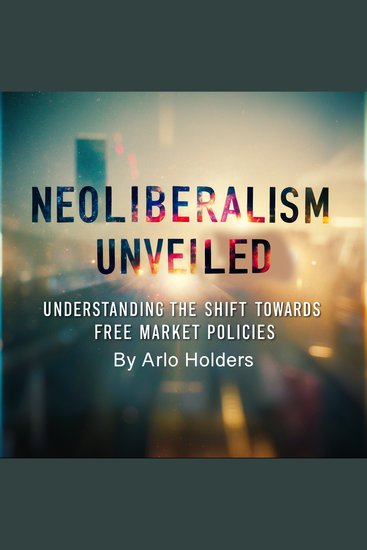
  • Neoliberalism Unveiled - Understanding the Shift Towards Free Market Policies - cover

    Neoliberalism Unveiled -...

    Arlo Holders

    • 0
    • 0
    • 0
    Neoliberalism is a term that has been widely used in academic, political, and economic discussions, yet its exact definition often varies depending on the context. Broadly, neoliberalism refers to a set of economic and political policies that emphasize the role of free markets in achieving economic prosperity, social well-being, and individual freedom. At its core, neoliberalism promotes the idea that markets should operate with minimal interference from the state, and that individuals should be free to pursue their economic interests without governmental restrictions. 
    The roots of neoliberalism can be traced back to the early 20th century, particularly to the ideas of economists such as Friedrich Hayek and Milton Friedman. These thinkers were critical of state intervention in the economy and argued that government control of markets often led to inefficiency and loss of individual freedoms. Hayek’s influential work, The Road to Serfdom (1944), warned against the dangers of central planning and collectivism, which he believed could lead to authoritarianism. Similarly, Friedman, through his advocacy for monetarism and the reduction of government spending, pushed for policies that emphasized the importance of individual choice and market forces over state control. Their ideas laid the intellectual foundation for what would later become neoliberalism. 
    Neoliberalism as a political and economic force began to take shape during the 1970s as many Western economies faced economic stagnation and rising inflation, often referred to as stagflation. Traditional Keynesian approaches, which advocated for government intervention to manage demand and stabilize economies, appeared to fail in addressing these new challenges. In response, neoliberal ideas gained traction, especially in the United States and the United Kingdom.
    Show book
  • Second Inaugural Address - cover

    Second Inaugural Address

    Ronald Reagan

    • 0
    • 0
    • 0
    Because of extreme cold weather, Chief Justice Warren Burger administered the official oath of office in the White House on January 20, 1985. A public administration of the oath of office and the inaugural address were delayed until January 21, 1985, in the Capitol Rotunda.  
    On the 50th inauguration since George Washington’s, Reagan marvels at America’s growth and inventions, including journeying to the moon and back. “There are no limits to growth and human progress when men and women are free to follow their dreams.” Our values of faith, family, work, and neighborhood were restored “when our economy was finally freed from government’s grip”.  
    America supports "individual liberty, self-government, and free enterprise throughout the world…” We deal best with great challenges when we come “together not as Democrats or Republicans, but as Americans united in a common cause.”  
    “We must never again abuse the trust of working men and women by sending their earnings on a futile chase after the spiraling demands of a bloated Federal Establishment.” “Freedom and incentives unleash the drive and entrepreneurial genius that are the core of human progress.” 
    “We must act now to protect future generations from government's desire to spend its citizens' money and tax them into servitude when the bills come due.” Though “our heritage is one of blood lines from every corner of the Earth, we are all Americans, pledged to carry on this last, best hope of man on Earth.” 
    Rather than relying on mutual assured destruction, we need “a security shield that will destroy nuclear missiles before they reach their target” and “render nuclear weapons obsolete.”  
    We are “one people under God, dedicated to the dream of freedom that He has placed in the human heart, called upon now to pass that dream on to a waiting and hopeful world.” 
    Audio recording courtesy of the Ronald Reagan Presidential Library. 
    AspenLeafMedia.com
    Show book
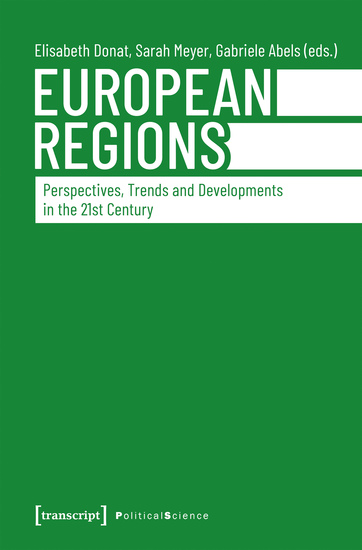
  • European Regions - Perspectives Trends and Developments in the 21st Century - cover

    European Regions - Perspectives...

    Gabriele Abels, Elisabeth Donat,...

    • 0
    • 4
    • 0
    At the beginning of the 21st century, the EU is facing deep political, social, and economic changes. The benefit of supranational organization is no longer obvious to European citizens and questions of legitimacy have accompanied the EU's development over the last decades. Regions - albeit often deemed »obsolete« - present themselves as stable and reliable partners in this turbulent environment: in being important objects of identification to their citizens, but also relevant political and legal entities in the EU's multilevel governance system. This edited volume asks about the role of regions and regional identity in a European Union that is perhaps struggling more than ever about its future.
    Show book
  • Audio Nuggets: Corporate Espionage 101 - cover

    Audio Nuggets: Corporate...

    Rick Sheridan, Alfred C. Martino

    • 0
    • 0
    • 0
    In this audio program, you will learn the the basics about what corporate espionage is, and the best practices for the reducing the possibility for your company's proprietary information of products, services, employees, computer files, contracts, algorithms, etc., being stolen by rival companies, rogue ex-employees or hostile foreign entities.
    Show book
  • The Canadian Citizenship Test - Study Guide with 500+ Official Style Practice Questions & Answers (Living in Canada) - cover

    The Canadian Citizenship Test -...

    Toronto Publications

    • 0
    • 0
    • 0
    What the students who pass the Canadian Citizenship Test on their first attempt know, that you don’t... 
    Maybe you’re worried about not passing your examination and getting your passport? 
    Or maybe you have no idea where to begin when it comes to preparing for the test? 
    If that sounds like you, fortunately, we’ve got your back. 
    We want to ensure that you pass your citizenship test with confidence. 
    We’ve handwritten and narrated over 500 questions from the Official Discover Canada Guide – so you can be sure that the questions and answers you’re practising are accurate and up-to-date. The questions and answers are spread across 10 different chapters such as History, the Economy, Laws, & Responsibilities of Canadians. Each of the questions and answers are multiple choice questions, as well as true and false questions, just like you’ll get on the day of the real test. 
    On the day of your test, you’ll need to get at least 15 out of 20 questions correct within 30 minutes - students who practice with our audiobook increase their chance of passing by at least 60%. 
    Here’s what you’ll get inside this audiobook:500+ Practice Questions, from the official Discover Canada guideAnswers narrated after a 10 second gap, to give you time to think about your answers!Key information on how & where to take your testWorld-class narration. 
    *BONUS* - We’ve also included the updated Oath of Canada (King Charles) for all important recital! 
    Regardless of where in the world you are from, this audiobook will help you to pass your Canadian Citizenship exam faster, and with more confidence – on your first attempt.  
    If you want to get your Canadian Passport and pass the examination with ease, then.. 
    Listen to this audiobook now!
    Show book
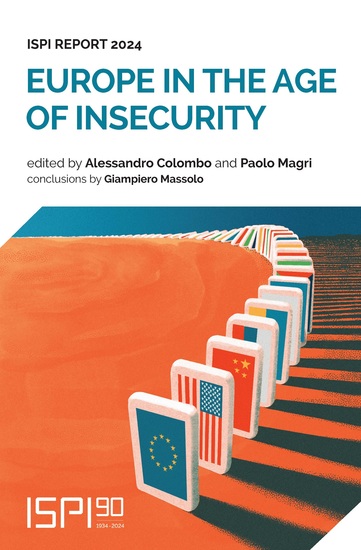
  • Europe in the Age of Insecurity - ISPI Report 2024 - cover

    Europe in the Age of Insecurity...

    Alessandro Colombo, Paolo Magri

    • 0
    • 0
    • 0
    The international system is going through a phase of heightened disorder. Russia's invasion of Ukraine in early 2022, and the Israel-Hamas conflict in late 2023 have shown that the current crisis of the international order is being increasingly militarized. Facing wars and instability closer to home, and a rise in big-power competition, Europe is feeling less and less "secure".
    This year's ISPI Report unpacks the different dimensions of the current "Age of Insecurity", looking into its political, economic, and demographic facets. It shows how different actors in the international system tackle such insecurity (while also contributing to create more), with a focus on the United States, China, Russia, India and the "Global South", and the main protagonists of the ongoing Israel-Hamas war.
    It finally zooms in on Europe, looking for viable options that could help the continent better face these rising political, economic, and demographic insecurities.
    Show book