Join us on a literary world trip!
Add this book to bookshelf
Grey
Write a new comment Default profile 50px
Grey
Subscribe to read the full book or read the first pages for free!
All characters reduced
The Complete Works of Margaret Fuller - Woman in the Nineteenth Century Summer on the Lakes in 1843 Essays Memoirs Reviews Narratives Poems & Biography by Julia Ward Howe - cover

The Complete Works of Margaret Fuller - Woman in the Nineteenth Century Summer on the Lakes in 1843 Essays Memoirs Reviews Narratives Poems & Biography by Julia Ward Howe

Ralph Waldo Emerson, Margaret Fuller, James Freeman Clarke, W. H. Channing, Julia Ward Howe

Publisher: Good Press

  • 0
  • 0
  • 0

Summary

The Complete Works of Margaret Fuller serves as a luminous testament to the rich tapestry of intellectual and literary endeavors of the 19th century, weaving together genres ranging from groundbreaking essays to sensitive poetry and incisive articles. This comprehensive anthology captures the spirit of transcendentalism while simultaneously grappling with questions of gender, reform, and identity, hallmarks of Fuller's literary canon. Within its pages, the collection showcases a diverse range of narrative styles and thought-provoking content that reflects the zeitgeist of the era. Standout pieces, such as the exploration of women's rights and Fuller'Äôs reflections on self-culture, underscore the richness and depth of this collection. The contributing editors, including eminent figures such as Ralph Waldo Emerson, James Freeman Clarke, and Julia Ward Howe, bring to the anthology a convergence of significant insights and literary prowess. Contextualized within the transcendentalist movement, the collective voices of these editors showcase the overarching influence of Fuller'Äôs work in the broader societal context. With backgrounds reflecting an era of reform, abolitionism, and burgeoning feminist thought, the editors'Äô nuanced perspectives illuminate Fuller's lasting impact and her pivotal role in shaping progressive discourse. For scholars and enthusiasts of literary history, The Complete Works of Margaret Fuller is an indispensable compilation that offers rare insight into a revolutionary period of American letters. This anthology provides readers with a remarkable opportunity to immerse themselves in the multiplicity of Fuller's legacy, fostering a rich dialogue between past and present. By navigating the intersections of literary style and social commentary, this volume not only educates but also inspires reflection and deeper understanding of 19th-century thought.
Available since: 11/16/2023.
Print length: 1644 pages.
Other books that might interest you

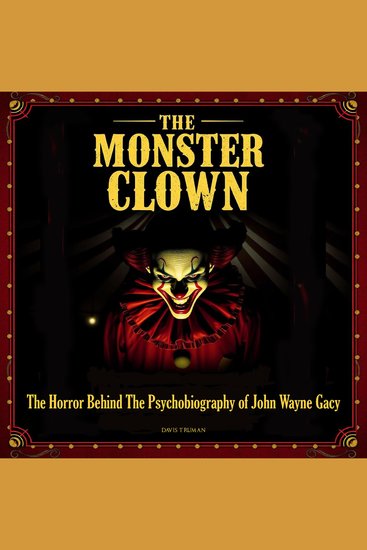
  • The Monster Clown - The Horror Behind The Psychobiography of John Wayne Gacy - cover

    The Monster Clown - The Horror...

    Davis Truman

    • 0
    • 0
    • 0
    Step into the chilling depths of the mind of one of history's most infamous serial killers. The Monster Clown unravels the disturbing psychobiography of John Wayne Gacy, the seemingly ordinary man who hid monstrous darkness behind the painted smile of a clown. 
    This book explores Gacy's twisted double life through gripping psychological analysis and haunting true-crime storytelling — from his respectable community presence to the horrifying crimes that shocked the world. Delve into the formative experiences, psychological patterns, and hidden traumas that shaped his descent into violence while uncovering the chilling realities behind his mask of deception. 
    A must-read for true crime enthusiasts, criminology scholars, and those fascinated by the complexities of the human psyche, The Monster Clown offers an unflinching examination of evil. Its haunting question is: What drives a man to commit unimaginable horrors? 
     
    Show book
  • Angèle au Couvent - A young girls search for happiness in art is challenged by her religious commitments and society - cover

    Angèle au Couvent - A young...

    Mary Butts

    • 0
    • 0
    • 0
    Mary Frances Butts was born on 13th December 1890 in Poole, Dorset. 
     
    Her early years were spent at Salterns, an 18th-century house overlooking Poole Harbour.  Sadly in 1905 her father died, and she was sent for boarding at St Leonard's school for girls in St Andrews. 
     
    Her mother remarried and, from 1909, Mary studied at Westfield College in London, and here, first became aware of her bisexual feelings.  She was sent down for organising a trip to Epsom races and only completed her degree in 1914 when she graduated from the London School of Economics.  By then Mary had become an admirer of the occultist Aleister Crowley and she was given a co-authorship credit on his ‘Magick (Book 4)’. 
     
    In 1916, she began the diary which would now detail her future life and be a constant reference point for her observations and her absorbing experiences. 
     
    During World War I, she was doing social work for the London County Council in Hackney Wick, and involved in a lesbian relationship.  Life changed after meeting the modernist poet, John Rodker and they married in 1918. 
     
    In 1921 she spent 3 months at Aleister Crowley's Abbey of Thelema in Sicily; she found the practices dreadful and also acquired a drug habit.  Mary now spent time writing in Dorset, including her celebrated book of short stories ‘Speed the Plough’ which saw fully develop her unique Modernist prose style. 
     
    Europe now beckoned and several years were spent in Paris befriending many artists and writing further extraordinary stories.   
     
    She was continually sought after by literary magazines and also published several short story collections as books. Although a Modernist writer she worked in other genres but is essentially only known for her short stories.  Mary was deeply committed to nature conservation and wrote several pamphlets attacking the growing pollution of the countryside. 
     
    In 1927, she divorced and the following year her novel ‘Armed with Madness’ was published.  A further marriage followed in 1930 and time was spent attempting to settle in London and Newcastle before setting up home on the western tip of Cornwall.  By 1934 the marriage had failed. 
     
    Mary Butts died on 5th March 1937, at the West Cornwall Hospital, Penzance, after an operation for a perforated gastric ulcer. She was 46. 
     
    In ‘Angèle Au Couvent’ Butts takes up the story of a young school girl desperate for friendships but wrestling with her fluid interpretation of religion.
    Show book
  • Book summary & analysis of Braiding Sweetgrass by Robin Wall Kimmerer - cover

    Book summary & analysis of...

    Briefly Summaries

    • 0
    • 0
    • 0
    This is a concise summary and analysis of Braiding Sweetgrass, by Robin Wall Kimmerer. It is not the original book and is not affiliated with or endorsed by Robin Wall Kimmerer. Ideal for those seeking a quick and insightful overview.
     
    Braiding Sweetgrass is a meditative exploration of the intersection between science, culture, and the natural world. Blending Indigenous wisdom with ecological knowledge, the book invites readers to reimagine their relationship with nature through stories, reflections, and lessons grounded in reciprocity and respect. Through the lens of botany and personal experience, it portrays plants not just as resources, but as teachers and relatives—offering a poetic call to heal the human connection with the Earth.
    Show book
  • Where Madness Lies - The Double Life of Vivien Leigh - cover

    Where Madness Lies - The Double...

    Lyndsy Spence

    • 0
    • 0
    • 0
    Vivien Leigh was one of the greatest film and theatrical stars of the 1930s, '40s, and '50s. Her Oscar-winning performances in Gone With the Wind and A Streetcar Named Desire have cemented her status as an icon of Hollywood. 


    From 1940 to 1960, Leigh was married to Sir Laurence Olivier, and together they were considered the royal couple of British theater. Indeed, their romance and acting partnerships captured the imagination of the public around the world. 


    Behind the scenes, however, Leigh's personal life was marred by manic depression. Largely misunderstood and subjected to barbaric mistreatment at the hands of her doctors, she would also suffer the heartbreak of Olivier's infidelity. Contributing to her image as a tragic heroine, she would die at the age of fifty-three. 


    Unlike previous biographies, Where Madness Lies begins in 1953 when Leigh suffered a nervous breakdown and was institutionalized. The tragic story unfolds as she tries to rebuild her life, salvage her career, and save her marriage. 


    Featuring a wealth of unpublished material—including private correspondence—Lyndsy Spence reveals how Leigh tragically fell victim to the draconian medical practices of the era.
    Show book
  • I Kept Walking - The Unlikely Journey of a Persian Woman with Polio - cover

    I Kept Walking - The Unlikely...

    Minou Soumekh Michlin, Gali...

    • 0
    • 0
    • 0
    I Kept Walking opens in 1940s Tehran when a misguided prank leaves three- year-old Minou frozen in fear. Days later, a doctor breaks the news to her mother: "Your daughter has polio." 
    To understand why nothing is as it seems-the cause of her polio or why her dutiful Jewish mother, who was married off at 13, thwarted her dream of marriage, Minou must flee Iran and confront the psychological toll of her polio. 
    I Kept Walking is the audacious account of a bold young woman who was unwilling to be crushed by polio or the prohibitions of a conservative society. 
    From the labyrinth of narrow alleys in Tehran's Grand Bazaar to a Jerusalem hospital room, this unforgettable memoir depicts a young woman's struggle to embrace her culture while defying its taboos. 
    This immigrant story will resonate with mothers and daughters, Jews and Persians, as well as anyone who has braved the unknown and kept on walking.
    Show book
  • William Wallace - The History Facts and Fight for Freedom of a Scottish Hero - cover

    William Wallace - The History...

    Kelly Mass

    • 0
    • 0
    • 0
    The Film "Braveheart" has it right on some points but does a bad job with historic precision with others, most likely because they're just attempting to dramatize a Hollywood film, not promoting dull precision. 
    Let's see what info we can learn from history about the real William Wallace. William Wallace was a Scottish knight. In order to comprehend the impact of that time's knight civilization and roles, we will discuss the idea itself. We will also discuss the brutal reign of Edward I of England, the sadistic murder of William Wallace (worse than you might think), and several other factors contributing to his capture, his resistance, and his following.
    Show book