Join us on a literary world trip!
Add this book to bookshelf
Grey
Write a new comment Default profile 50px
Grey
Subscribe to read the full book or read the first pages for free!
All characters reduced
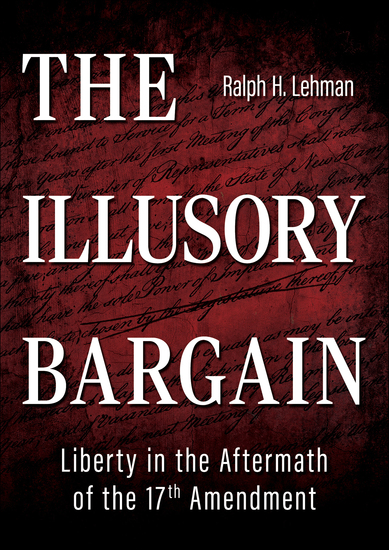
The Illusory Bargain - Liberty in the Aftermath of the 17th Amendment - cover

The Illusory Bargain - Liberty in the Aftermath of the 17th Amendment

Ralph H. Lehman

Publisher: Brown Books Publishing Group

  • 0
  • 0
  • 0

Summary

Out-of-control debt. Populism. Political vitriol and corruption. Where did America go wrong? Or rather, when did America go wrong?

1913. The Seventeenth Amendment is ratified, allowing the people of America to vote directly for their senators in the US senate. The same year, the Federal Reserve Act is passed, establishing a central bank to oversee monetary policy. In The Illusory Bargain, Ralph H. Lehman demonstrates that these seemingly empowering and people-serving pieces of legislature were just that-an illusion. Tracing the vision of the Founding Fathers as outlined in The Federalist Papers, Lehman reveals how the safety features of the original constitutional framework have eroded since and given way to rampant abuse of power and arbitrary, tyrannical law.

Through fresh, historically informed insights and over twenty years of financial expertise, Lehman reexamines the nation's fundamental values and proposes what may be the only course of action left to restore our liberty.
Available since: 05/22/2025.
Print length: 248 pages.

Other books that might interest you

  • Trump's Indictment - The Unprecedented Indictment of Donald J Trump - cover

    Trump's Indictment - The...

    Mark Jackson

    • 0
    • 0
    • 0
    In our shared pursuit for a better America, recent events have sparked diverse perspectives. While some celebrated Trump's indictment, others questioned its alignment with democratic principles. 
    The timing of the indictment raised eyebrows, prompting reflections on fairness and equality before the law. "The Unprecedented Indictment of Donald J. Trump" offers a thought-provoking exploration of this pivotal moment in American politics. This book focuses on the first indictment of Donald Trump by Manhattan District Attorney, Alvin Bragg Jr. 
    From an impartial standpoint, the book scrutinizes Trump's presidency, encompassing achievements, controversies, and the implications of his indictment. It offers insights into the legal and political ramifications, inviting readers to engage in informed discourse. 
    Regardless of one's stance on Trump, this book promises a balanced appraisal of the indictment and its implications for the future. Delve into nuanced analyses and gain a deeper understanding of America's legal and political landscape. 
    Join the quest for truth and comprehension as we dissect the facts surrounding Trump's indictment and its broader significance. History was indeed made, yet amidst the fervor, questions of fairness linger—reminding us of the importance of justice for all. Whether seeking clarity or insight, this book offers a valuable resource for those navigating the complexities of American governance. 
    Table of Contents  
    Introduction 
    Chapter 1: What Trump Did and Didn't on January 6 
    Chapter 2: Trump's Major Accomplishments as President 
    Chapter 3: Trump's Indictment 
    Chapter 4: Can Trump Still Win the Presidency in 2024? 
    Chapter 5: Good Will
    Show book
  • Subtle Acts of Exclusion Second Edition - How to Understand Identify and Stop Microaggressions - cover

    Subtle Acts of Exclusion Second...

    Tiffany Jana, Michael Baran

    • 0
    • 0
    • 0
    An expanded edition of the first practical, nonjudgmental handbook for dealing with microaggressions, featuring examples, sample scripts, action plans, a new discussion and activity guide, and up-to-date suggestions for creating a culture of belonging in the workplace. 
     
    Overt discrimination is relatively easy to spot. But the less obvious but more common actions that make people feel left out or stigmatized in our workplaces, commonly called microaggressions, can be hard to identify and even harder to deal with. 
     
    The author use a clearer, more accurate term: subtle acts of exclusion (SAE). After all, people generally aren't trying to be aggressive-usually they're trying to say something nice, learn more about a person, or be funny. Bring accused of aggression shuts the conversation down, when you want to open it up.   
     
    This book features examples, tools, sample scripts, and action plans to help readers prevent subtle acts of aggression from happening, or deal with them when they do. Updated throughout, this second edition features: 
     
    -	A greatly expanded chapter on "intentional acts of inclusion"-actions for creating a sense of belonging. 
    -	A discussion and activity guide ideal for book clubs and training sessions 
    -	A new concluding chapter, Hope for Humanity 
     
    Whether in the form of stereotypes, assumptions, backhanded compliments, or objectification, SAEs are damaging to our coworkers, friends, and acquaintances. This book is your friendly, accessible, non-judgemental guide to creating a welcoming workplace.
    Show book
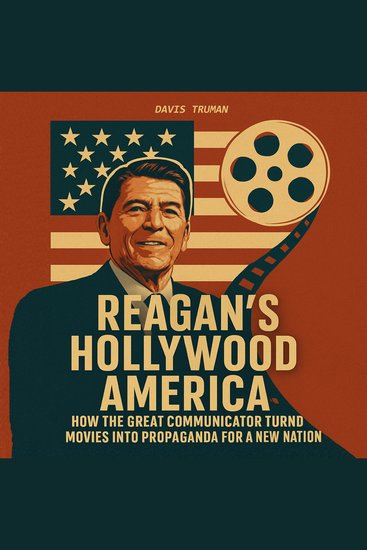
  • Reagan's Hollywood America - How the Great Communicator Turned Movies into Propaganda for a New Nation - cover

    Reagan's Hollywood America - How...

    Davis Truman

    • 0
    • 0
    • 0
    Lights. Camera. Politics 
    Before Ronald Reagan became “the Great Communicator,” he was a Hollywood actor who mastered the art of storytelling — and he carried that skill straight into the White House. Reagan’s Hollywood America reveals how the former movie star reshaped not only the Republican Party but also the entire cultural imagination of the United States. 
    From the rise of patriotic blockbusters to the golden glow of prime-time optimism, Davis Truman traces how film and television during the 1980s became a mirror — and a weapon — for Reagan’s vision of America. Behind the scenes, entertainment and ideology merged into a powerful narrative machine that sold not just movies, but a new national myth. 
    Inside this groundbreaking book:That ’80s Show! – How pop culture and politics fused into one seamless performance.The Image President – How Reagan used cinematic language to control public perception.Hollywood’s Cold War – Movies as moral battlegrounds for American virtue versus Soviet villainy.Television Nation – The rise of nostalgia, family values, and the American Dream on screen.The Legacy Reel – How Reagan’s Hollywood still shapes today’s political storytelling. 
    Rich with cultural analysis, cinematic insight, and political commentary, Reagan’s Hollywood America is an essential listen for readers who love history, film, and the art of persuasion. 
    Whether you’re a student of politics, a lover of classic cinema, or fascinated by how image became power, this book pulls back the curtain on an era when the American Dream was scripted, directed, and broadcast worldwide. 
     
    Show book
  • Bridging Divides: Why We Can't Agree on What's Right - "Dive into 'Bridging Divides' with captivating audio lessons that enhance your understanding and spark meaningful conversations!" - cover

    Bridging Divides: Why We Can't...

    Orson Trevelyan

    • 0
    • 0
    • 0
    Bridging Divides: Why We Can't Agree on What's Right 
    ⭐⭐ Simplified Audio Guide with Explanations ⭐⭐ 
    Are you eager to advance in your career and enhance your knowledge by effectively navigating today’s complex challenges? 
    Searching for a thorough guide that equips you with all the essential components to transform challenges into opportunities? 
    Your quest ends here! 
    This guide acts as your ultimate resource for deepening your understanding, honing your abilities, and participating in practical exercises. With this material, you're set for success. 
    Updated for the latest challenges. 
    Key features of this enriched guide: 
    - In-depth insights about transforming challenges into opportunities 
    - Comprehensive explanations that reveal your strengths 
    - Effective strategies for preparation and problem-solving 
    Our guide stands out with its extensive coverage, which is vital for your success. Concepts are explored in detail, not just skimmed over. 
    Please note that this guide is an independent resource and is not affiliated with any official entity. 
    Crafted with a straightforward structure and accessible language, our guide ensures smooth transitions between topics. Say farewell to complicated jargon and embrace clear, precise, and technically accurate content. 
    So, why wait? Click the BUY NOW button, secure your guide, and embark on your journey to success! 
    Transform your insights and turn challenges into golden opportunities with this essential guide!
    Show book
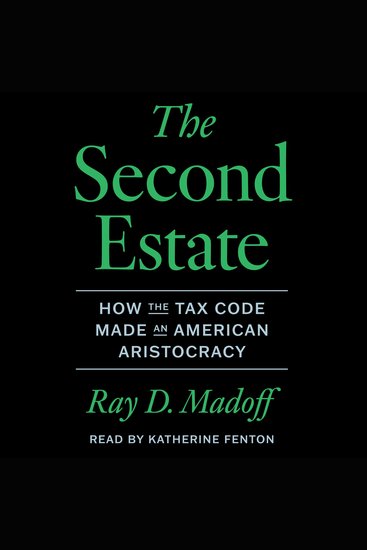
  • The Second Estate - How the Tax Code Made an American Aristocracy - cover

    The Second Estate - How the Tax...

    Ray D. Madoff

    • 0
    • 0
    • 0
    A revelatory book that lifts the curtain on America’s most consequential public deception: how the rich get richer using tools the government gave them. 
     
    Amid conflicting narratives about the drivers of wealth and inequality in the United States, one constant hovers in the background: the US tax code. No political force has been more consequential—or more utterly opaque—than the 7,000-page document that details who pays what in American society and government. Most of us have a sense that it’s an unfair system. But does anyone know exactly how it’s unfair? 
     
    Legal scholar Ray D. Madoff knows. In The Second Estate, she offers an unprecedented look behind the scenes of America’s byzantine system of taxation, laying bare not only its capacity to consolidate wealth but also the mechanisms by which it has created two fundamentally separate American societies: the working Americans who pay and the ultra-rich who benefit. 
     
    This is not a story of offshore accounts or secret tax havens. In The Second Estate, Madoff shows that the US system itself has, over time, been stripped and reconstituted such that it now offers a series of secret paths, hidden in plain sight, for wealthy people in the know to avoid taxation altogether. Through the strategic avoidance of traditional income, leveraging of investments and debt, and exploitation of rules designed to promote charitable giving, America’s wealthy do more than just pay less than their share; they remove themselves from the tax system entirely. Wealth becomes its own sovereign state, and the living is surprisingly—and maddeningly—cheap.
    Show book
  • Securitising Decolonisation - The Silencing of Ewe and Togoland Unification under United Nations Trusteeship 1945-1960 - cover

    Securitising Decolonisation -...

    Julius Heise

    • 0
    • 0
    • 0
    With the right to petition the United Nations, the Ewe and Togoland unification movement enjoyed a privilege unmatched by other dependent peoples. Using language conveying insecurity, the movement seized the international spotlight, ensuring that the topic of unification dominated the UN Trusteeship System for over a decade. Yet, its vociferous securitisations fell silent due to colonial distortion, leaving unification unfulfilled, thus allowing the seeds of secessionist conflict to grow. At the intersection of postcolonial theory and security studies, Julius Heise presents a theory-driven history of Togoland's path to independence, offering a crucial lesson for international statebuilding efforts.
    Show book