¡Acompáñanos a viajar por el mundo de los libros!
Añadir este libro a la estantería
Grey
Escribe un nuevo comentario Default profile 50px
Grey
Suscríbete para leer el libro completo o lee las primeras páginas gratis.
All characters reduced
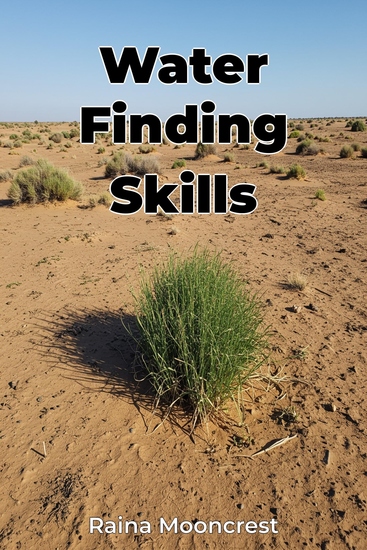
Water Finding Skills - cover

Water Finding Skills

Raina Mooncrest

Traductor A AI

Editorial: Publifye

  • 0
  • 0
  • 0

Sinopsis

Water Finding Skills offers crucial knowledge for anyone venturing into the wilderness or preparing for emergencies, focusing on the vital art of procuring safe drinking water. The book uniquely combines time-tested techniques with modern scientific understanding, emphasizing practical application over theoretical discussion.

 
Did you know that understanding plant life, like observing specific types of vegetation, can lead you to hidden water sources? Or that even simple methods like solar disinfection (SODIS) can render water potable under the right conditions?

 
The book progresses methodically, starting with core concepts of water sources and contamination before exploring water location strategies across diverse biomes, from forests to deserts. It then delves into purification methods, assessing their effectiveness against various pathogens.

 
What sets this book apart is its focus on real-world scenarios, providing step-by-step instructions, checklists, and diagrams to ensure readers can confidently apply these survival skills in any adventure or emergency.
Disponible desde: 19/02/2025.
Longitud de impresión: 85 páginas.

Otros libros que te pueden interesar

  • Mumbai - A Million Islands - cover

    Mumbai - A Million Islands

    Sidharth Bhatia

    • 0
    • 0
    • 0
    Since the East India Company merged seven islands into Bombay (now Mumbai), change has been constant-but now it is used as a weapon for displacement, disguised as development. Slums are erased overnight to make way for luxury towers priced in tens of crores. The working class is pushed to the margins-literally-and into distant housing projects with no infrastructure, transport or sanitation. Entire communities are uprooted while a new Mumbai is built for the privileged few, behind closed gates, inside glass walls. 
    Sidharth Bhatia's Mumbai: A Million Islands is a piercing look at a city in the throes of relentless transformation. What is vanishing is not just space, but memory, history and the very fabric of a living city. Mumbai's famed spirit of survival is being tested like never before. Where the original seven islands had symbolized a synergy, today they're multiplying as fractures-social, spatial and economic-splitting the city into a million islands, each more isolated than the other.
    Ver libro
  • Kofun Period - The Mysterious Tomb Builders and the Roots of Imperial Japan - cover

    Kofun Period - The Mysterious...

    Rolf Hedger

    • 0
    • 0
    • 0
    The Kofun Period, which lasted from approximately 250 to 600 AD, marks a significant era in early Japanese history. This period is named after the distinct burial mounds, or "kofun," that were constructed during this time. These mounds vary in size and shape but are most commonly recognized for their keyhole-like design. The Kofun Period is pivotal as it represents a time of political consolidation, the development of social structures, and the emergence of a powerful ruling elite that would lay the foundation for the imperial system in Japan. 
    The beginning of the Kofun Period is closely tied to the formation of more complex societies in the Japanese archipelago. By this time, a system of chiefdoms had developed, and the early Yamato state began to emerge as a dominant political force. The period sees the consolidation of power under a centralized leadership, which eventually paved the way for the establishment of the imperial family that still exists today. During the Kofun Period, society transitioned from small, localized groups to more organized and hierarchical structures, a shift that was reflected in the elaborate tombs built for the elites. 
    The most notable characteristic of the Kofun Period is the construction of large burial mounds for the ruling class. These tombs were not only elaborate final resting places for powerful individuals but also symbolized the political power and religious authority of the deceased. The kofun mounds varied in size, with some measuring several hundred meters in length. These tombs were often surrounded by moats and would contain a wealth of grave goods, such as weapons, jewelry, and pottery, which reflected both the material culture of the time and the importance of the individual being buried.
    Ver libro
  • 3 Sisters 3 Weeks 3 Countries (Still Talking) - cover

    3 Sisters 3 Weeks 3 Countries...

    Elizabeth Moore Kraus

    • 0
    • 0
    • 0
    Blithely venturing off on their first-ever trip together, the Moore sisters travel to Ireland, England, and Scotland. In their mid-60s, they embark with visions of fun on their horizon when all too quickly reality sets in. One sister learns she must accept her internal GPS in untrustworthy. Another reveals a major mistake in time management. The third volunteers as 'Fixer of All Things' -- a position open as the others lack interest. What can not be fixed is the chronic lack of elevators and a discouraging abundance of stairs, bringing about ups and downs of all sorts. Yet the Moore sisters laugh when they are down. Usually. Well, most of the time..
    Ver libro
  • Shikoku - Wisdom for the Wayfarer - cover

    Shikoku - Wisdom for the Wayfarer

    Yvonne Corpuz

    • 0
    • 0
    • 0
    Yvonne Corpuz was a global leader with a renowned firm headquartered in Japan when an unexpected turn in her career left her aspirations in disarray. Seeking respite, she embarked on the historic Shikoku pilgrimage, a 1,400-kilometre journey,with cherished companions Mayumi and Katsuji. Navigating the ancient route around the perimeter of Shikoku, Japan's most mysterious island, they visited its eighty-eight temples on a rigorous eight-day drive. As Yvonne immersed herself in exploring breathtaking landscapes, revered traditions and age-old customs, what commenced as a sojourn to escape life's disappointments blossomed into a profound journey of the heart, guiding her on the transformative path towards inner serenity and renewal.
    Shikoku is a compelling account that blends the essence of pilgrimage, the beauty of self-discovery and the enduring allure of Japan's people, culture and heritage. The result is an unforgettable spiritual travelogue that captures the heart and the imagination of the seeker and traveller in us all.
    Ver libro
  • The Adventurer's Handbook - From surviving an anaconda attack to finding a way out of a desert - cover

    The Adventurer's Handbook - From...

    Mick MickConefrey

    • 0
    • 0
    • 0
    Combining The Worst-Case Scenario Survival Handbook and Into Thin Air, award-winning documentarian Mick Conefrey's The Adventurer's Handbook draws lessons from the glory days of exploration. 
    What makes a good explorer? Adaptability, ambition, stamina, self-confidence, curiosity, optimism, authority—and fundraising ability. Though few of us will ever have to face a charging elephant, or survive solely on penguin stew, when it comes to project management, crisis aversion, or any number of everyday problems, there is much we can learn from the larger-than-life tales of the world's most famous adventurers. 
    Here, award-winning documentarian Mick Conefrey pulls practical advice from their original diaries and logs, like how to survive an anaconda attack (wait until it has swallowed your legs, then reach down and cut its head off), and how to keep morale up (according to Ernest Shackleton, "A good laugh doesn't require any additional weight"). In addition to the wonderful characters and stories, this book offers many lessons on how to set sail without a clear path home. 
    Answers to some important questions, courtesy of The Adventurer's Handbook: 
    * How many corpses are believed to be on Mt. Everest? 
    Answer: 120 
    * How is polar bear meat best prepared? 
    Answer: Raw and frozen. 
    * What do you do if attacked by a charging lion? 
    Answer: Stand very still and stare it down. 
    * What should you wear when crossing a desert? 
    Answer: Lots of layers—fabric absorbs sweat and prolongs its cooling action.
    Ver libro
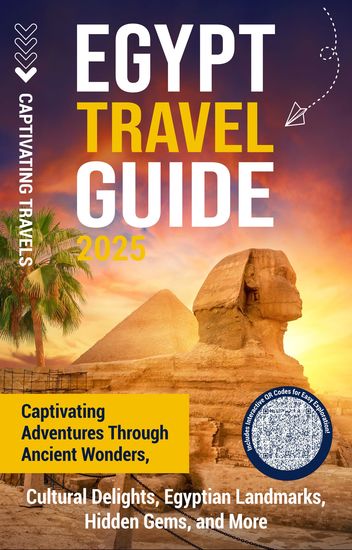
  • Egyptian Trade and Diplomacy - Relations with Neighboring Civilizations - cover

    Egyptian Trade and Diplomacy -...

    Omar Khalil

    • 0
    • 0
    • 0
    Ancient Egypt’s prosperity and cultural richness were significantly shaped by its early trade networks and exchanges with neighboring regions. From the very beginnings of Egyptian civilization, trade played a crucial role in building economic strength and fostering diplomatic relationships. The development of trade networks allowed Egypt not only to obtain essential resources but also to influence and be influenced by surrounding cultures. 
    The origins of Egyptian trade practices can be traced back to the Predynastic period, when local communities exchanged goods such as pottery, beads, and tools. As Egyptian society evolved and centralized under powerful pharaohs, trade became more organized, enabling long-distance interactions. By the time of the Old Kingdom, Egypt had established a network of trade routes that stretched beyond its borders, connecting it to various civilizations across the ancient world. 
    One of the earliest and most vital trade routes was the Nile River, serving as a natural highway that facilitated the movement of goods and people. The Nile connected southern and northern Egypt while also linking the civilization to Nubia and further into sub-Saharan Africa. This route allowed the exchange of gold, ivory, ebony, and exotic animal products, which were crucial to the Egyptian economy and the creation of luxury goods. Additionally, maritime trade across the Red Sea connected Egypt to the Arabian Peninsula and even the distant lands of Punt, where incense, spices, and other valuable commodities were sourced.
    Ver libro