Join us on a literary world trip!
Add this book to bookshelf
Grey
Write a new comment Default profile 50px
Grey
Subscribe to read the full book or read the first pages for free!
All characters reduced
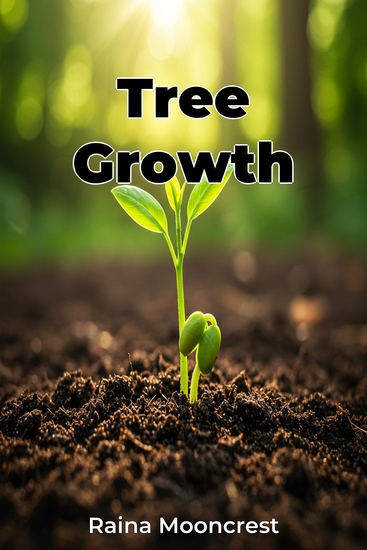
Tree Growth - cover

Tree Growth

Raina Mooncrest

Translator A AI

Publisher: Publifye

  • 0
  • 0
  • 0

Summary

Tree Growth explores the intricate biology of trees, highlighting their vital role in ecosystems and the urgency of understanding them for our planet's future. The book bridges general appreciation for nature with deep biological insights, examining tree growth mechanisms from cellular division to complex structures.

 
Did you know trees influence global climate patterns and serve as keystone species, providing essential resources? It emphasizes the importance of tree biology for conservation and sustainable management. The book begins with fundamental concepts like photosynthesis and nutrient uptake, then progresses to tree anatomy and ecological roles.

 
Finally, Tree Growth addresses environmental challenges such as deforestation and climate change, exploring their impact on tree populations. Unique data sources like tree ring chronologies illustrate past environmental conditions and tree responses to climate change.

 
This book's holistic approach, integrating physiological, ecological, and environmental perspectives, sets it apart, offering nuanced insights into the complex interactions that shape the lives of trees.
Available since: 03/10/2025.
Print length: 78 pages.
Other books that might interest you

  • Acknowledgments - cover

    Acknowledgments

    Becky Lucas

    • 0
    • 0
    • 0
    From critically acclaimed comedian Becky Lucas comes a funny, consoling and very candid collection of stories and essays about friends, enemies and figuring it out that establishes her as one of today's most original comedy writers. 
      
    There's no such thing as a perfect life, but there are perfectly hilarious moments. The best stories are often about the lowest points in our lives - the soul-crushing jobs, the bad boyfriends, the terrible holidays, the betrayals and heartbreaks. These are the stories I tell people to make them like me, but, more importantly, they've helped me learn how to like myself. 
    So this book is a collection of thankyous and acknowledgments: 
    * Thank you to an ex-lover who marvelled at the fact he could get hard with me, even though I wasn't up to his usual standard. 
    * Thank you to the coked-up real estate agent who, while lecturing me and my friend about the importance of travelling, fell down a flight of stairs. 
    * Thank you to the woman who approached me after a gig and told me she hoped her daughter wouldn't end up like me. 
    You've all taught me that you can't control who comes into your life or what happens to you, but you can decide just what it is you take from them.
    Show book
  • How To Write A Novel - cover

    How To Write A Novel

    William Swain

    • 0
    • 0
    • 0
    Finally, Something That Works!Have you ever wanted to write a novel, but didn't know where to start?Have you ever started writing a novel, only to get stuck halfway through?If you're serious about writing that novel then this book is for you.You see many writers (including me) just start writing without realizing how easy it is to fall into the multiple traps that can ruin their books. Anyone can write a novel but to write a bestseller you need to understand what makes a novel successful.This book will guide you through the process of brainstorming, crafting, and developing your own bestseller. Discover the secret storytelling code behind all successful novels and use it to outline, write, or revise your own. Plan new novels with plots that will keep readers engaged and turning pages.Stop struggling with your first draft (or your fourth!). Whether you're a seasoned writer or an anxious beginner, you'll be able to use this book to fast-track your writing career! Apply this practical advice to turn what could be an overwhelming goal into an actionable and attainable one.In this book, you will discover?The Essential Element of a Successful Story?Why Some Stories Work and Others Don't?How to Stay Focused and Motivated?Bringing Your Characters To Life?Stephen King’s Million Dollar Routine?Creating Killer Plots?Advanced Fiction Writing Tricks?Why You Should Never Write in Cliche?How to Edit Like a Pro?Making Space For What Comes?Creating Suspense and Drama?And Much, Much MoreClick Add To Cart to see your story come to life fast!
    Show book
  • History of Machu Picchu - The Greatest Symbol of the Inca Empire - cover

    History of Machu Picchu - The...

    Kelly Mass

    • 0
    • 0
    • 0
    Machu Picchu, one of the most iconic symbols of Inca civilization, is a 15th-century fortress perched high on a mountain crest in southern Peru's Eastern Cordillera. Sitting at an altitude of 2,430 meters (7,970 feet), it is located 80 kilometers (50 miles) northwest of Cusco, within the Machupicchu District of Urubamba Province. The fortress overlooks the Sacred Valley, and the Urubamba River winds through the valley below, cutting through the Cordillera and forming a tropical mountain canyon. This stunning geographical setting has made Machu Picchu one of the most visited and revered archaeological sites in the world. 
    Unlike the Mayans, the Incas had no written language, and thus, no records of the site existed during its operation. The first Europeans to visit Machu Picchu did so only in the 19th century, and as a result, much of its history remained shrouded in mystery. Modern archaeologists, relying on tangible evidence such as graves and structural remains, have attributed names and proposed functions for the buildings, but much of the site’s exact purpose remains speculative. 
    Most contemporary archaeologists believe that Machu Picchu was built as a royal estate for the Inca emperor Pachacuti, who ruled from 1438 to 1472. Constructed in 1450, the site functioned as a private residence for the emperor and his court. Over time, Machu Picchu became the most well-known image of Inca civilization and is often referred to as the "Lost City of the Incas." However, the estate was abandoned in the early 16th century, following the Spanish conquest of the Inca Empire. Recent radiocarbon dating indicates that the site was occupied from around 1420 to 1532.
    Show book
  • Travel Tips - cover

    Travel Tips

    Kyle Rasmussen

    • 0
    • 0
    • 0
    Travel Tips by Kyle Rasmussen is a deep look at some of the typical things that every traveler experiences and tips for how to make each aspect of the trip your best trip ever. This true compilation from the mind of an experienced and avid traveler provides insight into travel in the modern world. Mr. Rasmussen teaches readers to use a myriad of resources to make the trip even better. This is a helpful guide, but it is also an entertaining book full of personal stories from Mr. Rasmussen’s many travels. The tips, tricks, and advice within these pages can be utilized by all travelers: young and old, rich and not-so-rich, seasoned travelers or those embarking on their first journey. Mr. Rasmussen’s hope is that his writing will educate, entertain, inspire, and encourage people to travel and to leave the world a better place than they found it.
    Show book
  • That's Not Funny - How the Right Makes Comedy Work for Them - cover

    That's Not Funny - How the Right...

    Matt Sienkiewicz, Nick Marx

    • 0
    • 0
    • 0
    A 2022 Best Comedy Book, Vulture 


    "Why do conservatives hate comedy? Why is there no right-wing Jon Stewart?" These sorts of questions launch a million tweets, a thousand op-eds, and more than a few scholarly analyses. That's Not Funny argues that it is both an intellectual and politically strategic mistake to assume that comedy has a liberal bias. Matt Sienkiewicz and Nick Marx take listeners—particularly self-described liberals—on a tour of contemporary conservative comedy and the "right-wing comedy complex." 


    In That's Not Funny, "complex" takes on an important double meaning. On the one hand, liberals have developed a social-psychological complex—it feels difficult, even dangerous, to acknowledge that their political opposition can produce comedy. At the same time, the right has been slowly building up a comedy-industrial complex, utilizing the irony-laden media strategies of liberals such as Jon Stewart, Samantha Bee, and John Oliver to garner audiences and supporters. Right-wing comedy has been hiding in plain sight, finding its way into mainstream conservative media through figures ranging from Fox News's Greg Gutfeld to libertarian podcasters like Joe Rogan. That's Not Funny taps interviews with conservative comedians and observations of them in action to guide listeners through media history, text, and technique.
    Show book
  • The Brave Bunny - The Quest for the Golden Carrot - cover

    The Brave Bunny - The Quest for...

    Penny Thistlewhip

    • 0
    • 0
    • 0
    The Brave Bunny: The Quest for the Golden Carrot 
     Join Benny, a small but courageous bunny, on an epic adventure through the Whispering Woods, across the Crystal Creek, and into the mysterious Forgotten Garden. When the legendary Golden Carrot—said to grant wisdom, courage, and endless carrots—is discovered to be real, Benny sets out on a quest to find it and save his burrow from a long, hungry winter. Along the way, he meets unlikely allies, faces tricky riddles, and learns that true bravery isn’t about being the biggest or the fastest—it’s about hopping forward, even when you're scared. 
    A heartwarming tale of friendship, courage, and determination, The Brave Bunny is a delightful journey for readers of all ages.
    Show book