Junte-se a nós em uma viagem ao mundo dos livros!
Adicionar este livro à prateleira
Grey
Deixe um novo comentário Default profile 50px
Grey
Assine para ler o livro completo ou leia as primeiras páginas de graça!
All characters reduced
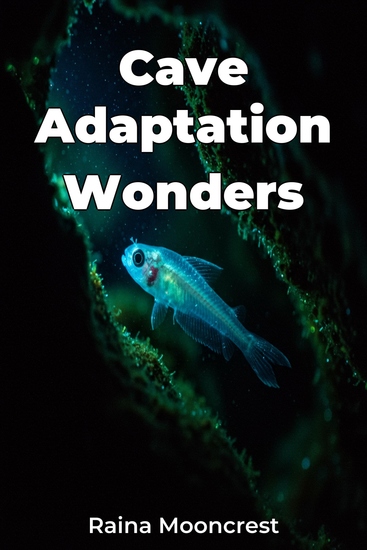
Cave Adaptation Wonders - cover
LER

Cave Adaptation Wonders

Raina Mooncrest

Tradutor A AI

Editora: Publifye

  • 0
  • 0
  • 0

Sinopse

Cave Adaptation Wonders unveils the extraordinary evolutionary strategies of organisms thriving in perpetual darkness. These cave species, often exhibiting traits like loss of sight and pigmentation, offer invaluable insights into evolutionary biology and the power of natural selection in extreme environments. One intriguing aspect is how different species independently develop similar adaptations, a phenomenon known as convergent evolution, showcasing the environment's strong influence. Studying these organisms also aids cave exploration, as well as informs conservation efforts crucial for preserving these delicate ecosystems. The book explores sensory, metabolic, and genetic adaptations, providing a comprehensive view of cave life.

 
For example, cavefish enhance their tactile sensitivity to navigate the darkness, while cave salamanders conserve energy through reduced metabolic rates. The text progresses from introducing cave ecosystems and evolutionary principles to detailed analyses of specific adaptations, supported by field observations, experiments, and genomic research.

 
The book uniquely integrates ecological, physiological, and genetics perspectives, offering a mechanistic understanding of cave adaptation, making it valuable for students, researchers, and anyone fascinated by evolution and the natural world.
Disponível desde: 03/03/2025.
Comprimento de impressão: 56 páginas.

Outros livros que poderiam interessá-lo

  • Where is My F***N Leg?! - cover

    Where is My F***N Leg?!

    David Macintosh

    • 0
    • 0
    • 0
    Scalpels, Egos, Libidos. Is anybody in this hospital under control? 
    In surgery, every cut changes a body forever. But what do you really know about the person holding the knife? Are their bodies betraying them and their desires distracting them? Does doubt haunt them and pride destroy them? 
    This is the story of the surgeons who stole a leg and saved a life. They are  the ones falling apart in the tearoom afterwards. The aging consultant who can feel his hands betraying him. The single mother questioning every 
    cut she's ever made. The brilliant surgeon whose ego writes cheques 
    his marriage can't cash. The trainee left holding the blame when a surgeon decides his reputation matters more than the truth. Two women torn apart by a lascivious outsider. And a woman who holds them all together. 
    Set in tropical North Queensland; Where is My F***N Leg?! is about the tribes we belong to in operating theatres, in marriages, in the quiet hours when there's nothing left to hide behind. 
    It's funny. It's searing. It's painful. 
    A blisteringly honest account of loss, lust, trust, betrayal and the uncomfortable truth that the people cutting you open are just as breakable as the rest of us.
    Ver livro
  • We Are the Weather - Saving the Planet Begins at Breakfast - cover

    We Are the Weather - Saving the...

    Jonathan Safran Foer

    • 0
    • 0
    • 0
    This program is read by the author. In We Are the Weather, Jonathan Safran Foer explores the central global dilemma of our time in a surprising, deeply personal, and urgent new way.   Some people reject the fact, overwhelmingly supported by scientists, that our planet is warming because of human activity. But do those of us who accept the reality of human-caused climate change truly believe it? If we did, surely we would be roused to act on what we know. Will future generations distinguish between those who didn’t believe in the science of global warming and those who said they accepted the science but failed to change their lives in response?The task of saving the planet will involve a great reckoning with ourselves—with our all-too-human reluctance to sacrifice immediate comfort for the sake of the future. We have, he reveals, turned our planet into a farm for growing animal products, and the consequences are catastrophic. Only collective action will save our home and way of life. And it all starts with what we eat—and don’t eat—for breakfast.
    Ver livro
  • Wild Nature in Urban Edgelands - cover

    Wild Nature in Urban Edgelands

    Christopher Brown

    • 0
    • 0
    • 0
    In this 2024 conversation with Justine Willis Toms, Christopher Brown points our that our urban landscape is dotted with abandoned lots. We’ve all noticed them—or not noticed them. These seemingly derelict spaces are often filled with left-behind concrete slabs and littered with old tires, broken-down and rusting washing machines, and other detritus of our throwaway culture. But if you stop and look past the trash, you’ll notice grass and vines are slowly reclaiming these marginal spaces. In that reclaiming, wildlife is eking out a healthful existence outside the human realm. These abandoned places where wild nature collides with the rubble of human domination host a surprising number of species.  
    Christopher Brown is an accomplished lawyer who has worked on two Supreme Court confirmation hearings. He has also been general counsel for several technology companies. His varied experiences span from restoring prairies to reporting from Central American war zones. His current nonfiction book explores the natural world in urban settings. He is the author of:Failed State: A Novel (Eos 2020)Rule of Capture: A Novel (Eos 2019)The Tropic of Kansas: A Novel (Harper Voyager 2017)The Natural History of Empty Lots: Field Notes from Urban Edgelands, Back Alleys, and Other Wild Places (Timber Press 2024). 
    Interview Date: 12/2/2024       Tags: Christopher Brown, biodiversity, abandoned lots, industrial sites, urban creeks, brownfields, Neolithic, agriculture, Kiva, pit house, colony of Harvester ants, Edgeland home Austin, wastelands, Tesla plant in Austin, biodiversity, climate change, Animals, Ecology/Nature/Environment, Social Change/Politics
    Ver livro
  • The Man Who Stalked Einstein - How Nazi Scientist Philipp Lenard Changed the Course of History - cover

    The Man Who Stalked Einstein -...

    Bruce J. Hillman, Birgit...

    • 0
    • 0
    • 0
    By the end of World War I, Albert Einstein had become the face of the new science of theoretical physics and had made some powerful enemies. One of those enemies, Nobel Prize winner Philipp Lenard, spent a career trying to discredit him. Their story of conflict, pitting Germany’s most widely celebrated Jew against the Nazi scientist who was to become Hitler’s chief advisor on physics, had an impact far exceeding what the scientific community felt at the time. Indeed, their mutual antagonism affected the direction of science long after 1933, when Einstein took flight to America and changed the history of two nations. The Man Who Stalked Einstein details the tense relationship between Einstein and Lenard, their ideas and actions, during the eventful period between World War I and World War II.
    Ver livro
  • A Path to Peace of Mind and Sobriety - How EMDR safely Unlocks Trapped Memories and Brings Serenity - cover

    A Path to Peace of Mind and...

    Paul Schulte

    • 0
    • 0
    • 0
    This book describes the how and why EMDR can address deep traumatic memories and bring about peace of mind in 8-12 sessions. The neutralising of these traumatic is often an important pre-condition to gaining lasting sobriety. EMDR is ideal for PTSD and difficult memories of physical, emotional, or sexual abuse as well as neglect.
    Ver livro
  • Human Toll - cover

    Human Toll

    Barbara Baynton

    • 0
    • 0
    • 0
    Ursula (Ursie) Ewart, orphaned as a young child, is sent away from her home in the Australian bush. While Ursie was previously doted on by station hands, Boshy, Nungi,and Queeby, at her new home, in a nearby country town, she is barely tolerated. Her only confidante is Andrew (Andree), an older child in the same household.In Human Toll, Barbara Baynton builds on her observations in Bush Studies to provide further insight into women's experience of Australian bush life and culture at the turn of the 20th century.(written by Kirsty Leishman)
    Ver livro