Join us on a literary world trip!
Add this book to bookshelf
Grey
Write a new comment Default profile 50px
Grey
Subscribe to read the full book or read the first pages for free!
All characters reduced
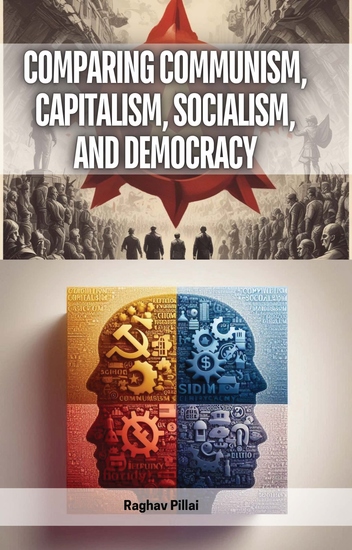
Comparing Communism Capitalism Socialism and Democracy - cover

Comparing Communism Capitalism Socialism and Democracy

Raghav Pillai

Publisher: Educohack Press

  • 0
  • 0
  • 0

Summary

"Comparing Communism, Capitalism, Socialism, and Democracy" navigates the intricate tapestry of global governance and economic systems. This enlightening book dissects four fundamental ideologies that have shaped human history. Going beyond surface-level definitions, it delves into the historical evolution, key principles, and distinctions that define each ideology. 

Whether you are a seasoned scholar, curious student, or an individual seeking a profound understanding of the world's socio-political landscape, this book provides a roadmap to unravel communism, capitalism, socialism, and democracy.

Uncover the roots of each ideology, tracing their origins from pivotal historical moments. Explore the economic paradigms, understanding how they shape wealth distribution, production, and resource allocation. Examine governance models, from centralized planning to democratic governance, and their impact on citizen participation and political stability. Delve into societal dimensions, evaluating how these ideologies foster inclusivity, address disparities, and preserve cultural identity. Analyze the contemporary relevance of each ideology, considering their adaptability to global challenges and their impact on international relations.

"Comparing Communism, Capitalism, Socialism, and Democracy" serves as an indispensable guide for anyone seeking clarity in political and economic ideologies. It offers a reader-friendly yet comprehensive exploration, equipping individuals with knowledge to critically engage with diverse ideologies shaping our global society.
Available since: 02/20/2025.
Print length: 230 pages.
Other books that might interest you

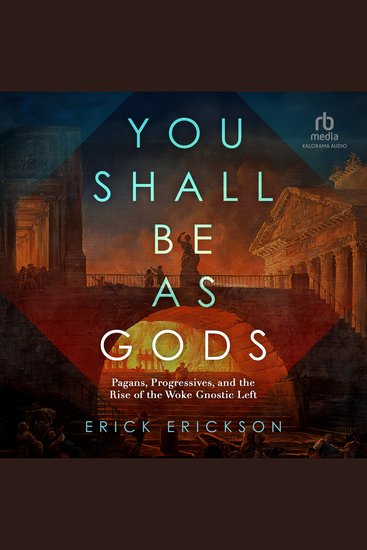
  • You Shall Be as Gods - Pagans Progressives and the Rise of the Woke Gnostic Left - cover

    You Shall Be as Gods - Pagans...

    Erick son

    • 0
    • 0
    • 0
    Our country doesn't have a partisan problem, a political problem, a social problem, or an economic problem. We have a spiritual problem. 


    As Christianity has been pushed aside, the Progressive Left has developed a new pagan religion. But the radical roots of the new secular religion are ancient. We've seen it all before. In You Shall Be as Gods, Erick Erickson traces the religion's roots from Paganism and Gnosticism through the Age of Enlightenment all the way into the Postmodernism of the twenty-first century. At the heart of the ancient religion is a self-centered culture. 


    The Christian church today has been weakened by compromising with the neo-pagan religion, leaving the faithful ill-prepared to counter the claims of society's present-day doctrine. Yet there remains a significant remnant in America that refuses to bow to the rising belief system. 


    Just as in Rome and countless societies throughout history, the religions present two opposing stories of reality which necessitates conflict. In an era where the "Christian thing" to do seems to be to go along and get along, Erickson makes clear that the two cultures cannot peacefully coexist and calls the listener to speak the truth in love.
    Show book
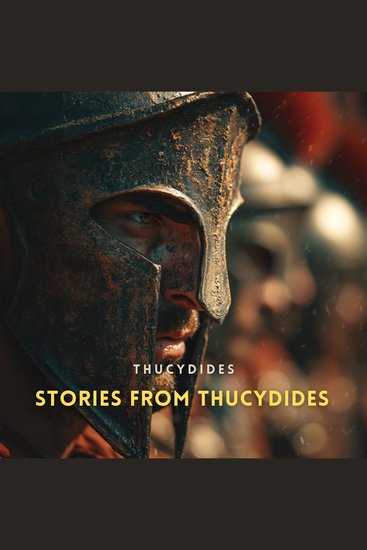
  • Stories from Thucydides - cover

    Stories from Thucydides

    Anonymous

    • 0
    • 0
    • 0
    Thucydides’ Stories from Thucydides presents vivid episodes from the Peloponnesian War, capturing the clash between Athens and Sparta in the 5th century BCE. Through detailed accounts of battles, sieges, political intrigue, and speeches, Thucydides explores power, ambition, human nature, and the tragic cost of war, offering timeless insights into leadership, strategy, and the fragility of civilization.
    Show book
  • Justinian: The Emperor Who Built an Empire… and Doomed It - The Ambition Triumphs and Tragedies of Byzantium’s Greatest Emperor - cover

    Justinian: The Emperor Who Built...

    Phil J. Ponce

    • 0
    • 0
    • 0
    Dive into the gripping history of Emperor Justinian, the ruler who sought to restore the Roman Empire to its former glory but instead left a legacy of both brilliance and downfall. Through conquests, legal reforms, and architectural wonders, Justinian reshaped the Byzantine world-yet his ambitious vision led to economic strain and political unrest. This audiobook unpacks the triumphs and tragedies of his reign, offering a compelling portrait of one of history’s most fascinating figures.
    Show book
  • Acts of Resistance - The Power of Art to Create a Better World - cover

    Acts of Resistance - The Power...

    Amber Massie-Blomfield

    • 0
    • 0
    • 0
    What is the purpose of art in a world on fire? Can it be a genuine form of political resistance? 


    What is the purpose of art in a world on fire? In this exhilarating and deeply inspiring work, Amber Massie-Blomfield considers the work of artists, writers, musicians, and filmmakers—such as Gran Fury, Billie Holiday, Alexis Wright, Claude Cahun, Rick Lowe, and Joseph Beuys—alongside collectives, communities, and organizations that have used protest sites as their canvas and spearheaded political movements. From writer Ken Saro Wiwa combating oil pollution in Nigeria and Susan Sontag directing Waiting for Godot in besieged Sarajevo to the women stitching subversive patchworks in Pinochet's Chile and the artist-activists who blocked the building of a new airport in France, with stories drawn from environmentalism, feminism, anti-fascism, and other movements, Acts of Resistance brings together remarkable acts of creativity that have shifted history on its axis.
    Show book
  • Historical Documents USA - cover

    Historical Documents USA

    Hank Wilson

    • 0
    • 0
    • 0
    Listen to key founding documents, plus a look at significant events that took place between the years of 1810 to 1877, starting with the period of 1810-1840 when one of, if not, the most historically significant events that took place.
    Show book
  • Islamic Relics: The History of Some of the Holiest Items in Islam - cover

    Islamic Relics: The History of...

    Editors Charles River

    • 0
    • 0
    • 0
    Muslim relics have become sought after relatively recently, since in the tradition of Islam it is customary to bury the deceased together with his belongings. However, many religious relics have rather controversial origins. Sometimes the faithful sincerely worship artful forgeries masquerading as holy relics and things that supposedly belonged to saints. The real sanctuaries are carefully guarded and are not always accessible to believers. They are brought out for public viewing on especially festive days. It is often represented as creating a special ritual.  
    	It is curious that the attitude towards such relics gradually changed over the centuries. If, at first, they were considered amulets used by private individuals, then over time their purpose and comprehension took on a different character. Most notably, the possession of the relics of the prophet began to be considered one of the arguments in favor of the appointment of the Caliph. The concentration of several relics in one mosque immediately sharply increased, in the eyes of the believers, the piety of such a mosque; this, in turn, immediately affected the growth of its wealth and political influence. Thus, in the published catalog of relics stored in the former Badshahi mosque of the Mughal state in Lahore (now Pakistan), there are 28 items: seven belonged to the prophet himself, three to the son-in-law of the prophet Ali, two to the daughter of the prophet Fatima, five to the grandson of the prophet Hussein, etc. It is believed that some of these items were taken out by Timur after the capture of Damascus, and some were donated by Sultan Bayazid to Timur's descendant, Babur. After the fall of the Mughal dynasty in India, they were first in private possession in the second half of the 19th century. In different ways, they came to the Lahore Mosque.
    Show book