Join us on a literary world trip!
Add this book to bookshelf
Grey
Write a new comment Default profile 50px
Grey
Subscribe to read the full book or read the first pages for free!
All characters reduced
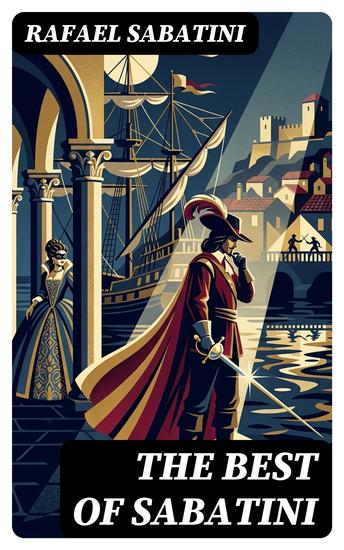
The Best of Sabatini - Enriched edition - cover

The Best of Sabatini - Enriched edition

Rafael Sabatini

Publisher: DigiCat

  • 0
  • 0
  • 0

Summary

In "The Best of Sabatini," Rafael Sabatini masterfully compiles his most enthralling tales, showcasing his distinct flair for historical fiction infused with swashbuckling adventure and romantic intrigue. Through rich, vivid prose, Sabatini transports readers to a world of daring escapades, complex characters, and moral dilemmas set against the backdrop of tumultuous historical epochs. His narrative style, characterized by a blend of lyrical elegance and thrilling pacing, invites readers to immerse themselves fully in both the grandeur and peril of his richly imagined settings, from the high seas to the courts of European nobility. Rafael Sabatini, an Italian-born British novelist born in 1875, cultivated a profound appreciation for history and storytelling during his formative years. His extensive travels and multilingual upbringing endowed him with a diverse cultural perspective, shaping his unique voice in literature. It is this rich tapestry of experiences that animates "The Best of Sabatini," reflecting the author's keen insight into human nature, honor, and bravery, all while weaving tales that resonate with timeless truth. For readers seeking adventure and depth in equal measure, "The Best of Sabatini" stands out as a quintessential collection that not only captures the essence of Sabatini's literary genius but also provides an excellent entry point into his oeuvre. This anthology is a must-read for enthusiasts of historical fiction and anyone longing for a captivating escape into an exhilarating past.

In this enriched edition, we have carefully created added value for your reading experience:
- A comprehensive Introduction outlines these selected works' unifying features, themes, or stylistic evolutions.
- A Historical Context section situates the works in their broader era—social currents, cultural trends, and key events that underpin their creation.
- A concise Synopsis (Selection) offers an accessible overview of the included texts, helping readers navigate plotlines and main ideas without revealing critical twists.
- A unified Analysis examines recurring motifs and stylistic hallmarks across the collection, tying the stories together while spotlighting the different work's strengths.
- Reflection questions inspire deeper contemplation of the author's overarching message, inviting readers to draw connections among different texts and relate them to modern contexts.
- Lastly, our hand‐picked Memorable Quotes distill pivotal lines and turning points, serving as touchstones for the collection's central themes.
Available since: 10/11/2022.
Print length: 6640 pages.
Other books that might interest you

  • Henry Esmond Volume 2 - The English Humourists; The Four Georges - cover

    Henry Esmond Volume 2 - The...

    Anonymous

    • 0
    • 0
    • 0
    Henry Esmond is a historical novel set in early 18th-century England, following the life of Henry Esmond, a loyal, honorable man entangled in the political and domestic intrigues of an aristocratic family. Blending romance, wit, and historical detail, it explores themes of love, legitimacy, and loyalty amid the turbulent reigns of the first two Hanoverian kings. The English Humourists and The Four Georges are companion nonfiction works: the former offers critical portraits of 18th-century satirists like Swift and Fielding, while the latter examines the manners, morals, and monarchs of Georgian England with Thackeray’s trademark irony and social insight.
    Show book
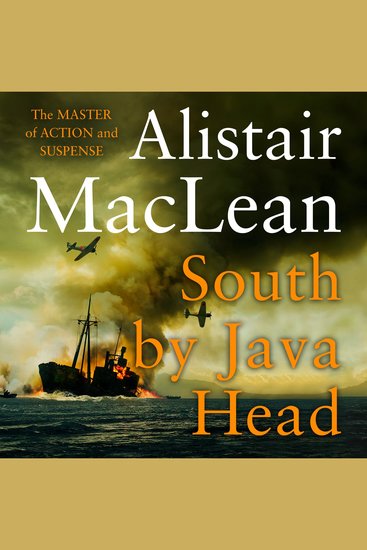
  • South by Java Head: An epic and dramatic historical fiction war novel of courage and sacrifice - cover

    South by Java Head: An epic and...

    Alistair MacLean

    • 0
    • 0
    • 0
    The 50th anniversary edition of this classic World War 2 adventure set in south-east Asia. 
    February, 1942: Singapore lies burning and shattered, defenceless before the conquering hordes of the Japanese Army. 
    The last boat escapes out of the harbour into the South China Sea, and on board are a desperate group of strangers, each with a secret to guard, each willing to kill to keep that secret safe. 
    Dawn sees them far out to sea but with the first murderous dive bombers already aimed at their ship. Thus begins a nightmare succession of disasters wrought by the hell-bent Japanese, the unrelenting tropical sun and, ultimately, by the survivors themselves, as they head south by Java Head. 
    Alistair MacLean, the author of this best-seller, masterfully weaves a story of suspense and action. The adventure unfolds as the desperate group battles not only the hell-bent Japanese and the unrelenting tropical sun, but also their own secrets. 
    For fans of Frederick Forsyth (The Veteran), Nevil Shute (A Town Like Alice), Ken Follett (The Armour of Light), Edward Marston (The Railway Detective's Christmas Case), and Eric Ambler (The Mask of Dimitrios). 
    HarperCollins 2024
    Show book
  • A Hunger Artist - cover

    A Hunger Artist

    Franz Kafka

    • 0
    • 0
    • 0
    A Hunger Artist is a short story by Franz Kafka first published in 1922. The protagonist, a hunger artist who experiences the decline in appreciation of his craft, is typically Kafkaesque: an individual marginalized and victimized by society at large. A Hunger Artist explores themes such as death, art, isolation, asceticism, spiritual poverty, futility, personal failure and the corruption of human relationships.
    Show book
  • The Scarlet Letter - cover

    The Scarlet Letter

    Nathaniel Hawthorne

    • 0
    • 0
    • 0
    Step into colonial New England with The Scarlet Letter, Nathaniel Hawthorne's masterpiece that delves into themes of sin, guilt, and redemption. Set in a strict Puritan community, this powerful tale follows Hester Prynne, a woman condemned to wear a scarlet "A" as a symbol of her adultery. With her young daughter, Pearl, Hester faces public shaming, secrecy, and judgment as she seeks dignity and resilience against the harsh morality of her society. 
    As Hester’s past lover and her vengeful husband reenter her life, hidden secrets are revealed, and the story intensifies in a poignant exploration of human nature and justice. Hawthorne's rich, descriptive language and haunting symbolism make The Scarlet Letter a profound and timeless story of the human spirit. 
    Narrated to bring Hawthorne’s vivid characters and Puritan setting to life, this audiobook is perfect for those who enjoy classic literature and compelling narratives. 
    Start listening to The Scarlet Letter today and immerse yourself in a tale of courage, strength, and transformation in the face of adversity.
    Show book
  • Philosophy of Furniture - cover

    Philosophy of Furniture

    Edgar Allan Poe

    • 0
    • 0
    • 0
    "The Philosophy of Furniture" is an essay written by American author Edgar Allan Poe and published in 1840. It presents Poe's theories on interior decorating.
    Poe begins by suggesting that the English are the "supreme" examples of internal decoration, above the Italians, French, Chinese, Scotch, Dutch, Spanish and Russians. "Yankees", he says, "are preposterous". He blames this American failing on a lack of aristocracy by blood, having instead "an aristocracy of dollars". Because of that, decoration in America has become a "mere parade of costly appurtenances" to create an "impression of the beautiful". He contrasts this with England, where wealth is not the loftiest ambition to constitute "nobility".
    Show book
  • A Chameleon - From their pens to your ears genius in every story - cover

    A Chameleon - From their pens to...

    Anton Chekhov

    • 0
    • 0
    • 0
    Anton Pavlovich Chekhov was born on 29th January 1860 in Taganrog, on the south coast of Russia.  
    His family life was difficult; his father was strict and over-bearing but his mother was a passionate story-teller, a subject Chekhov warmed to. As he later said; ‘our talents we got from our father, but our soul from our mother’.  
    At school Chekhov was distinctly average. At 16 his father mis-managed his finances and was declared bankrupt. His family fled to Moscow. Chekhov remained and eked out a living by various means, including writing and selling short sketches to newspapers, to finish his schooling. That completed and with a scholarship to Moscow University obtained he rejoined his family. 
    He was able to help support them by selling satirical sketches and vignettes of Russian lifestyles and gradually obtained further commissions. In 1884, he qualified as a physician and, although it earned him little, he often treated the poor for free, he was fond of saying ‘Medicine is my lawful wife, and literature is my mistress.’ 
    His own health was now an issue as he began to cough up blood, a symptom of tuberculosis.  Despite this his writing success enabled him to move the family into more comfortable accommodation.  
    Chekhov wrote over 500 short stories which included many, many classics including ‘The Kiss’ and ‘The Lady with a Dog’.  His collection ‘At Dusk’ won him the coveted Pushkin Prize when was only 26.  
    He was also a major playwright beginning with the huge success of ‘Ivanov’ in 1887.   
    In 1892 Chekhov bought a country estate north of Moscow. Here his medical skills and money helped the peasants tackle outbreaks of cholera and bouts of famine. He also built three schools, a fire station and a clinic.  It left him with less time for writing but the interactions with real people gained him detailed knowledge about the peasantry and their living conditions for his stories.  
    His most famous work, ‘The Seagull’ was received disastrously at its premiere in St Petersburg. It was later restaged in Moscow to highlight its psychological aspects and was a huge success. It led to ‘Uncle Vanya’, ‘The Three Sisters’ and ‘The Cherry Orchard’.  
    Chekhov suffered a major lung hemorrhage in 1897 while visiting Moscow. A formal diagnosis confirmed tuberculosis and the doctors ordered changes to his lifestyle.  
    Despite a dread of weddings the elusive literary bachelor quietly married the actress Olga Knipper, whom he had met at rehearsals for ‘The Seagull’, on 25th May 1901. 
    By May 1904 with his tuberculosis worsening and death imminent he set off for the German town of Badenweiler writing cheerful, witty letters to his family and assuring them his health was improving.  
    On 15th July 1904 Anton Chekhov died at Badenweiler.  He was 44.
    Show book